Fenian Cycle · figure
Fionn mac Cumhaill
Hunter, poet, leader of the Fianna and sometimes a giant: Fionn connects stories of wisdom, loyalty, love and betrayal across several distinct traditions.
Also found as: Finn McCool · Finn MacCool · Finn mac Cumall · Find mac Cumaill · Finn · Demne · Deimne
Research reviewed 17 October 2026.
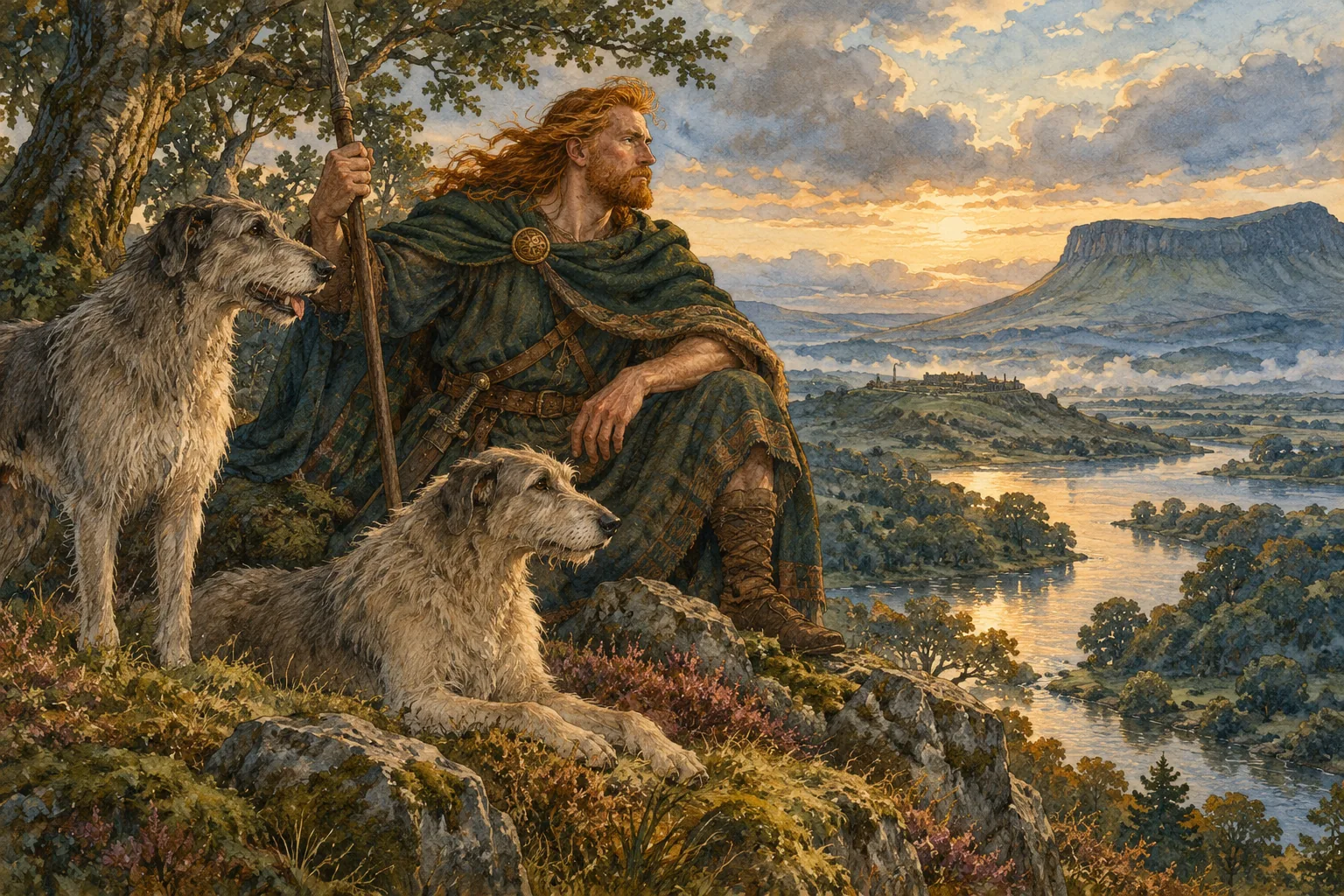
Fionn mac Cumhaill is the leader around whom many stories of the Fianna gather. Readers also meet him as Finn McCool, Finn MacCool or Find. In the texts examined for this collection he can be a hunted child, a poet with extraordinary knowledge, a loving husband, a commander and a dangerous rival. A figure page brings those roles together without forcing them into one seamless biography.
Begin with the stories
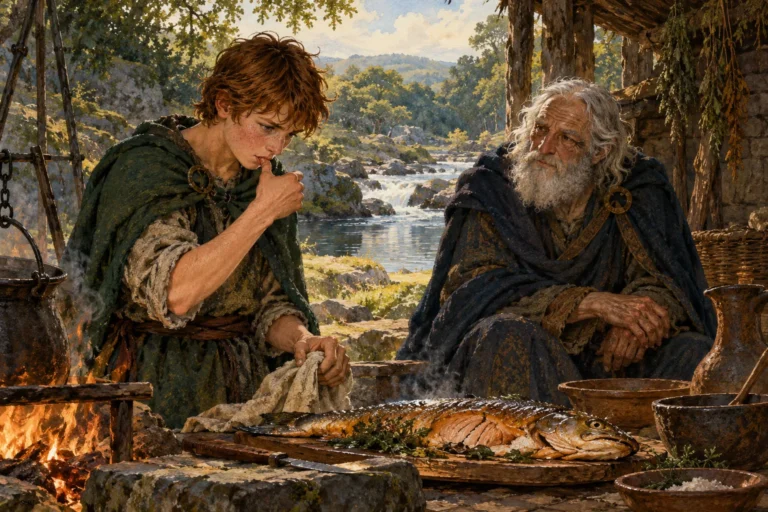
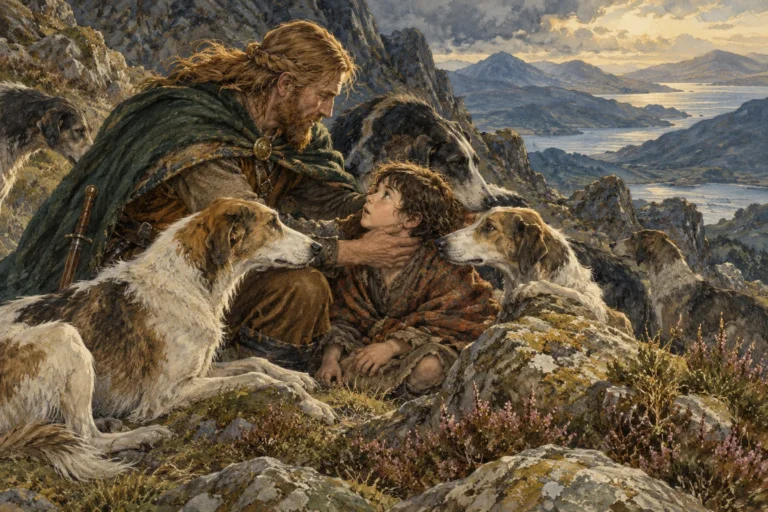
The Salmon of Knowledge follows the young Demne to a poet beside the Boyne. The medieval Boyhood narrative connects the discovery of wisdom with the learned arts of poetry; a later account collected by Curtin places a related episode in a giant’s cave. The shared thumb of knowledge does not make all the surrounding events identical. Meyer, §§17–20; Curtin, pp. 139–142.
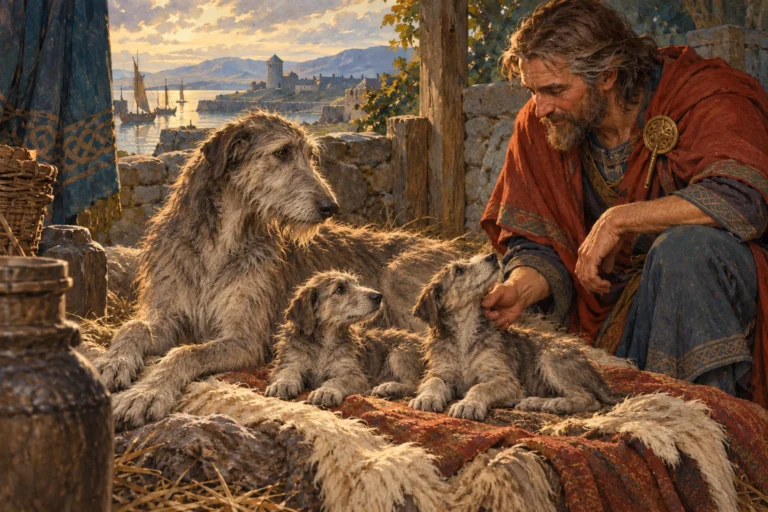
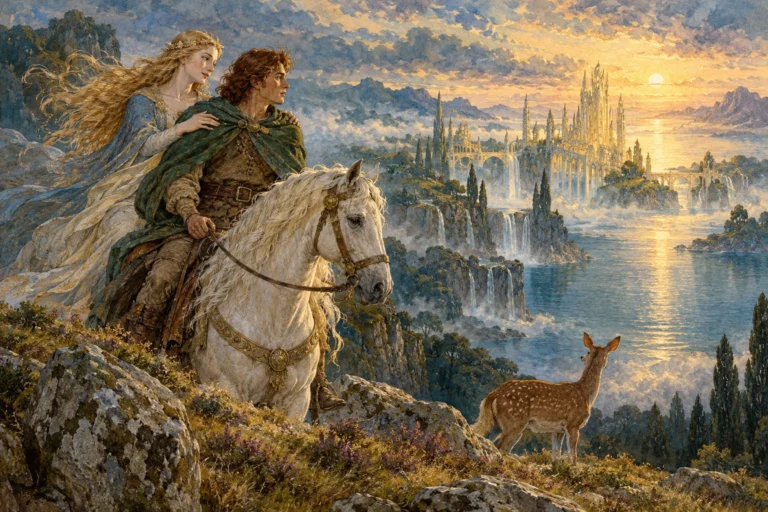
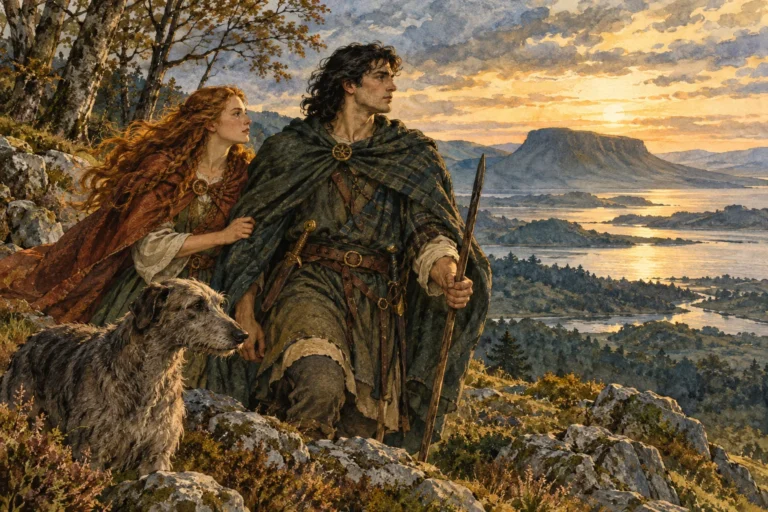
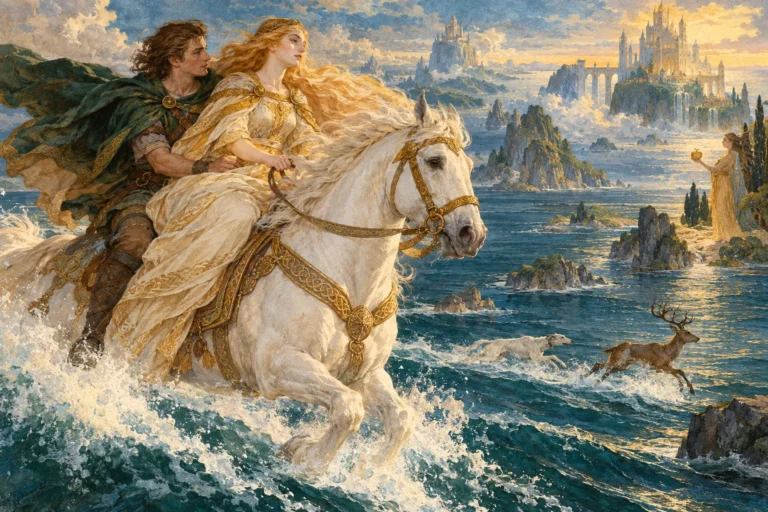
In Sadhbh and the birth of Oisín, Fionn’s hounds recognise an enchanted woman beneath a deer’s appearance. His stronghold gives her temporary refuge. Her disappearance and the later finding of their son connect Fionn’s household with the Otherworld. Oisín in Tír na nÓg carries that connection into the next generation, and gives Fionn the sorrowful role of a father watching his son depart. Gregory, Part II, Book I, chapter IV; Book X, chapter II.
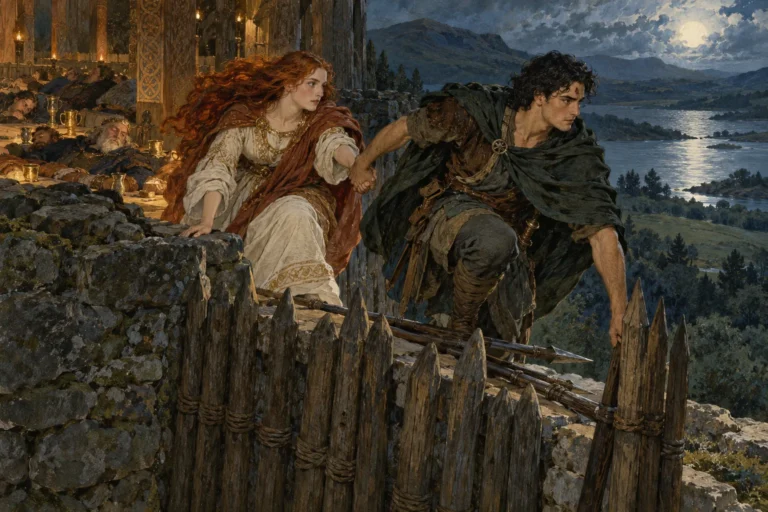
The pursuit of Diarmuid and Gráinne presents a harder portrait. Here Fionn’s grievance survives an apparent reconciliation, and he withholds water that could heal a dying companion. In the giant-in-the-cradle stories, strength gives way to household ingenuity. The library keeps those comic giant tales alongside the heroic material, with each account’s source visible.
Leadership, kinship and rescue
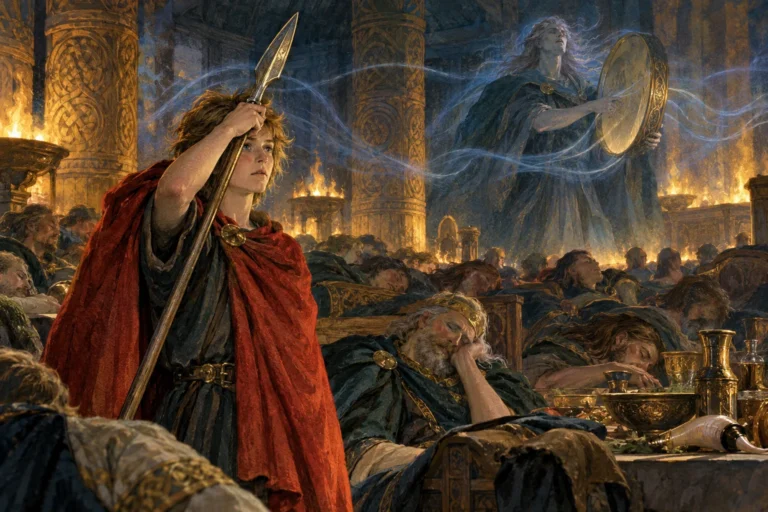
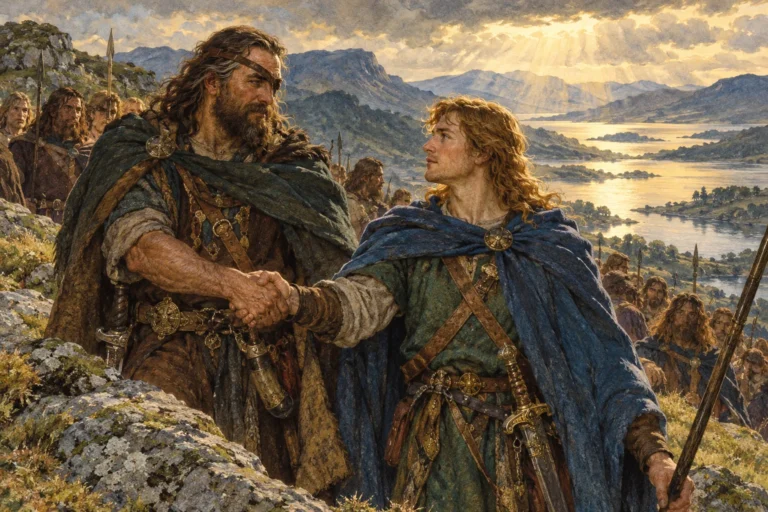
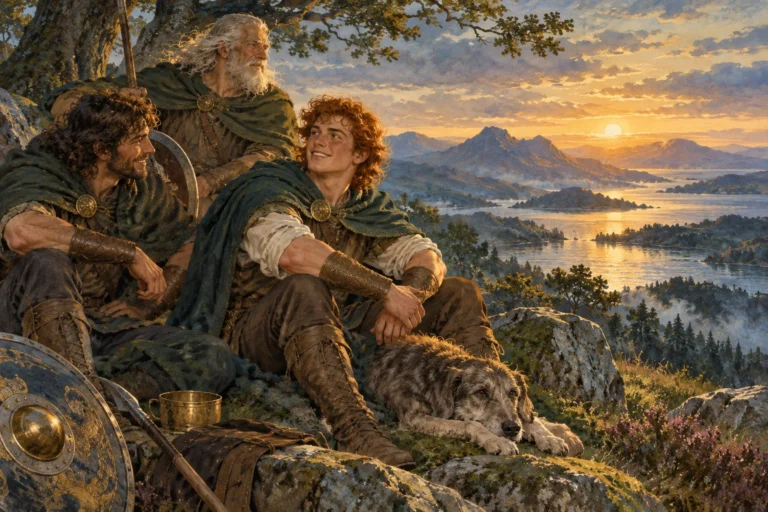
Fionn and Aillén follows his defence of Tara at Conn’s court and the promise that brings him command. The birth of Bran and Sceólang explains the hounds’ kinship with him and the obligations behind a marriage. At Kesh, his company needs Goll’s rescue: the leader’s authority does not make him invulnerable. Follow those entries for their named texts and the differences in Gregory’s adaptations.
A figure with several landscapes
The River Boyne belongs to the knowledge episode. Almhuin, associated with the Hill of Allen, is the home from which Gregory’s Finn hunts and governs his household. Tara is the setting for the marriage feast that begins the pursuit, while Benbulben is associated both with the finding of Oisín and with Diarmuid’s death. These are narrative relationships: a place-name or a visible monument is not by itself proof that the figure lived there. Gregory, Books I and VII, with place-name notes.
What can be said about a historical Fionn?
The stories establish a long-lived literary and folkloric figure. They do not supply a securely documented third-century biography. Ailbhe Mac Shamhráin’s Dictionary of Irish Biography entry treats Find as a legendary hero and argues that his origins lie in a deity later represented as a human figure. It also describes his incorporation into Leinster genealogies. That is a scholarly interpretation, not a discovered identity or an agreed birth certificate. Read the DIB entry.
Read the linked stories as a cluster: each has its own narrative, compared accounts and research limits. Differences in family, chronology or character remain part of the record. They are questions for investigation, rather than mistakes to erase by inventing a single definitive life.
Versions and variations
Follow the linked stories for comparisons of individual accounts. Each identifies its principal telling and distinguishes translations, adaptations and other witnesses.
Context and evidence
This profile connects the documented accounts in the collection. Individual stories provide the evidence for their events, settings and differences.
Sources for this entry
- Anonymous; translated by Kuno Meyer, The Boyish Exploits of Finn. Ériu 1 (1904), pp. 180–190; CELT T303023. §§4–20. Read source — Boyhood, names and knowledge episode; directly consulted.
- Lady Gregory, Gods and Fighting Men. 1905 edition displayed by Project Gutenberg. Part II, Books I, VII and X; Notes III and V. Read source — Thematic links, household, pursuit and places; directly consulted. About this book
- Jeremiah Curtin, Myths and Folk Tales of Ireland. Project Gutenberg text no. 36540. Birth of Fin MacCumhail, pp. 139–142. Read source — Alternate knowledge narrative; directly consulted. About this book
- Ailbhe Mac Shamhráin, Find (Mod. Ir. Fionn; Arch. Ir. Vind; Celt. Vindos). Dictionary of Irish Biography, Royal Irish Academy, October 2009. Whole entry; DOI 10.3318/dib.003085.v1. Read source — Brief attributed modern scholarly interpretation; directly consulted.
Research coverage
A cluster guide to the accounts examined, including the Aillén passage from Acallam na Senórach. Further work includes the rest of the Acallam, death traditions, Gaelic lay collections and documented Scottish, Manx and local Irish traditions. Spelling aliases aid discovery without making similarly named figures identical.
The Myths · Irish collection · Editorial approach
Further Reading