Fenian Cycle · figure
Oscar: Champion and Grandson of Fionn
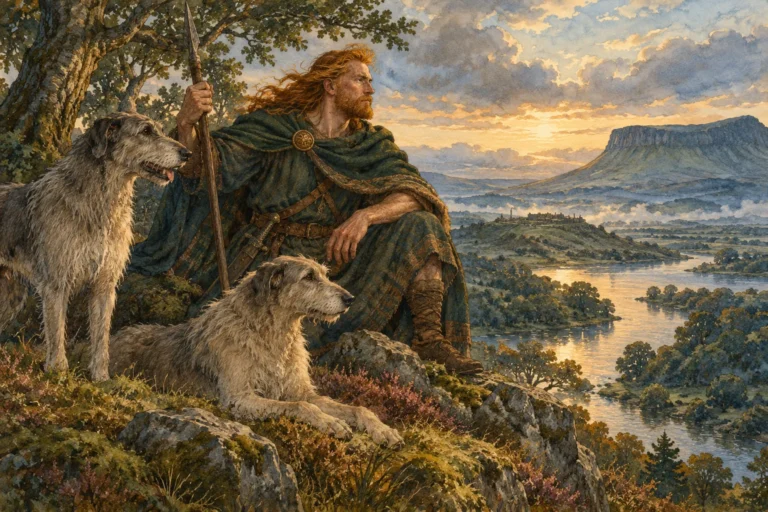
Oisín’s son and Fionn’s grandson is the young champion whose death gives the end of the Fianna its deepest grief. His stories also include unlikely beginnings, Otherworld rescues and Scottish Gaelic adventures.
Also found as: Osgar · Oscar mac Oisín · Osgar mac Oisein
Research reviewed 17 October 2026.
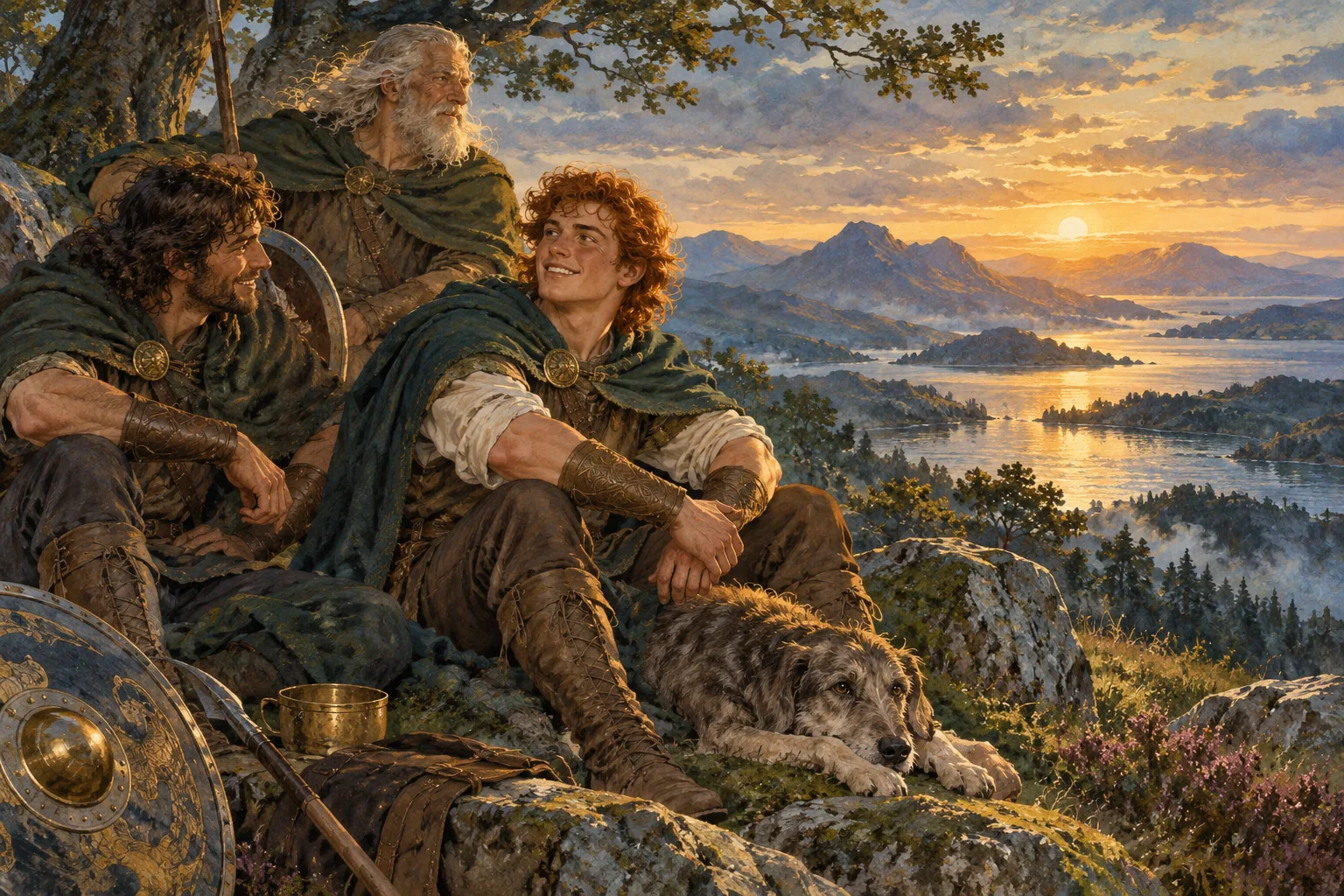
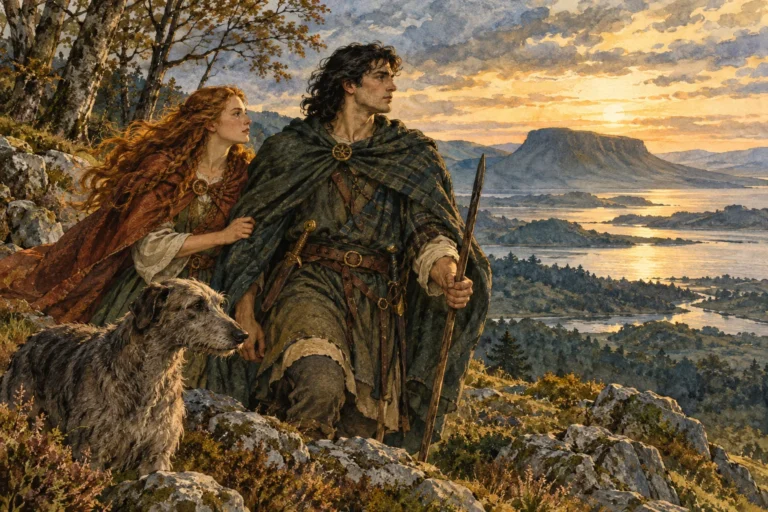
Oscar is the son of Oisín and grandson of Fionn mac Cumhaill. Within the Fenian stories, that relationship places him between the company’s present strength and its hoped-for future. His greatest battle ends in death, but reading only that ending misses the humour, companionship and extraordinary adventures that make the loss matter. The genealogy is explicit in both Gregory’s “Oisín’s Children” and the Scottish Gaelic “Lay of Osgar”.
Gregory gives him an unpromising childhood. The Fianna keep the best marrow bones for him and spare him hardship; he becomes large and idle. When an attack leaves him behind, he picks up a log and joins the fight, routing the enemy. The supposed idler reveals the strength that will make him a leading champion. Gregory adds a regional qualification: admirers called Oscar the strongest, but people in Connacht preferred Goll. Her account therefore preserves competing loyalties rather than one uncontested ranking. Source: Part II, Book V, “Oisín’s Children”.
His relationship with Diarmuid is another useful route into the collection. Gregory makes them close companions and says Diarmuid taught him weapons, feats and chess. Asked what music he likes best, Oscar chooses the clash of swords. The scene sketches a man formed for battle, among companions whose answers range from conversation to the sounds of woodland. It is a literary portrait, not a record of an historical interview. Source: Book V.
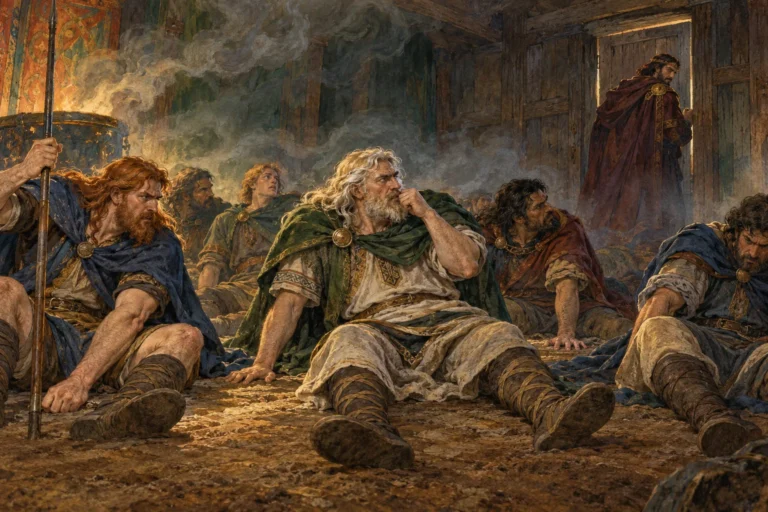
In The Hostel of the Quicken Trees, Oscar acts at both ends of the plot. He kills the invading king whose son Midac later constructs the trap, then kills the King of the World in the final rescue battle. Joyce makes the same young warrior the origin of an enemy’s grievance and the deliverer of the decisive victory. Source: chapters I and VII, pp. 177–180 and 219–222.
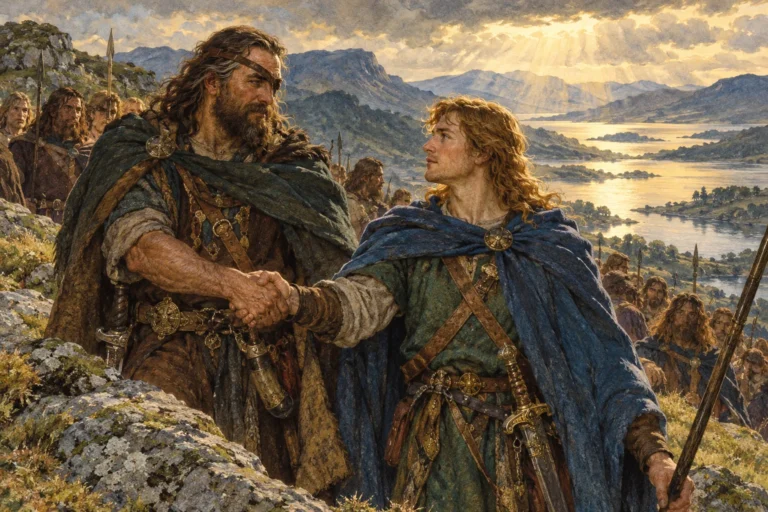
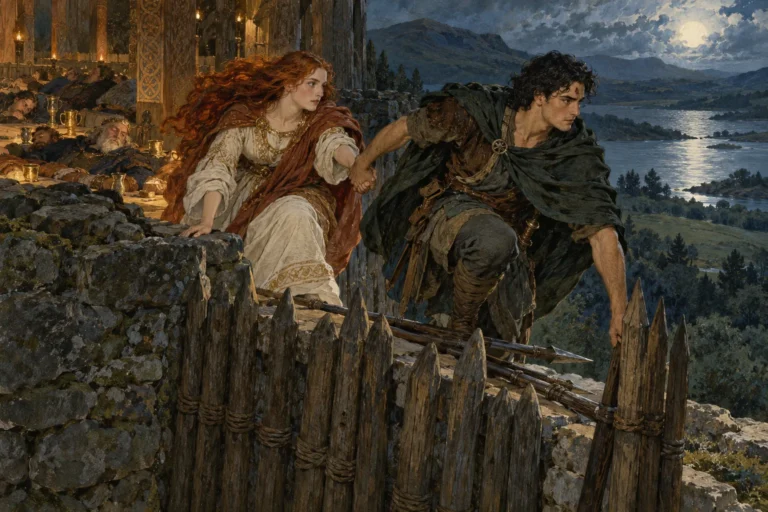
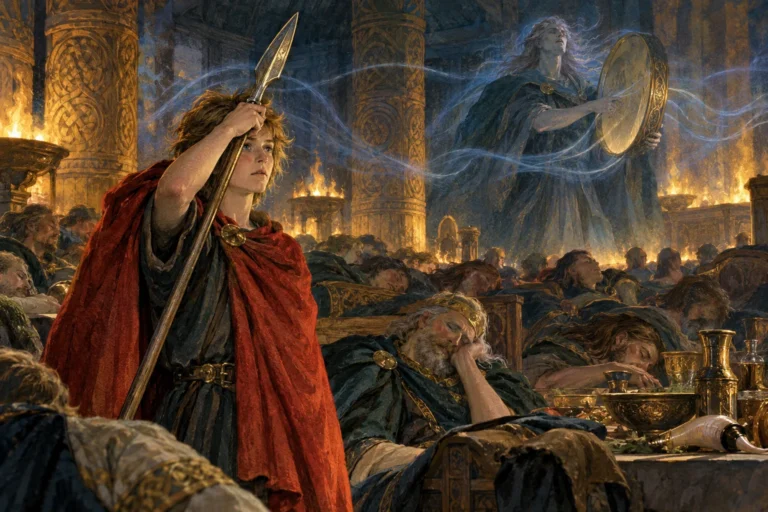
The Pursuit of the Gilla Decair shows him working with Goll. He asks to undertake a combat that the older warrior is ready to fight, then assists him against the opposing force. Later they pass themselves off as poets to recover Taise, with Fergus supplying the skill their disguise requires. Their partnership is particularly striking beside stories of division between their families. Source: O’Grady, §§28–30 and 39–40.
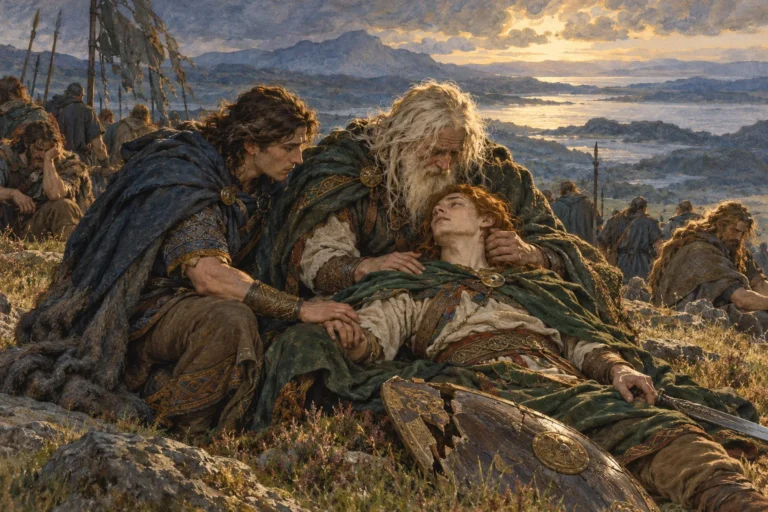
At Gabhra, Oscar kills the king but receives a mortal wound. Oisín finds him alive; Fionn arrives to discover that his healing cannot save him. Public defeat becomes private bereavement. Gregory describes the survivors leaving their own losses momentarily unspoken to mourn Oscar together. The sorrow of father and grandfather makes him more than a tally of heroic victories. Source: Book IX, chapter III.
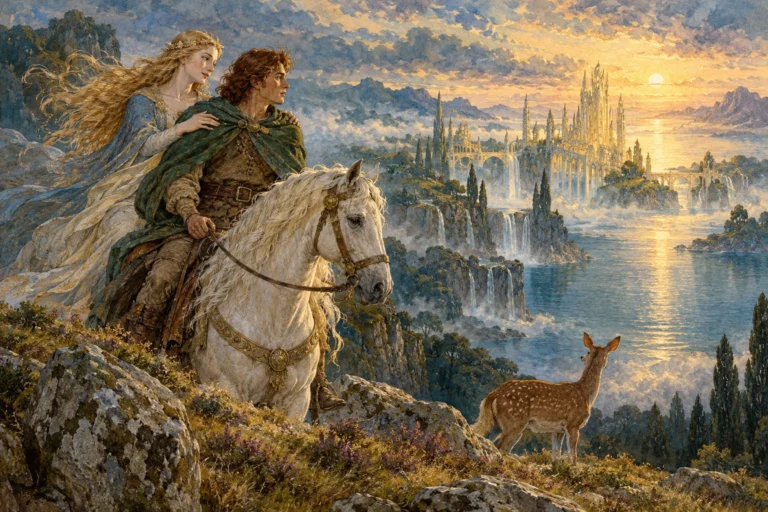
Scottish tradition gives him further lives. Campbell’s “Osgar, the Son of Oisein”, pp. 311–316, begins with a schoolboy taken away by a terrifying giant. A captive woman helps him kill the captor; later she proves to be a Greek princess whom he marries. His role changes with the storyteller: martial heir, endangered boy, grateful companion and beloved grandson all belong within the documented tradition. This adventure should stand alongside the Irish material with its own source label, rather than being silently inserted into a single definitive biography.
Versions and variations
Different beginnings. Gregory’s Book V makes the indulged, apparently idle boy discover his power during an attack. Campbell’s prose tale, pp. 311–316, first demonstrates it in school games, where everyone else must combine against him. Yet a giant can still knock him unconscious and carry him away. These are distinct narrative openings; the printed sources do not require them to form consecutive chapters in one childhood.
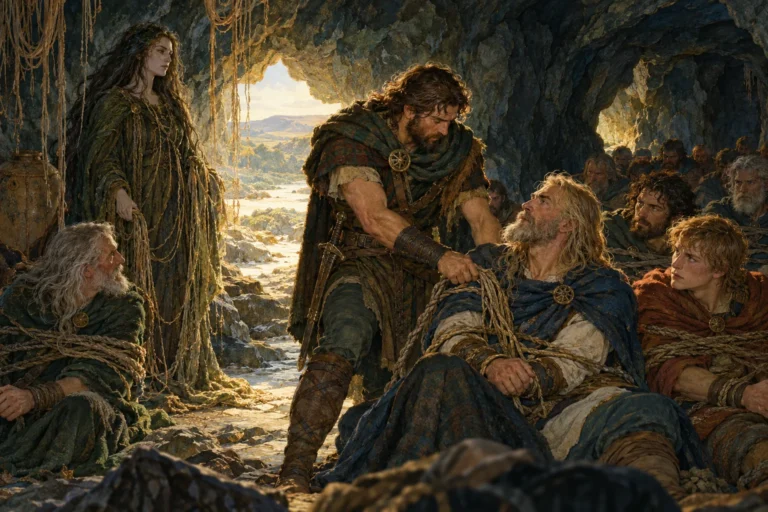
Strength that needs help. In the giant story Oscar survives because the abducted woman releases him and helps kill their captor. At Kesh he is among those disabled by enchantment until Goll rescues the company, in O’Grady’s “Enchanted Cave”, §§5 and 8–10. These episodes qualify the claim that he is simply an invincible strongest man. Gregory herself reports the rival preference for Goll; regional praise is part of the tradition being compared.
The speaker of the lament. In Gregory’s Gabhra chapter, Oscar describes the hard heart disturbed by others’ mourning. In Campbell’s “Lay of Osgar”, stanzas 57–58 and note 345–19, the printed sequence gives that speech to Fionn. MacLean acknowledges reciters who put it in Oscar’s mouth, then explains why he prefers the grandfather. The disagreement changes the dying hero’s emotional portrait and makes the editor’s own preferences visible.
Publication is not a single voice. Campbell’s lay explicitly combines material from two named reciters. The adjacent prose tale does not provide an equally specific informant statement in the passage consulted. Gregory lists several printed authorities for “Oisín’s Children”. Those differences in documentation matter: an attributed oral performance, a collector’s edited text and a literary synthesis are related kinds of evidence, but they are not interchangeable.
Context and evidence
The sources here establish Oscar as a widely narrated heroic figure; they do not establish the events of his life as historical facts. The Scottish and Irish materials also resist a neat national boundary: the Scottish lay situates Highland heroes in Ireland, while Irish romances send them across an imagined international world. Campbell’s own attempt to explain the giant story as a real sea-rover’s journey is nineteenth-century interpretation, not independent corroboration. Begin with Gabhra for his death, then read the rescue stories for the living champion his companions mourn.
Sources for this entry
- Lady Gregory, Gods and Fighting Men. 1905 edition; first published 1904. Part II, Book V, Oisín’s Children; Book IX, chapter III; Notes III, Authorities. Read source — Figure portrait, relationships and death; passages directly consulted. About this book
- P. W. Joyce, Old Celtic Romances: The Fairy Palace of the Quicken Trees. 1920 edition; first published 1879. Chapters I and VII, pp. 177–180 and 219–222. Read source — Oscar’s separate roles in the revenge plot and final battle. About this book
- Anonymous; translated by Standish Hayes O’Grady, The Pursuit of the Gilla Decair and his Horse. Silva Gadelica, II (1892). pp. 305–306 and 309–310, §§28–30 and 39–40. Read source — Partnership with Goll and Taise expedition. About this book
- J. F. Campbell, editor, Popular Tales of the West Highlands, III: LXXX, Osgar, the Son of Oisein. Edinburgh: Edmonston and Douglas, 1862. Prose tale pp. 311–316; editorial discussion follows. Read source — Distinct Scottish prose adventure; collector’s historical speculation not adopted. About this book
- Donald MacPhie and Patrick Smith, recorded by Hector MacLean; edited by J. F. Campbell, Popular Tales of the West Highlands, III: LXXXI, The Lay of Osgar. 1862. pp. 320–347; especially stanzas 46–64 and note 345–19. Read source — Death lay, named collection circumstances and editorial variant. About this book
- Anonymous; translated by Standish Hayes O’Grady, The Enchanted Cave of Keshcorran. Silva Gadelica, II (1892); CELT T303021. pp. 344–346, §§5 and 8–10. Read source — Oscar’s capture and rescue by Goll. About this book
Research coverage
Guide connects directly consulted Irish literary adaptations, translated romance and Scottish prose/verse accounts. Oscar’s mother, spouse traditions beyond the cited Greek-princess episode, early manuscript poems and the full range of Gabhra recensions require further research; no harmonised historical life is asserted.
The Myths · Irish collection · Editorial approach
Further Reading