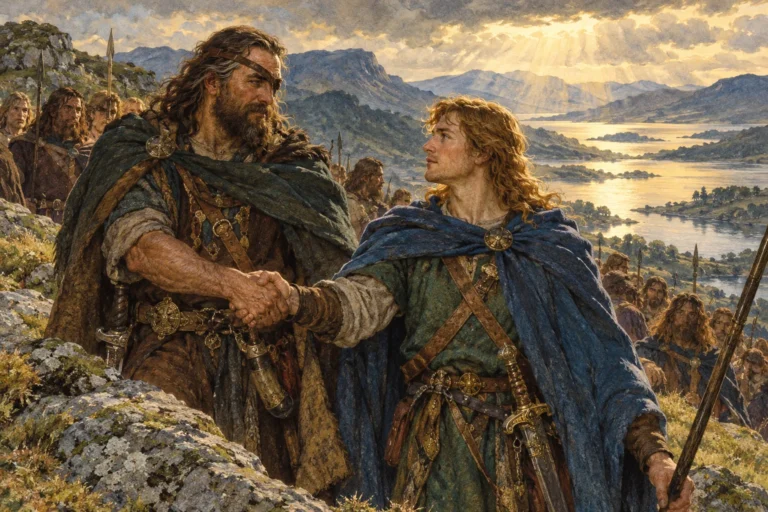
Fenian Cycle · figure
Oisín
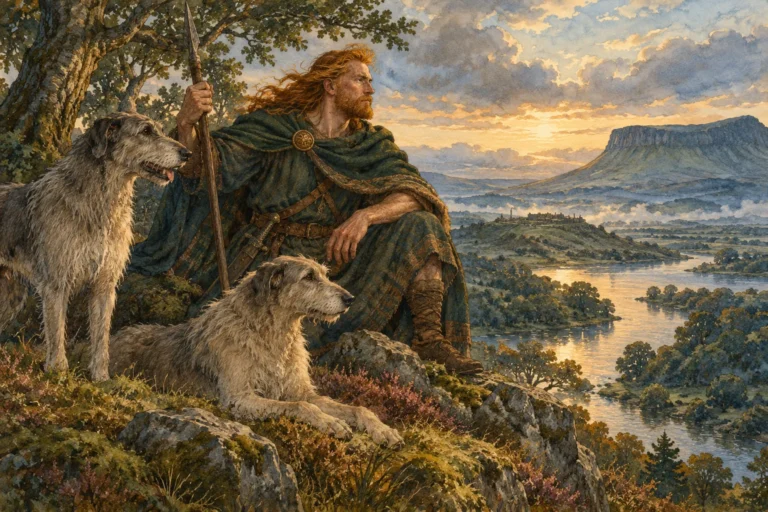
Fionn’s son is a hunter, warrior, poet and survivor: a figure through whom stories remember the Fianna and ask what remains when their world is gone.
Also found as: Oisin · Ossian · Oisín son of Fionn
Research reviewed 17 October 2026.
Oisín belongs to several connected kinds of story. He is Fionn’s son and a member of the Fianna, the child of a mother trapped in an animal’s form, the lover carried into an Otherworld, and the old man who remembers heroes to people who never knew them. These roles should be explored together without forcing every source into one seamless biography. Gregory’s collection makes the connections particularly visible through “Oisin’s Mother”, “Oisin’s Children” and “Oisin and Patrick”.
The child found on the mountain
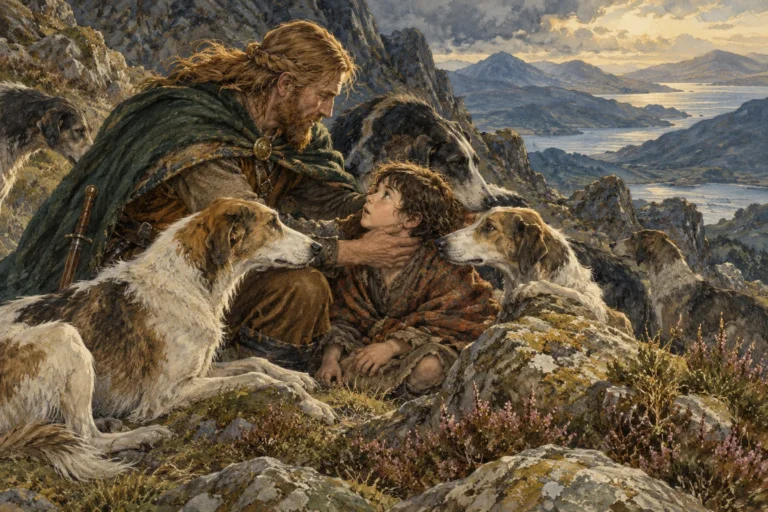
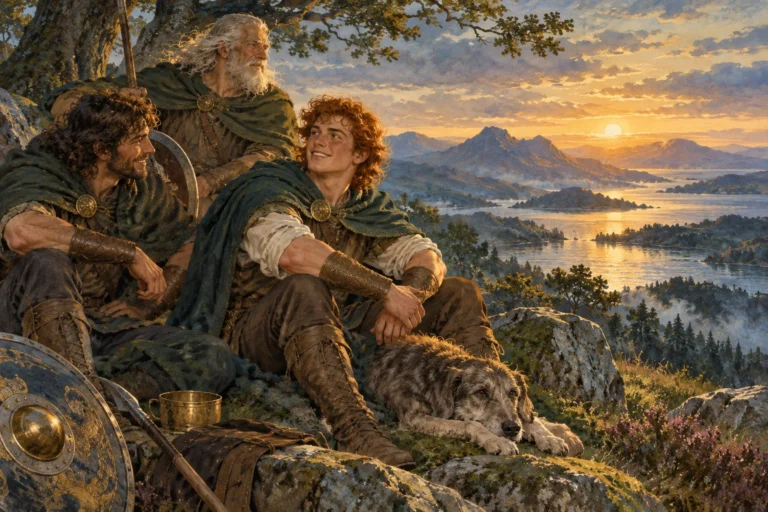
In Sadhbh and the Birth of Oisín, Fionn shelters a deer who becomes a woman at his home, Almhuin. A hostile enchanter later tricks her into leaving its protection. Years afterwards, the hunters find a human child whose earliest memories are of a deer mother and a confined, wooded place. Gregory locates that discovery on Beinn Gulbain, linked here with Benbulben. This Oisín is a human boy brought up by a deer; the account does not have a fawn turned into a boy at Fionn’s door. Gregory, Part II, Book I, chapter IV; compare Kennedy, “The Youth of Oisin”.
A member of a complicated household
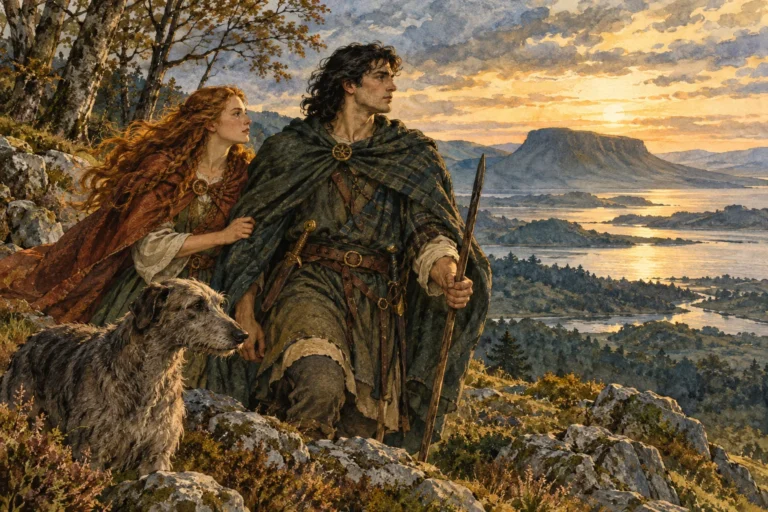
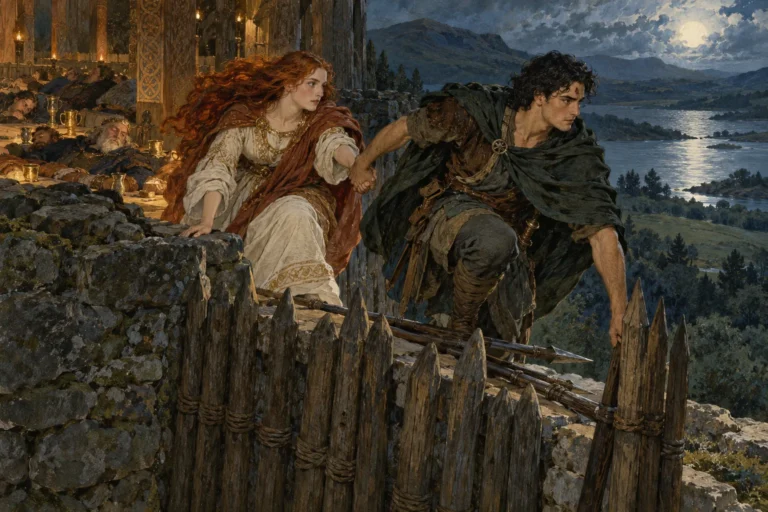
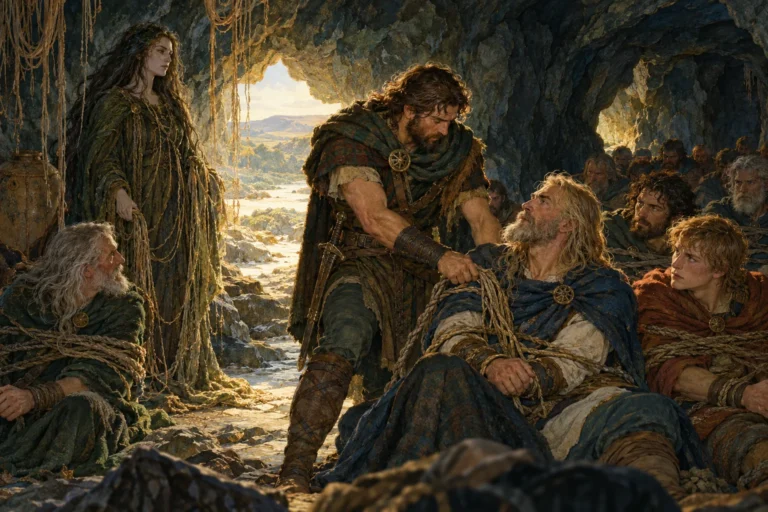
Oisín is not always the principal hero. He can be one of the companions whose decisions matter to someone else’s fate. In the Pursuit of Diarmuid and Gráinne, §1.7, Gráinne first asks Oisín to flee with her; he refuses because she is promised to his father. She then turns to Diarmuid. In the Keshcorran tale, §§10–12, Oisín is among those rescued and remains too exhausted by the ordeal to fight the next challenger. These appearances keep him within a vulnerable human company, even when other stories give him an extraordinary lifespan.
Oisín is also Oscar’s father. Gregory’s Book V, “Oisin’s Children”, follows Oscar’s place among the Fianna, while the later chapters about Gabhra bring the family into the destruction of the company. For a reader, the relationship changes the weight of Oisín’s recollections: he is remembering a lost generation that includes his own child.
The visitor who cannot come home
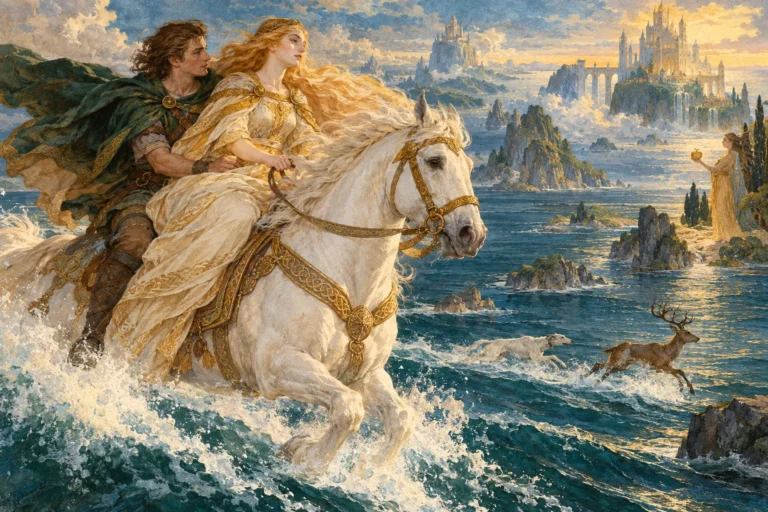
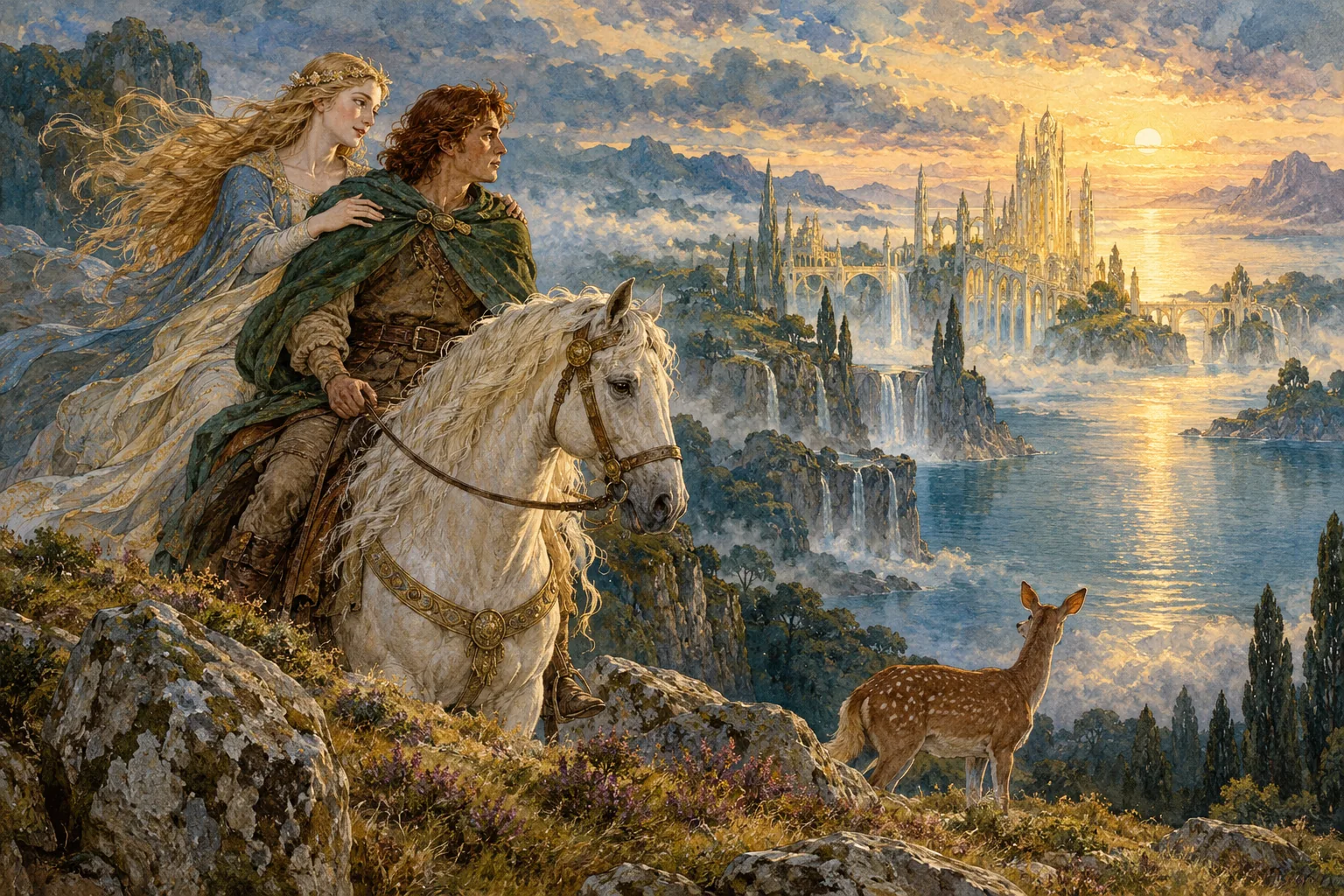
Oisín in Tír na nÓg gives that loss its most dramatic shape. In Joyce’s version, Niamh takes him away on a white horse. What seems a short stay lasts three hundred years in Ireland. He returns to a diminished world and the ruins of Fionn’s home. An attempt to help men with a heavy stone brings his foot to earth and sudden old age. His surviving voice carries the story into the time of Patrick. Joyce, “Oisin in Tirnanoge”, pp. 385–399.
The details are not fixed. Curtin’s “Oisin in Tir na n-Og” gives the Otherworld king’s daughter a pig’s head, a marriage that removes the enchantment, and a race for sovereignty. Oisín’s disastrous return involves an old hunting horn. Gregory instead makes his dismount connected with recognising an old washing place. Each account offers a different route from desire to irreversible loss.
Poet, voice and remembered past
In Gregory’s Book XI, Oisín and Patrick argue over the worth of the Fianna, their pleasures and their fate. Oisín’s voice lets an old heroic world speak back to a Christian one. That literary role is not proof that every poem put into his mouth was composed by one historical man. Start with the individual story and its named witness, then follow the places, family relationships and recurring questions across the cluster.
Versions and variations
The mother and childhood: Kennedy’s “The Youth of Oisin” and Gregory’s “Oisin’s Mother” share the deer-mother, enchanted separation and rediscovery of a human boy. Gregory names Kennedy among her authorities, so their agreement should not be counted as two independent testimonies. The spelling Saav in Kennedy and Sadbh in Gregory is also a naming difference to record, rather than an automatic reason to create two separate mothers.
The Otherworld family: Joyce’s account names Niamh and emphasises the marvellous voyage and homesickness. Curtin’s account makes the princess’s altered appearance, her father’s fear of losing his kingdom and Oisín’s victory in a race central to the marriage. These differences affect the heroine’s story as well as Oisín’s.
The return: stone, horn and remembered washing place belong to different examined versions. A figure profile can connect them without pretending Oisín suffered all three accidents. The separate story page sets them alongside their sources.
Context and evidence
None of the accounts used here is a contemporary biography of a securely identified Oisín. They are evidence for the stories, identities and values attached to his name. “Ossian” is included as a useful search form, but the wider Scottish traditions and the later literary reception under that name require their own source work. This profile currently concentrates on the Irish narratives directly examined, with local landscape associations kept distinct from proof that a particular event happened there.
Sources for this entry
- Lady Gregory, Gods and Fighting Men. 1905 edition, first published 1904; Project Gutenberg. Part II, Book I, chapter IV; Book V; Books X–XI; Notes III. Read source — Family, childhood, Oscar, return and Patrick-frame passages examined. About this book
- Patrick Kennedy, Legendary Fictions of the Irish Celts: The Youth of Oisin. Second edition, 1891; work first published 1866; Library Ireland transcription. Part IV, chapter XIII, opening story. Read source — Direct comparison for childhood; acknowledged predecessor of Gregory. About this book
- P. W. Joyce, Old Celtic Romances. Consulted 1920 edition; first published 1879. Preface, discussion of Oisin; Oisin in Tirnanoge, pp. 385–399. Read source — Niamh, voyage and stone-return account; author’s adaptation statement. About this book
- Jeremiah Curtin, Myths and Folk-Lore of Ireland. First published 1890; Project Gutenberg transcription. Oisin in Tir na n-Og, pp. 230–242. Read source — Different princess, race and horn-return narrative directly examined. About this book
- Anonymous; English translation by Standish Hayes O’Grady, Tóruigheacht Dhiarmada agus Ghráinne. O’Grady translation (1857) displayed alongside Irish text by UCC Irish Sagas Online. §1.7. Read source — Oisín’s refusal of Gráinne’s request. About this book
- Anonymous; translated by Standish Hayes O’Grady, The Enchanted Cave of Keshcorran. Silva Gadelica II (1892), pp. 343–347. §§10–12. Read source — Oisín as rescued companion who cannot face the later combat. About this book
Research coverage
A guide to directly examined Irish narrative roles, not a complete biography or full catalogue of Oisín/Ossian material. The Irish verse sources behind Joyce, manuscript poetry, Scottish witnesses and recorded oral collections need further comparison.
The Myths · Irish collection · Editorial approach
Further Reading