Place · County Meath, Ireland
Hill of Tara
A landscape of monuments and a royal centre in stories of Lugh, Étaín, Gráinne and Ireland’s kings.
Also found as: Tara · Teamhair · Temair · Teamhair na Rí
A place with many stories
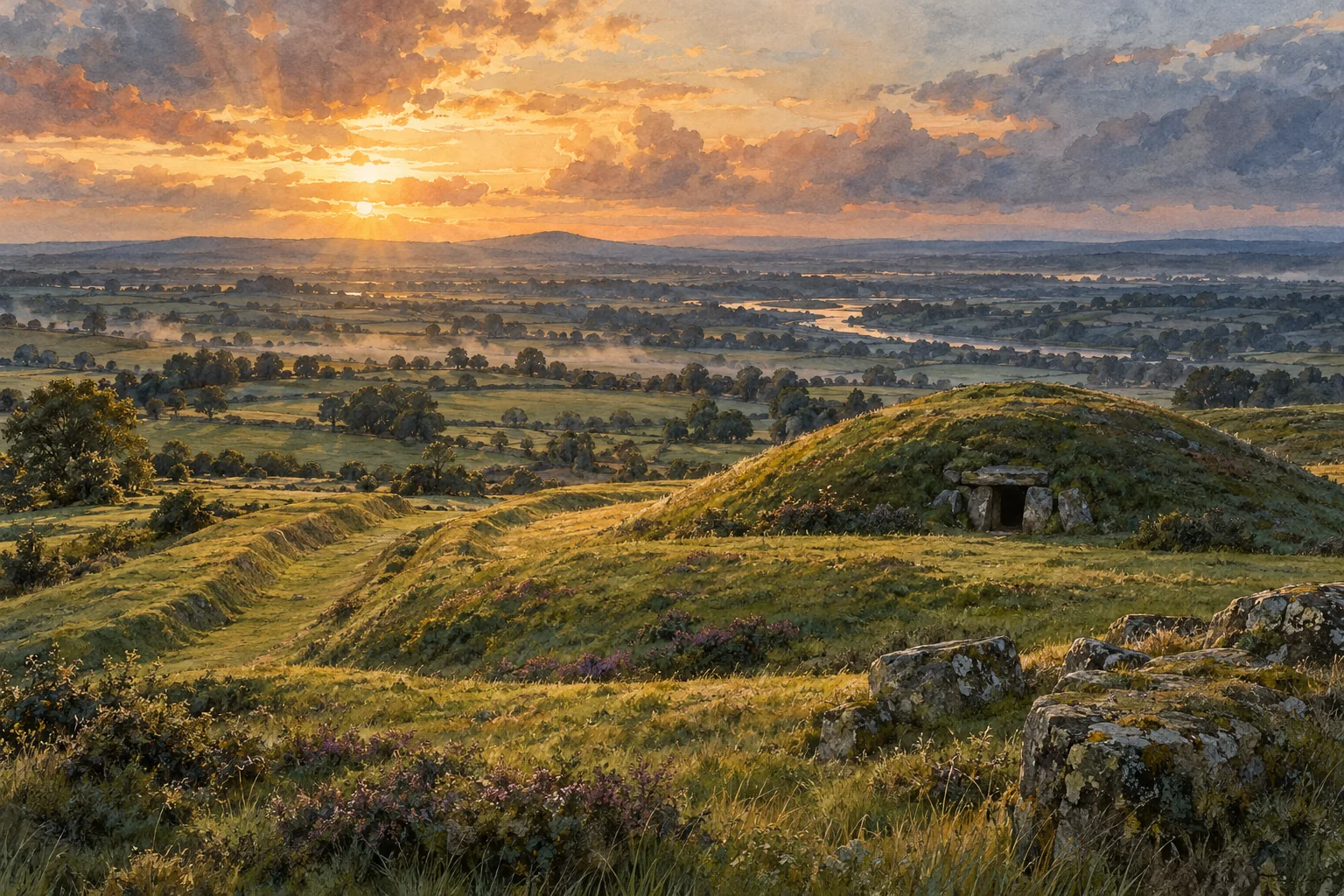
Tara is a useful meeting point between different strands of Irish tradition. In stories it is a royal court, a place of assembly and a setting where a stranger’s abilities or a king’s authority can be tested. Those literary roles should be read alongside the physical hill, rather than used as a plan of buildings that must once have stood there.
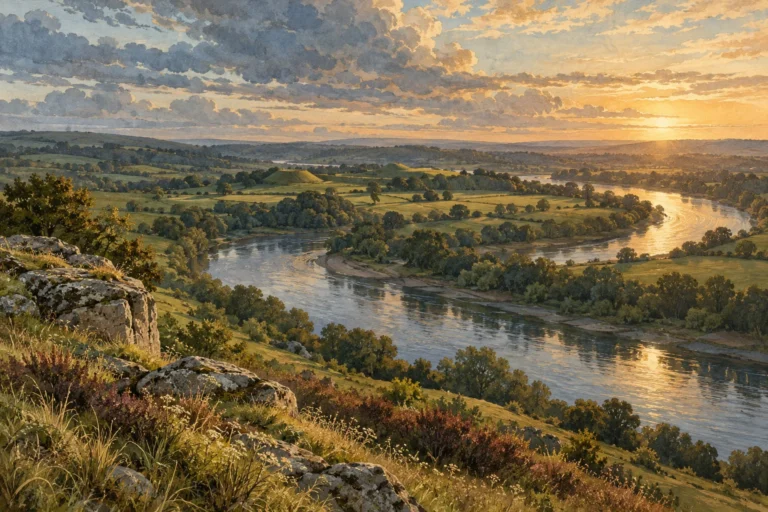
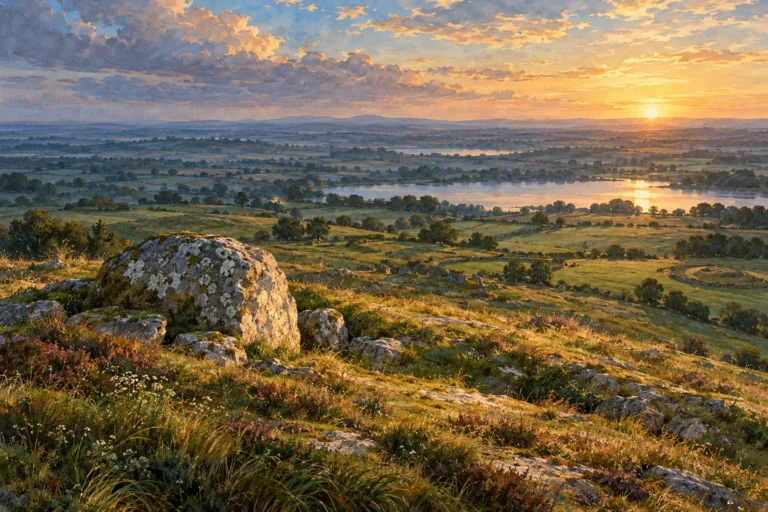
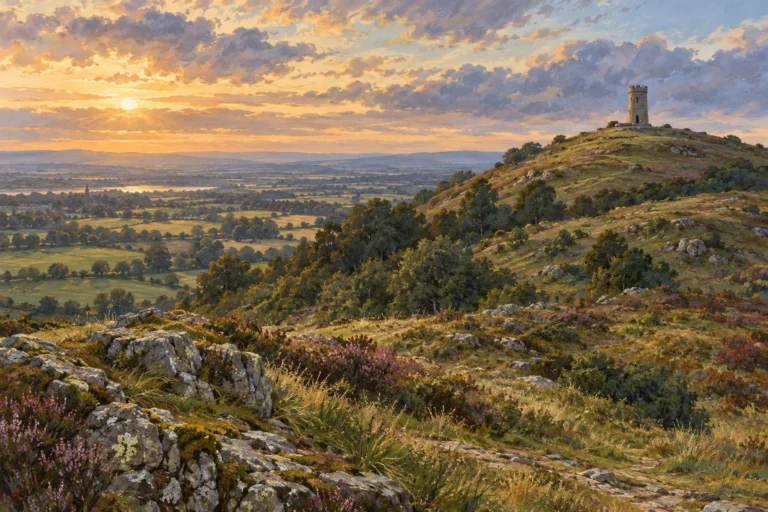
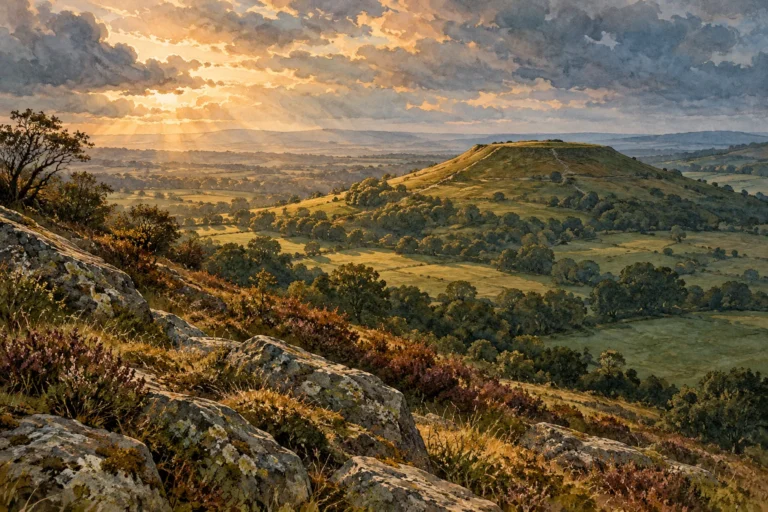
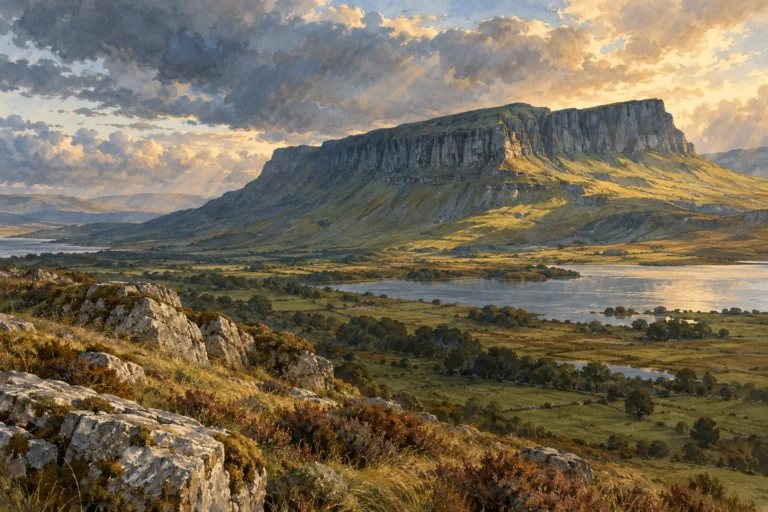
The site is in County Meath. Its surviving monuments belong to different periods: Tara is a landscape that changed over a long time, rather than the remains of one legendary palace. The Office of Public Works’ site account provides an introduction to the place and its history.
What the archaeology tells us
The Mound of the Hostages is a prehistoric passage tomb. The visible earthworks also include enclosures and the long parallel banks traditionally called the Banqueting Hall. The OPW explains that archaeologists interpret those banks as a ceremonial approach, rather than the outline of a great dining hall. Names such as Cormac’s House preserve associations; a name alone does not identify the person who built a monument. Read the monument descriptions.
This distinction matters when a tale describes feasts, challenges or marriage arrangements at Tara. Archaeology can investigate the hill’s use, construction and chronology. It cannot by itself verify the conversations or supernatural events narrated in a story.
Tara in the tales
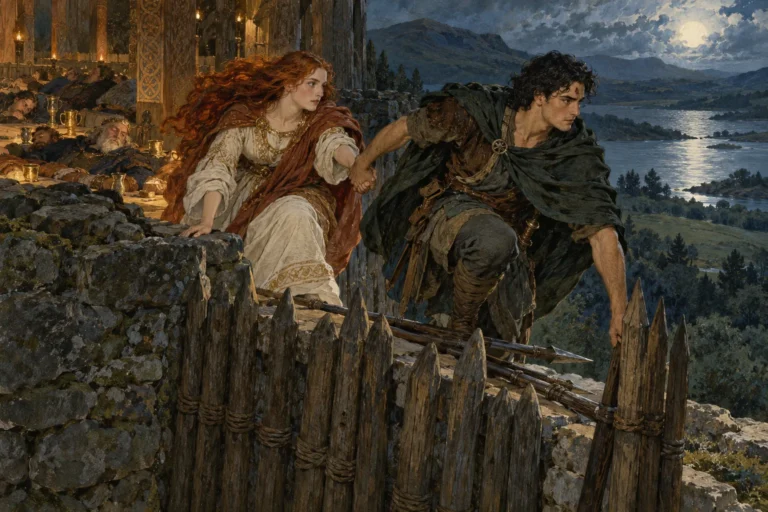
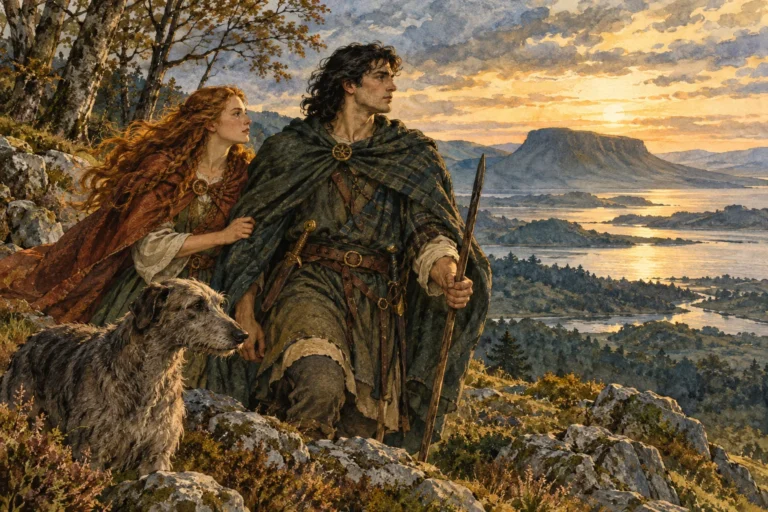
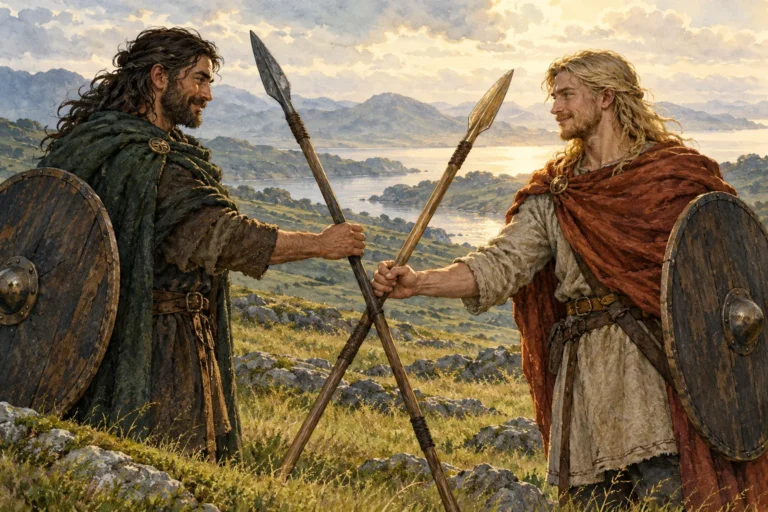
Lady Gregory uses the name Teamhair. In her account of Lugh’s arrival, the newcomer must persuade the doorkeeper that he offers a skill the king’s household lacks. Étaín’s story also brings supernatural claims into a royal household. The opening of Diarmuid and Gráinne’s pursuit turns a courtly marriage arrangement into a flight across Ireland. These are different narrative uses of the same named place, not one continuous eyewitness history. Read Gregory’s accounts and her source notes.
Sources for this place
- Office of Public Works, Hill of Tara. Site description. Read source — Location and archaeological overview.
- Office of Public Works, Hill of Tara Highlights. Banqueting Hall; Mound of the Hostages; Royal Seat and Cormac’s House. Read source — Monument interpretation.
- Lady Gregory, Gods and Fighting Men. Digital text bearing 1905. The Coming of Lugh; Midhir and Etain; Diarmuid and Grania; place-name notes. Read source — Literary associations, not archaeological proof. About this book
Research coverage
The entries below cover several literary associations with Tara. The site has a much larger historical and storytelling record; this page does not yet catalogue every royal, saintly or local tradition.
The Myths · Irish collection · Editorial approach
Further Reading