Fenian Cycle · figure
Diarmuid Ua Duibhne
A warrior whose beauty and obligations pull him into conflict with Fionn: Diarmuid links Otherworld fosterage, hospitality, the pursuit of Gráinne and the fatal hunt on Benbulben.
Also found as: Diarmuid · Diarmaid · Dermot · Diarmuid of the Love-Spot · Diarmuid Ó Duibhne
Research reviewed 17 October 2026.
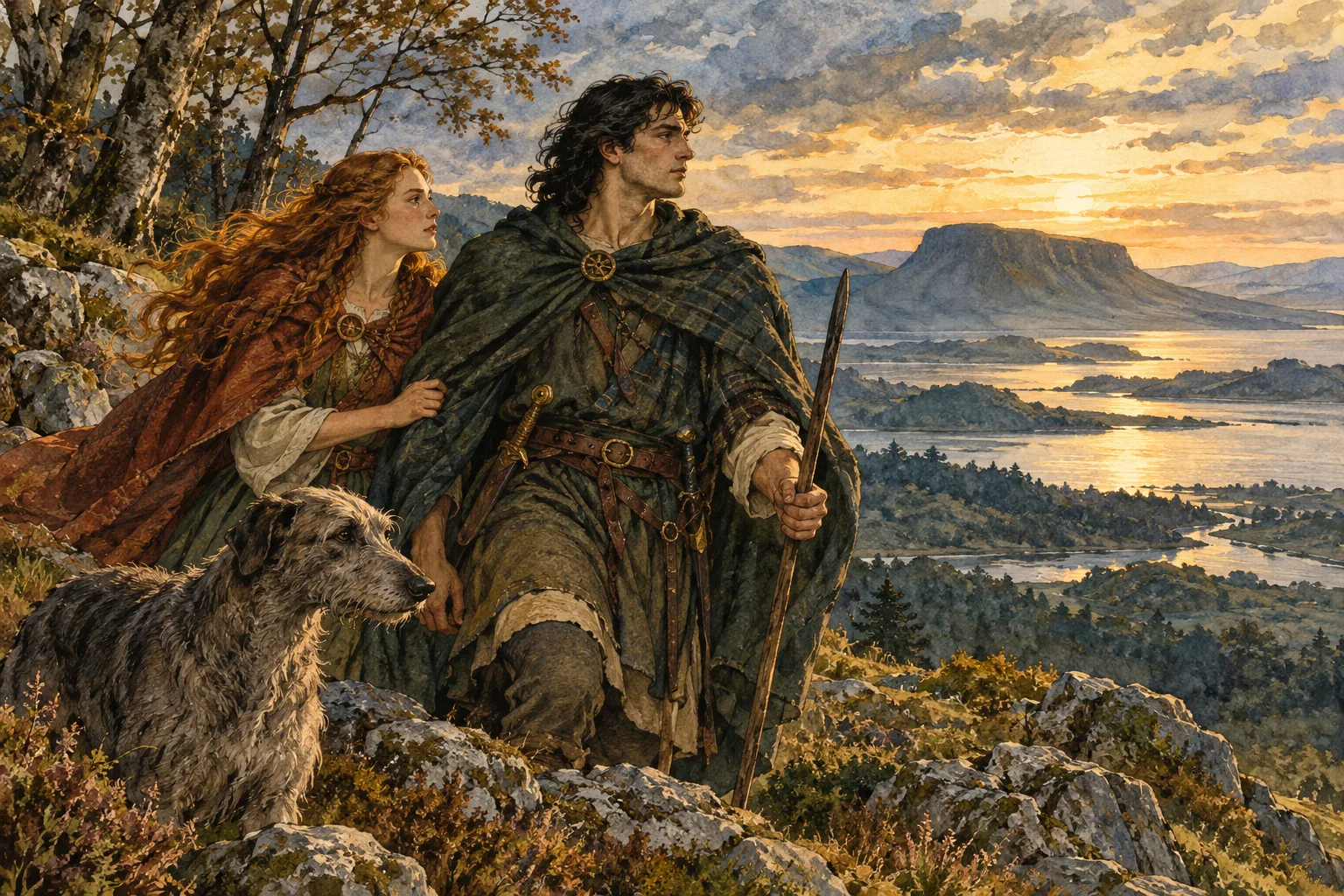
Diarmuid Ua Duibhne is a hero whose loyalties can become traps. He belongs to Fionn’s company, yet his best-known story makes Fionn his pursuer. His beauty draws attention, but the decisive choices are shaped by promises, obligations, hospitality and the demands of other people. The connected stories offer more than a romance: they ask what a warrior owes his leader, a woman seeking his help, a guest and the person who once raised him. Gregory brings several of these strands together in Books VI–VII of Part II.
A foster-child of Aengus
Gregory’s “Birth of Diarmuid” places him in the household of Aengus, whom she calls Angus Óg, at Brugh na Bóinne. His father is Donn and his mother Crochnuit. Aengus’s affection for the child establishes a relationship that matters long after childhood: in the pursuit story, this Otherworld foster-father protects Diarmuid and Gráinne. The association connects the figure to the Boyne and Brú na Bóinne, while the supernatural household remains part of the narrative, not an archaeological identification of an occupant.
Beauty and hospitality
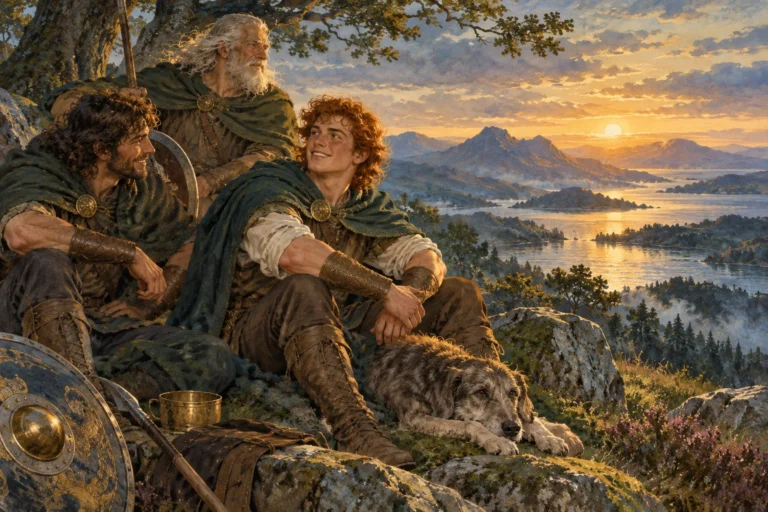
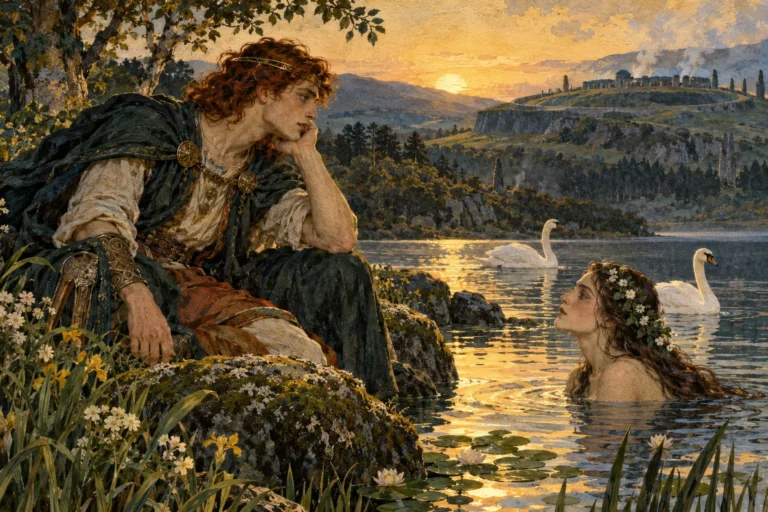
In “How Diarmuid Got His Love-Spot”, four hunters encounter a strange house, a powerful sheep, a cat and a young woman who is Youth herself. She touches Diarmuid’s forehead and leaves the mark that causes women who see it to love him. This is one particular explanation of his irresistible appearance, not a biological detail to rationalise or a single origin to impose on every account.
Another story makes his welcome to a stranger more important than appearance. In “The Daughter of King Under-Wave”, an alarming, dishevelled woman asks for shelter beneath the warriors’ covering. Fionn and Oisín refuse; Diarmuid lets her in and brings her to the fire. Read beside the love-spot episode, it shows two different ways in which an unexpected woman can test a hero.
The pursuit of Diarmuid and Gráinne
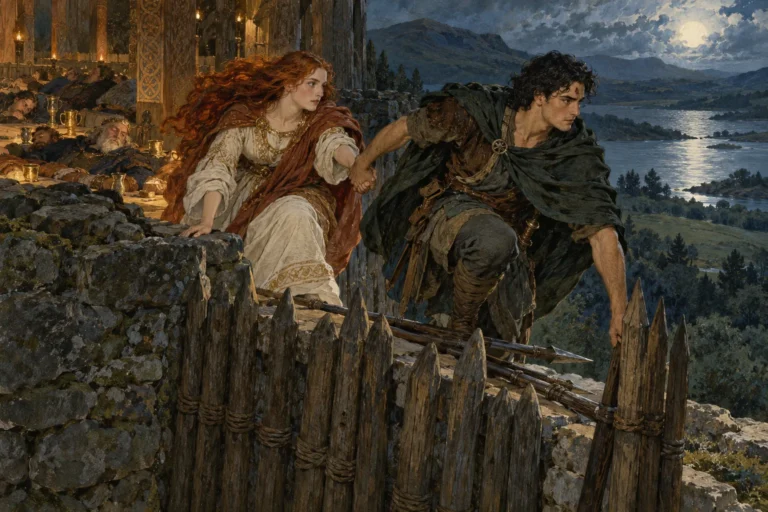
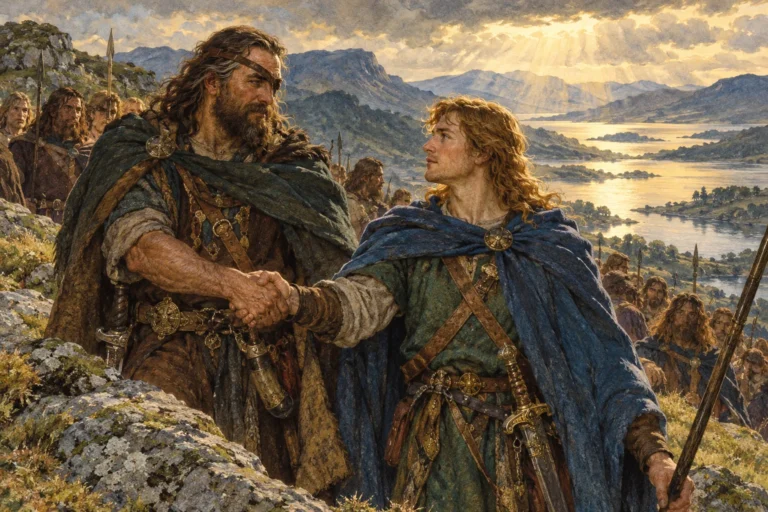
At Tara, Gráinne is promised to Fionn but asks to leave with Diarmuid. His first reaction is refusal: he would be betraying his leader. She places a binding obligation upon him, and the flight begins. In the UCC excerpt of the Pursuit, §1.7, her request to Oisín precedes the appeal to Diarmuid. That sequence matters because it prevents us from assuming every telling begins with an uncomplicated, mutual love affair.
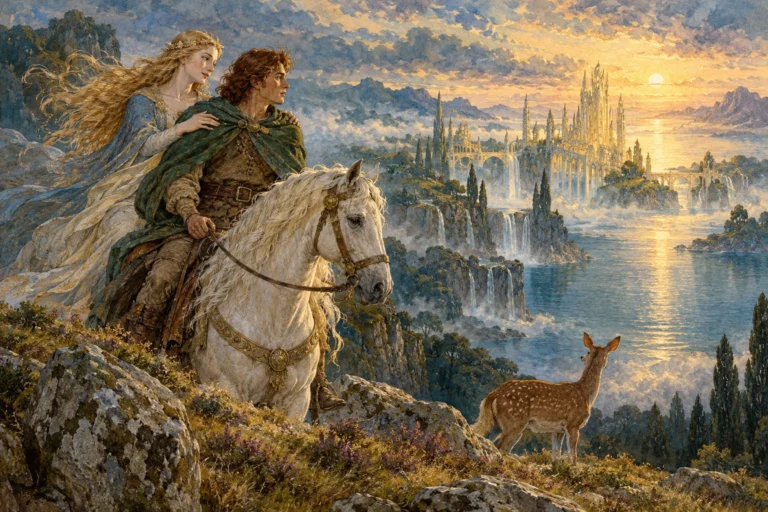
The long pursuit story repeatedly makes survival depend on companionship, concealment and negotiated protection. Aengus helps the fugitives. Fionn’s own warriors can sympathise with them. Eventually peace is arranged and a family life becomes possible. In Gregory’s Book VII, the apparent settlement makes the later tragedy more painful: the danger survives the formal reconciliation.
The hunt that peace cannot prevent
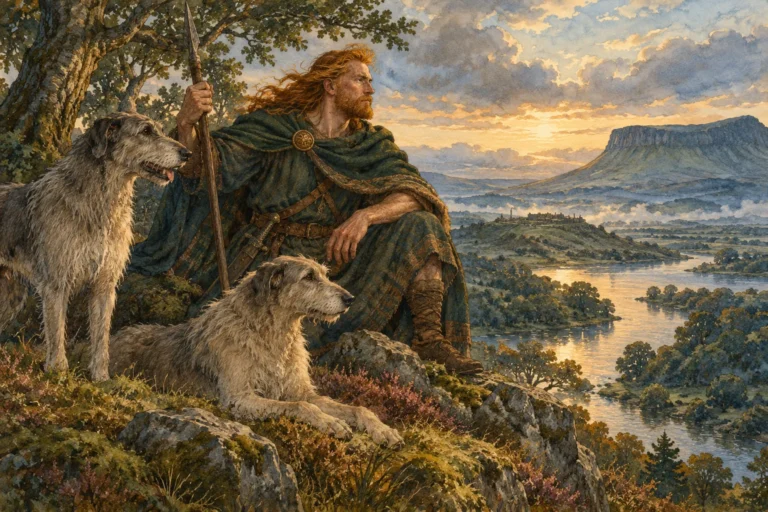
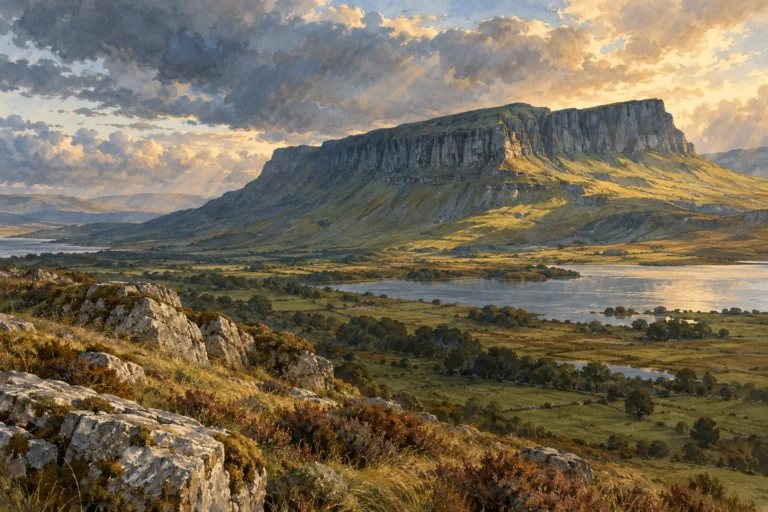
At Benbulben, a boar mortally wounds Diarmuid. Fionn can bring healing water in his hands, but resentment delays him. By the time he returns with it, rescue is impossible. Aengus takes charge of Diarmuid’s body. This account gives the death both a supernatural setting and a recognisable human failure: aid that is deliberately delayed becomes aid denied. Gregory, Book VII, chapter VIII; compare Joyce’s “The Pursuit of Dermat and Grania”, closing episode.
Diarmuid’s story continues in the grief and choices of those left alive. Some modern retellings stop before that aftermath. Following the named sources, rather than a single familiar summary, lets readers see why his death changes Fionn’s character, Gráinne’s position and the bonds holding the Fianna together.
Versions and variations
A love-spot is not the whole explanation: Gregory supplies a separate origin story in which Youth gives Diarmuid his mark. Her Tara narrative then makes the sight of that mark part of Gráinne’s attraction. The directly examined Pursuit excerpt, §1.7, foregrounds her successive requests to Oisín and Diarmuid and the binding demand placed on the latter. The full editions must be compared before claims are made about every manuscript’s treatment of attraction.
After Diarmuid’s death: Gregory continues with Gráinne’s grief, Fionn’s approach to her and conflict involving her sons. Joyce’s preface to Old Celtic Romances explicitly says he omitted the concluding material concerning Gráinne and her sons because he judged it inferior. Its absence from his story is therefore an editorial decision, not evidence that his version independently preserves a kinder original ending.
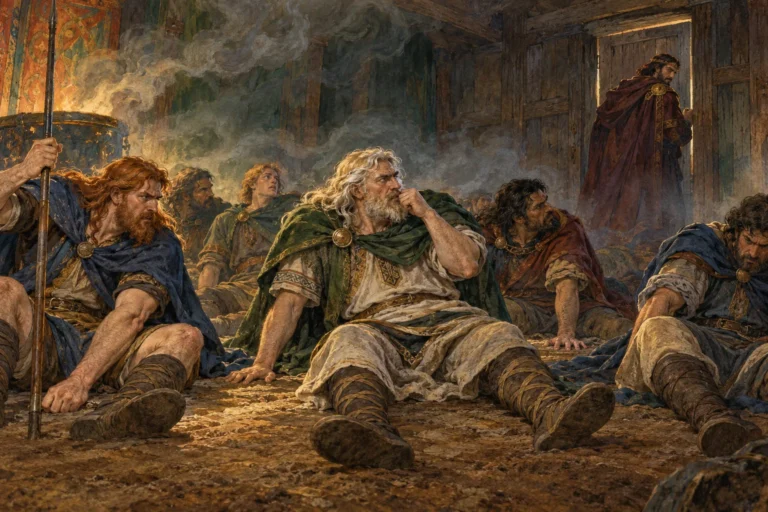
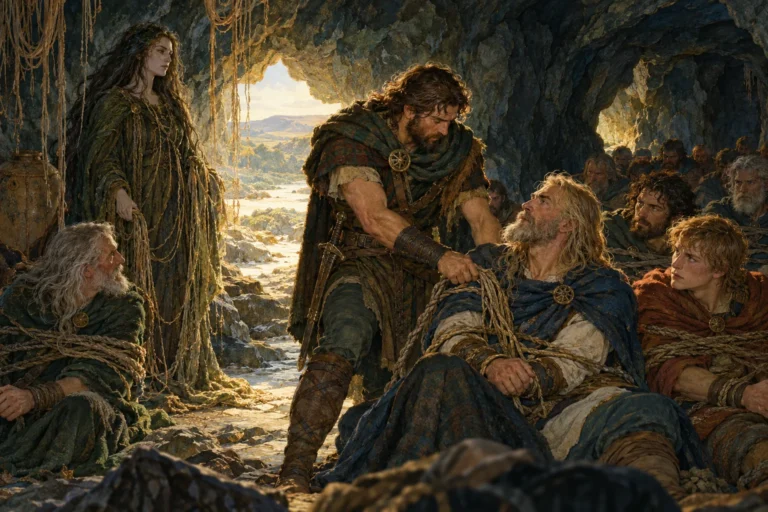
The hero beyond the pursuit: the love-spot, the guest from under the sea and the trapped warriors at Kesh belong to different tales. They enrich the figure guide without becoming additional episodes that every telling of his life must contain.
Context and evidence
The sources examined present Diarmuid through heroic narrative, not a contemporary personal record. Named landscapes help readers trace the tradition, but an association with Tara, Brú na Bóinne or Benbulben does not by itself establish a historical resident or a datable individual. Local monuments called “beds” of Diarmuid and Gráinne deserve individual pages when their folklore and archaeological descriptions can be checked separately. No unexamined monument or burial is identified as authentic here.
Sources for this entry
- Lady Gregory, Gods and Fighting Men. First published 1904; consulted 1905 edition via Project Gutenberg. Part II, Book VI, chapters I–III; Book VII, chapters I–VIII; Notes III. Read source — Principal connected guide; birth, love-spot, hospitality opening, pursuit and aftermath examined. About this book
- Anonymous; English translation by Standish Hayes O’Grady, Tóruigheacht Dhiarmada agus Ghráinne. O’Grady translation (1857), displayed by UCC Irish Sagas Online alongside Irish text. §§1.7 and 1.10–12; §2.35; editorial introduction and route summary. Read source — Directly examined excerpts for the flight, obligation and settlement; not claimed as a full manuscript collation. About this book
- P. W. Joyce, Old Celtic Romances. Consulted 1920 edition; first published 1879. Preface, pp. xv–xvi; The Pursuit of Dermat and Grania, pp. 274–350, especially pp. 334–350. Read source — Death narrative and explicit explanation of abridged ending. About this book
- Anonymous; translated by Standish Hayes O’Grady, The Enchanted Cave of Keshcorran. Silva Gadelica II (1892), pp. 343–347. §12. Read source — Diarmuid among the weakened companions who decline the renewed combat. About this book
Research coverage
This guide joins directly examined narratives and explicit editorial differences. It is not a full survey of Diarmuid’s Irish and Scottish traditions. The complete critical Pursuit edition, Scottish death lays and individually documented local monuments remain priorities.
The Myths · Irish collection · Editorial approach
Further Reading