Ulster Cycle · figure
Cú Chulainn
The young defender of Ulster: a hero whose stories combine extraordinary strength, fierce obligations, friendship, grief and a death that later readers repeatedly reimagined.
Also found as: Cúchulainn · Cu Chulainn · Cuchulain · Cuchullin · Cú Chulaind · Sétanta · Setanta · Hound of Ulster · Hound of Culann
Research reviewed 17 October 2026.
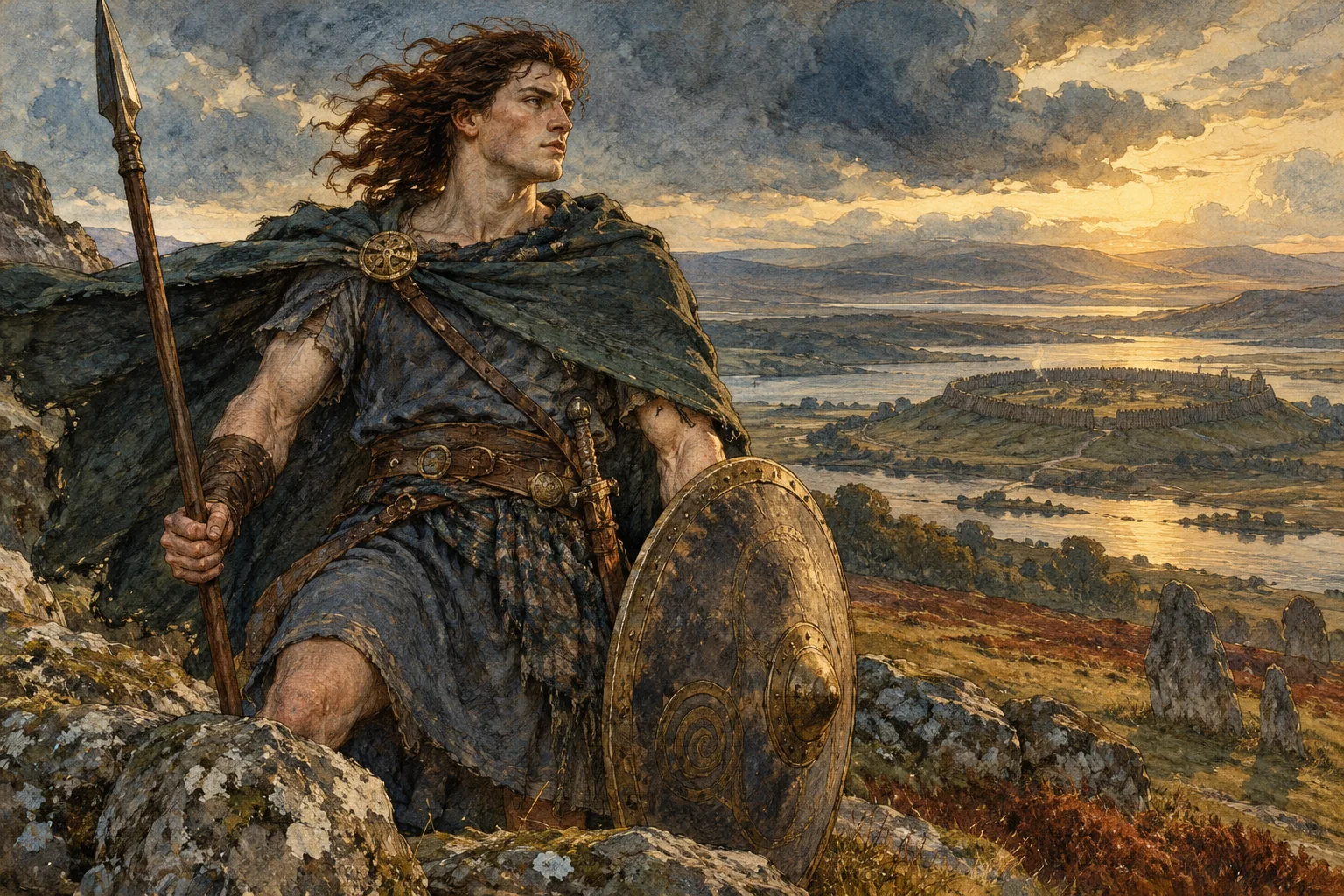
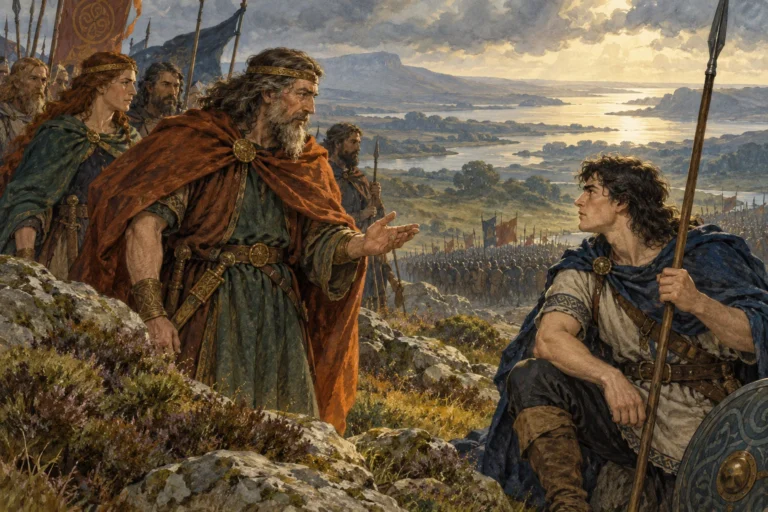
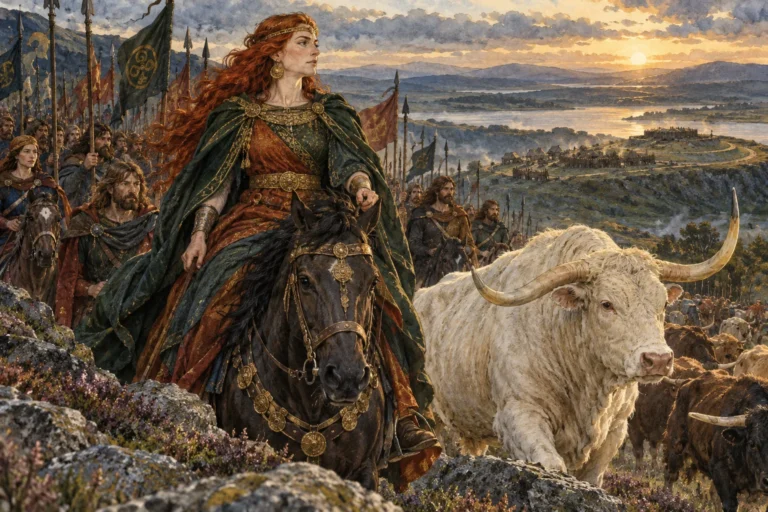
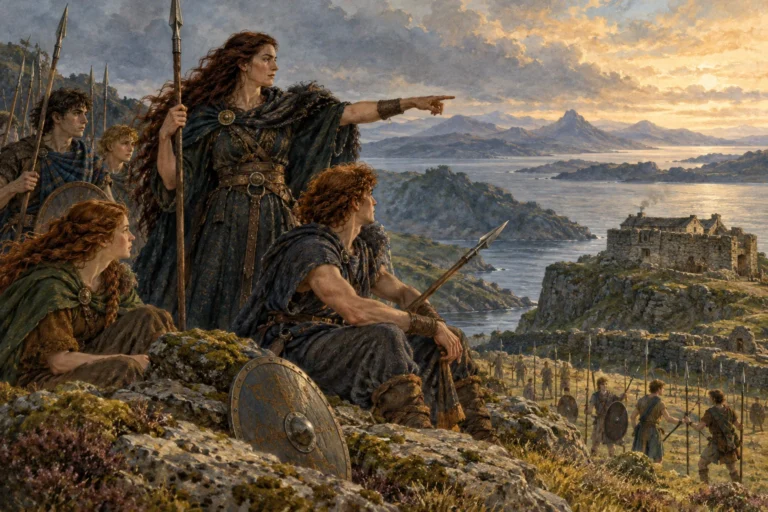
Cú Chulainn is one of the principal heroes of the Ulster Cycle, the body of stories associated with Conchobar’s court and its rivals. His best-known role is in the Táin Bó Cúailnge, the cattle raid of Cooley. The army seeking the bull encounters a defender whose youth gives little indication of his terrifying power. The stories also show him making promises, loving companions and suffering consequences that strength cannot undo.
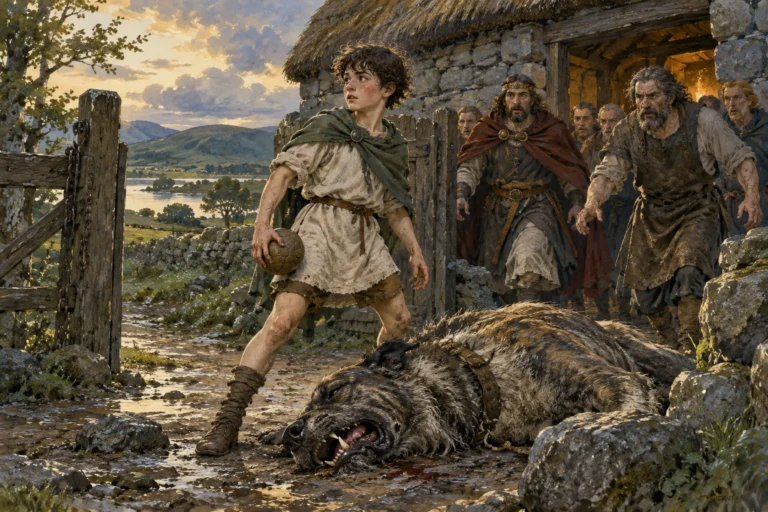
His boyhood name is Sétanta. In the story of Culann’s hound, he kills a smith’s guard dog and offers to protect the property until another can be trained. The resulting name, Cú Chulainn, means Culann’s Hound. Even this familiar episode has alternatives: one account stresses his bare hands, another the ball, and the transmitted texts do not agree about his age. A figure page should therefore lead readers to the evidence, rather than flatten those differences into a definitive childhood. Faraday’s boyhood account.
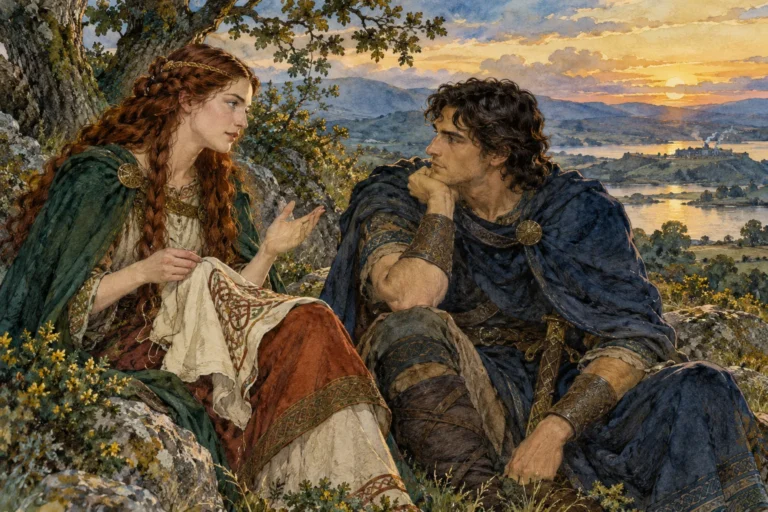
The people around him form a network rather than a single unchanging family tree. Deichtine is his mother; Sualtaim belongs to his human parentage, while Lug has an otherworld role in the tradition. Conchobar is the king around whose court much of the narrative moves. Emer is central to the wooing and marriage story; Scáthach to his training; Láeg to his life in the chariot and on the battlefield. Ailbhe Mac Shamhráin’s Dictionary of Irish Biography entry; Meyer’s translation of The Wooing of Emer.
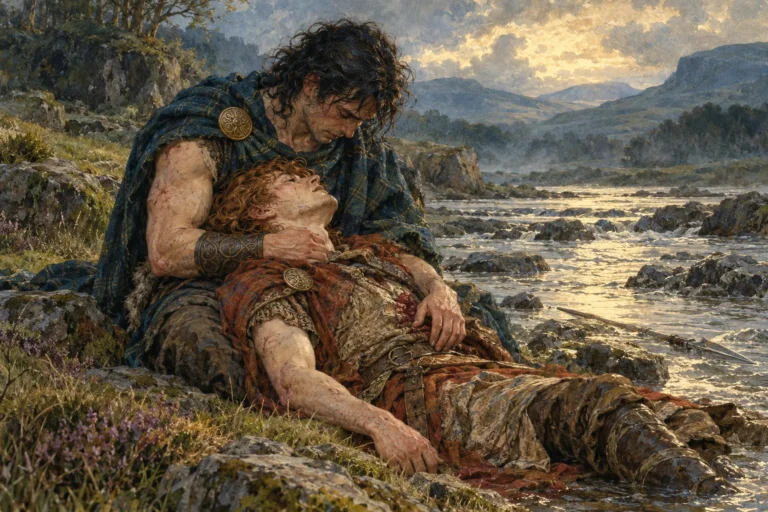
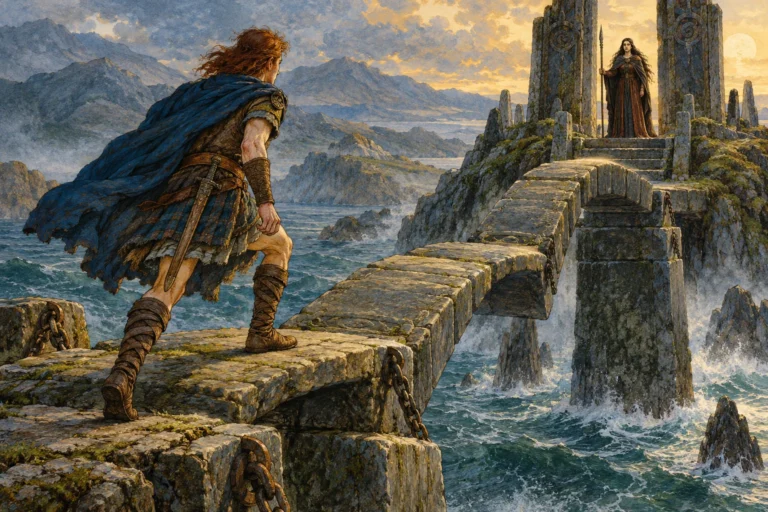
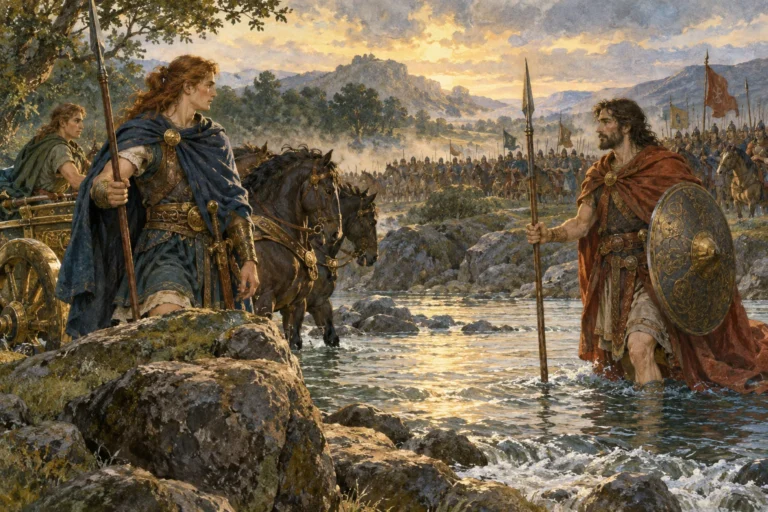
In his combat with Ferdiad, the opponent is a companion trained in the same arts. The duel draws its force from their shared life and from the pressures that overcome their bond. In the death-tale, his enemies exploit the demands of honour, while the dying hero binds himself upright to a stone. These stories make a useful starting cluster because they let readers follow the same figure through changing kinds of obligation.
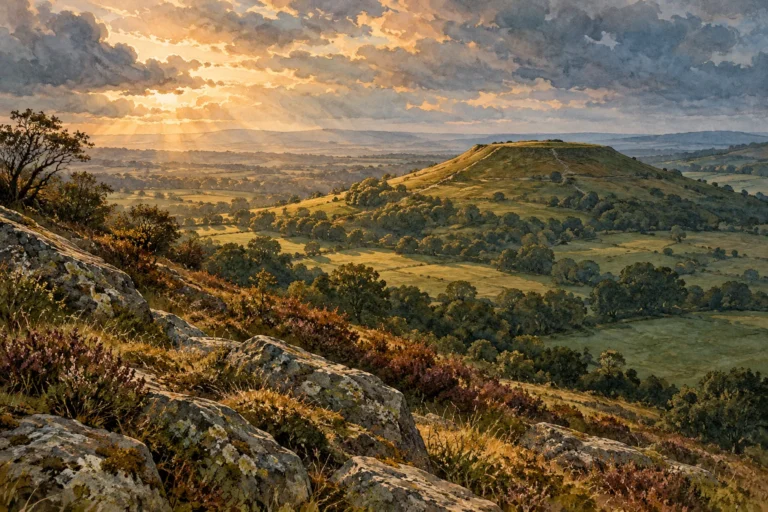
His geography also needs its own entries. Emain Macha / Navan Fort is a real place associated with the court; Mag Muirthemne and Cooley provide other narrative landscapes. Archaeology can establish occupation, building and ritual at a place. It cannot, by that fact alone, verify a named hero or a particular duel. No evidence examined for this profile establishes Cú Chulainn as an identifiable historical person. Official Navan Fort record.
Lady Gregory’s Cuchulain of Muirthemne is an important route into these stories, but it arranges several authorities into a continuous literary life. Read it beside the separate medieval tales and their translations. The cluster now includes his birth traditions, the Wooing of Emer and Connla’s death, with separate guides to Emer and Scáthach. These make it possible to compare the hero’s relationships as well as his battles.
Versions and variations
A figure with several textual lives. “Cú Chulainn’s story” is not one book written at one date. The childhood material, wooing tale, Táin and death-tales have their own manuscript histories. A detail appearing in Gregory’s continuous narrative should be traced back to her named authorities wherever possible.
Biography versus evidence. The Dictionary of Irish Biography treats him as a legendary figure, discusses genealogical claims made about him, and notes that some oral tales have no surviving written exemplars. Such claims and oral survivals belong in the record, but they do not supply a verified birth date or a historical family tree.
How to read this cluster. Start with the linked stories, then compare their source panels. Record an account’s language, manuscript or collector, edition and relationship to earlier works. Similar spelling is not proof of identity; a changed spelling is not proof of a new character. Future comparisons should distinguish inherited story elements from an adapter’s selection, compression or invention.
Context and evidence
A useful historical question is not only whether the hero existed, but what the stories reveal about the societies that told and copied them. David Emmet Austin Taylor’s doctoral research argues that medieval Irish literary heroes were shaped by the warrior aristocracies of their authors’ world. That is a scholarly interpretation of the literature, not identification of a historical Cú Chulainn. Taylor, thesis abstract, 2023.
The profile should grow as the story dossiers grow. A claimed connection belongs here only when it can lead to a named text, documented oral account or clearly attributed study.
Sources for this entry
- Ailbhe Mac Shamhráin, Cú-Chulainn. Dictionary of Irish Biography, Royal Irish Academy, October 2009. Biographical entry; DOI 10.3318/dib.002268.v1. Read source — Scholarly overview of the legendary figure, genealogical claims and oral traditions..
- Anonymous; translated by Kuno Meyer, The Wooing of Emer. Archaeological Review 1 (1888), pp. 68–75, 150–155, 231–235, 298–307; CELT T301021. Opening account and training/wooing narrative. Read source — Checked primary tale in translation for relationships and training context; not fully collated for this profile..
- Lady Gregory, Cuchulain of Muirthemne: Notes by Lady Gregory. London: John Murray, 1902. Opening editorial statement and individual tale source lists. Read source — Evidence for the construction of Gregory’s continuous biography.. About this book
- Department for Communities, Northern Ireland, Navan Fort. Official heritage-site information; accessed 17 October 2026. About Navan Fort. Read source — Identification of the archaeological place associated with Emain Macha..
- David Emmet Austin Taylor, Heroes and heroism in medieval Irish literature. PhD thesis, University College Cork, 2023. Repository abstract only. Read source — Attributed modern interpretation. The full thesis was not reviewed for this entry..
Research coverage
A growing guide to the linked childhood, birth, courtship, training, Connla, Ferdiad and death accounts. The Mórrígan, championship tales, broader Scottish material, local folklore and modern reception remain further research tasks. Each linked entry identifies its examined sources and remaining gaps.
The Myths · Irish collection · Editorial approach
Further Reading