figure · England
Robin Hood
Archer, trickster, generous host and dangerous outlaw: Robin changes as ballads, plays and books give him new lives.
Also found as: Robyn Hode · Robin of Sherwood · Robert of Huntingdon · Robin of Loxley. Research reviewed 18 October 2026.
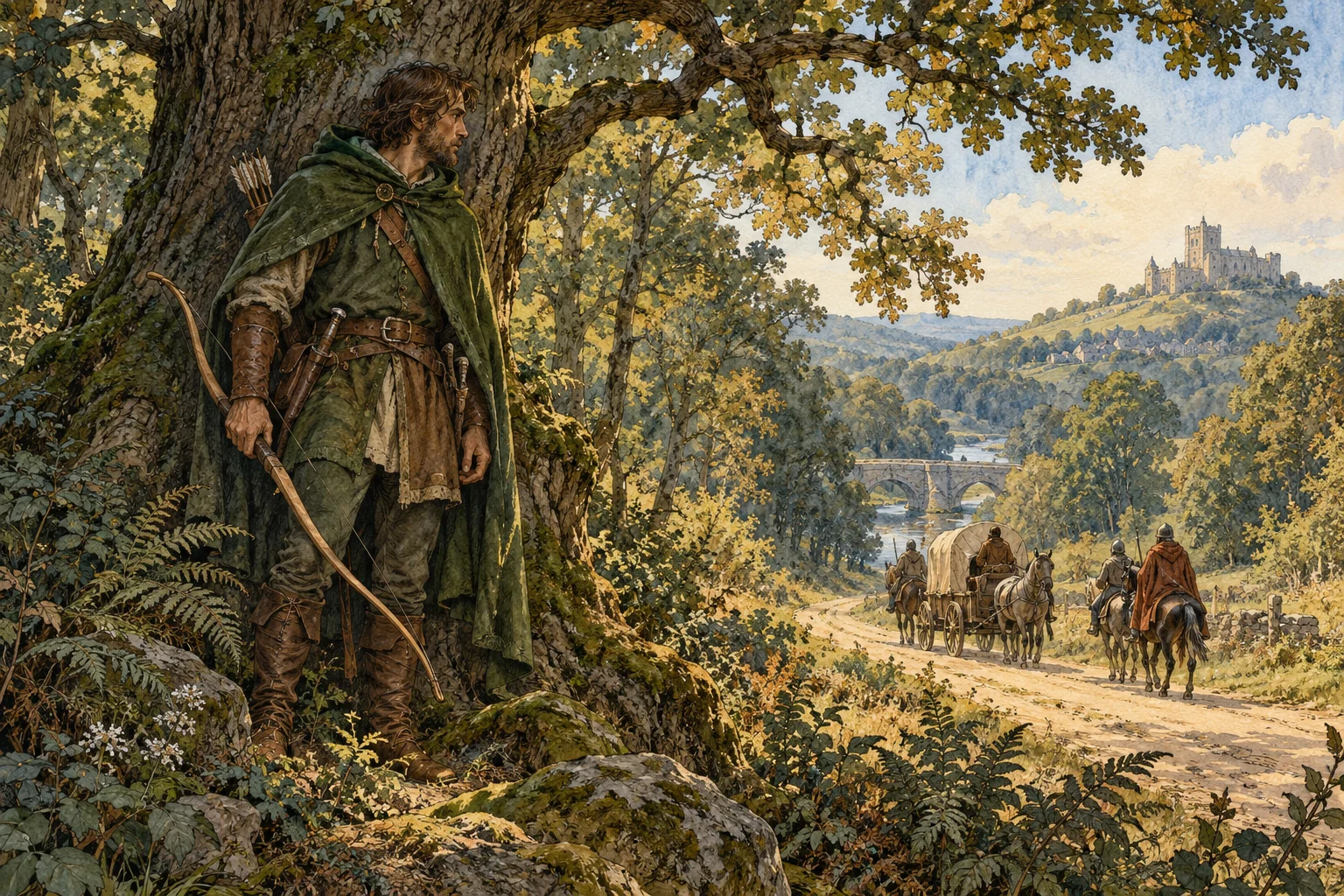
Robin Hood belongs to a long tradition rather than a single fixed adventure. The early ballads present a yeoman and his companions living beyond official authority, entertaining travellers, demanding money, fighting the sheriff and sometimes helping people in need. Later works add explanations for his outlawry, noble ancestry, a fuller romance with Marian and a place in the reign of Richard I.
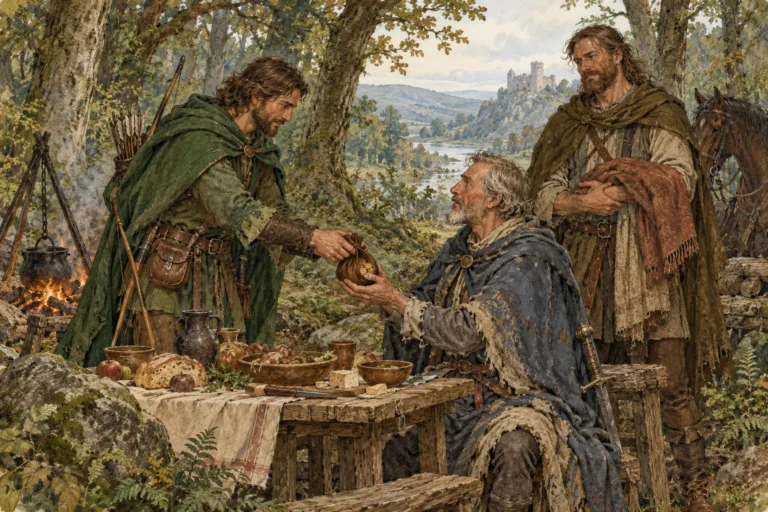
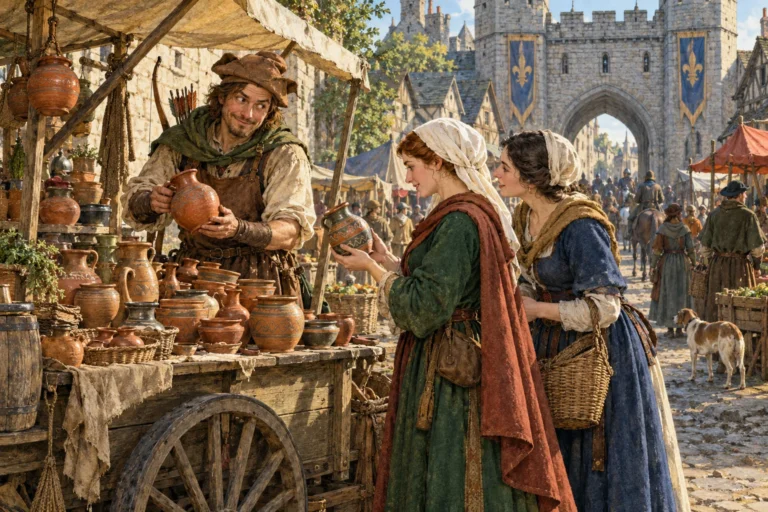
Start with the potter for comedy, the Monk for a difficult story of loyalty, or the poor knight for the generosity of the Gest. Together they show why a single description of Robin can be misleading. He gives freely, but also demands an unjust toll; he inspires devotion, but loses his temper with John.
The men around him matter as much as his bow. John can rescue, correct or defeat him. The sheriff’s household can become the scene of a joke. A stranger with a staff or a friar beside a stream can overturn the usual balance of power. Robin’s appeal includes his ability to recover from being made ridiculous.
Versions and variations
The yeoman and the earl
The Gest opens by calling Robin a yeoman. In the Marian broadside printed as Child 150 he is the Earl of Huntington. Pyle makes him a yeoman who later receives an earldom from Richard. These are different ways of assigning him rank, not evidence of a documented promotion shared by all versions. Gest, opening; Marian ballad, stanza 4; Pyle, epilogue.
Edward and Richard
The king in the Gest is Edward. Pyle’s visit to the greenwood belongs to Richard. An unnamed king in another ballad should not be assigned a name merely to make the stories agree.
The woodland company changes
John, Much and Scathlok appear in early surviving material. Marian and Tuck have their own histories through drama, festivities and later ballads. Read Marian and Tuck separately before treating a modern cast list as an unchanging medieval band.
Context and evidence
The existence of Robin Hood stories is well evidenced; the identity of a person behind them is a different question. Our evidence guide distinguishes the date of a surviving text, the period in which it sets its action and the much harder task of matching a character to a documentary record.
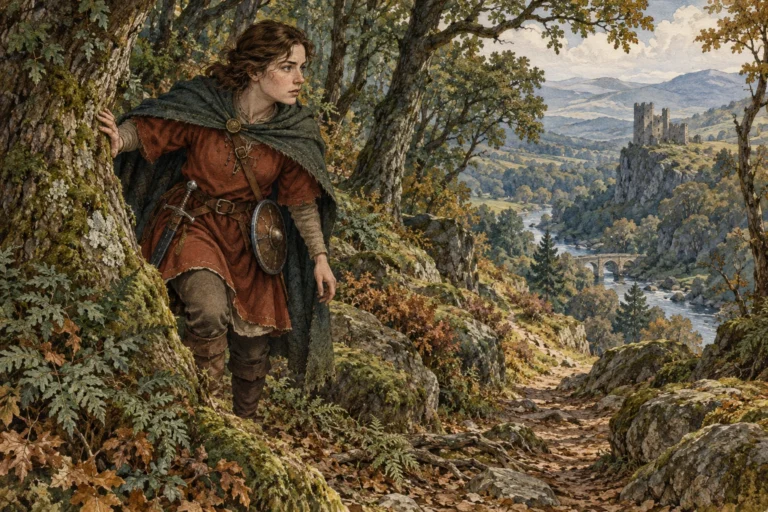
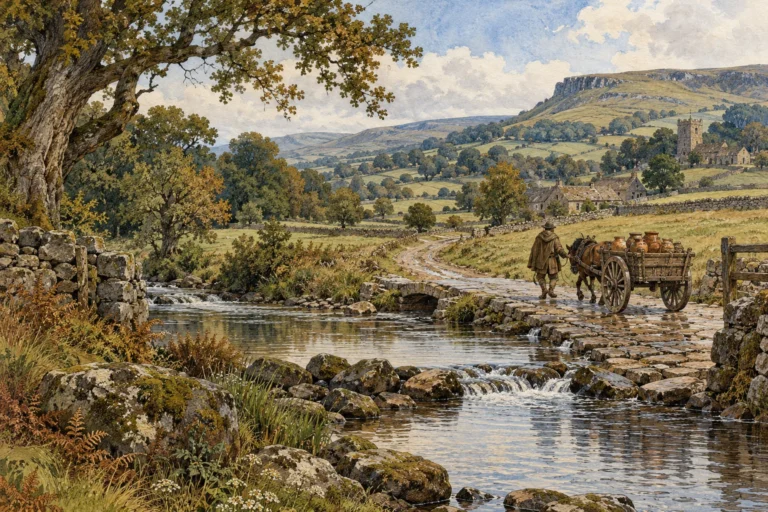
Barnsdale and Sherwood both belong in the collection. A story’s use of a real road, abbey or town can make it vivid without establishing that its events occurred there. Nor should a later place-name be used as proof of a medieval biography.
Sources for this entry
- Francis James Child, editor, The English and Scottish Popular Ballads, volume III. Boston, Houghton, Mifflin, 1888. No. 117; opening; king episode, fyttes VII–VIII; introduction. early character, rank and king. Read source · About this book
- Francis James Child, editor, The English and Scottish Popular Ballads, volume III. Boston, Houghton, Mifflin, 1888. No. 119; quarrel and rescue. loyalty and violence. Read source · About this book
- Francis James Child, editor, The English and Scottish Popular Ballads, volume III. Boston, Houghton, Mifflin, 1888. No. 121; toll demand and repayment. a morally mixed trickster. Read source · About this book
- Francis James Child, editor, The English and Scottish Popular Ballads, volume III. Boston, Houghton, Mifflin, 1888. No. 150; stanzas 4–13. noble Robin in the Marian ballad. Read source · About this book
- Howard Pyle, The Merry Adventures of Robin Hood. 1883; Project Gutenberg text. “King Richard Comes to Sherwood Forest” chapter title; epilogue. later royal framework and earldom. Read source · About this book
Research coverage
The named texts and selected editorial notes have been examined. This entry does not claim to collate every manuscript, broadside, oral performance or modern adaptation.
The Myths · Robin Hood collection · Editorial approach
Further Reading