figure · England
Little John
Robin’s towering companion is a fighter and a wit, but the older stories also make him the friend who acts when everyone else loses hope.
Also found as: Lytell John · Lytill Ihon · John Little. Research reviewed 18 October 2026.

Little John is already part of Robin’s company in the early surviving ballads. He is not merely an audience for his leader’s cleverness. He can win a wager, expose Robin’s misjudgement, negotiate with authority and bring a rescue to its conclusion.
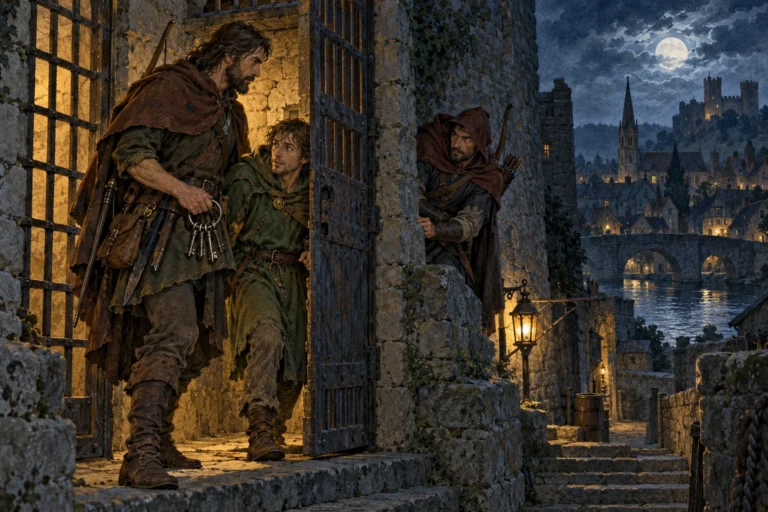
In the Monk, Robin strikes him after a dispute over shooting. John leaves, then returns to save him from imprisonment. The rescue does not erase the violence committed on the way: John kills the monk and jailer, while Much kills the page. At the end, John asks to be a fellow rather than accepting Robin’s offer of command.
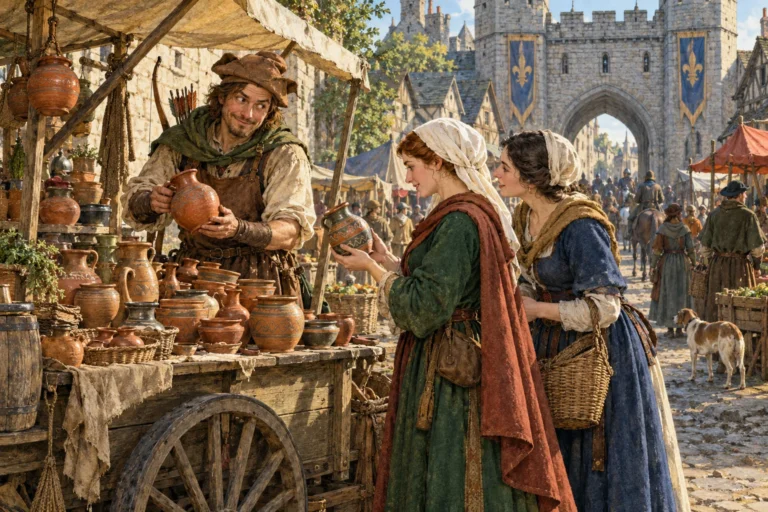
In the Potter, he knows the stranger’s strength from an earlier encounter at Wentbridge and wagers against Robin. In the poor knight episode, he is moved by the traveller’s predicament and measures out cloth with extravagant generosity. The same character can carry danger, comedy and compassion.
Versions and variations
A meeting story arrives later
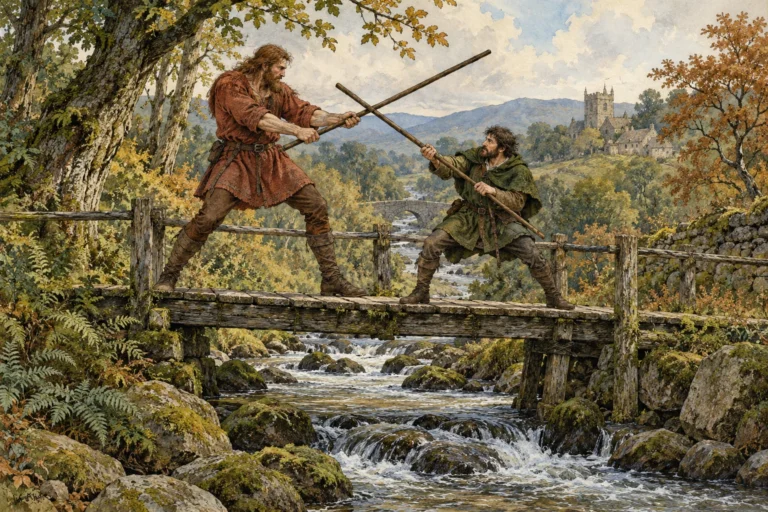
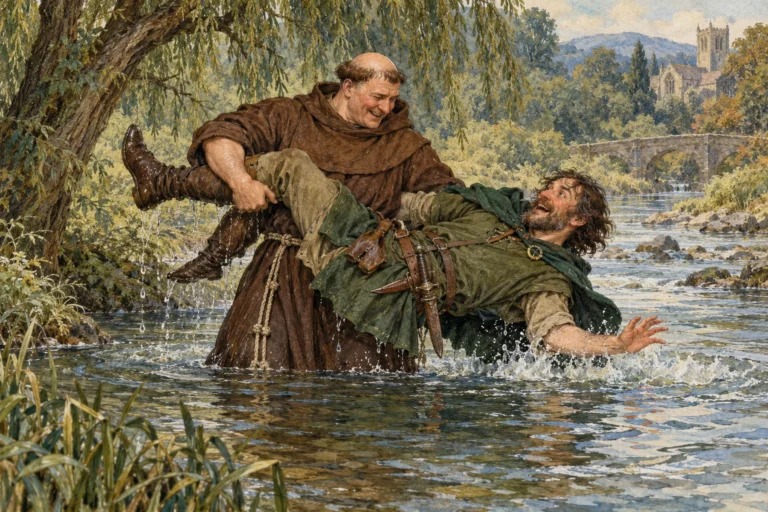
Child 125 explains that John Little becomes Little John after defeating Robin on a bridge. Its seven-foot stature and mock christening make the nickname memorable. The older Monk text does not give that origin. No. 125; No. 119.
Pyle’s skilled recruit
Pyle adds an archery test after the bridge fight and gives John an immediate place as Robin’s right-hand man. This helps a connected book introduce its principal companion. It is a literary elaboration of the meeting story. Opening chapter.
The companion at the end
In the death traditions John wants to avenge Robin by burning the religious house; Robin refuses. The later B text makes John the listener to the last requests about the bow and grave. The loyalty is continuous, while details of the final scene vary. A and B.
Context and evidence
John’s presence across stories is evidence of a durable character. It does not authenticate every later grave, birthplace or family name attached to him. This first guide has not assessed the Hathersage grave tradition or made an identification with a historical individual.
For a useful reading sequence, compare his refusal of subservience in the Monk with his cheerful acceptance of membership in the later bridge tale. Both make friendship central, but they imagine the relationship at different stages and for different audiences.
Sources for this entry
- Francis James Child, editor, The English and Scottish Popular Ballads, volume III. Boston, Houghton, Mifflin, 1888. No. 119; quarrel, rescue and conclusion. early role and fellowship. Read source · About this book
- Francis James Child, editor, The English and Scottish Popular Ballads, volume III. Boston, Houghton, Mifflin, 1888. No. 121; stanzas 6–21. Wentbridge and the wager. Read source · About this book
- Francis James Child, editor, The English and Scottish Popular Ballads, volume III. Boston, Houghton, Mifflin, 1888. No. 117; stanzas 61–81. generosity to the knight. Read source · About this book
- Francis James Child, editor, The English and Scottish Popular Ballads, volume III. Boston, Houghton, Mifflin, 1888. No. 125; meeting and naming. later origin tale. Read source · About this book
- Francis James Child, editor, The English and Scottish Popular Ballads, volume III. Boston, Houghton, Mifflin, 1888. No. 120; conclusions of A and B. last requests. Read source · About this book
- Howard Pyle, The Merry Adventures of Robin Hood. 1883; Project Gutenberg text. Opening chapter, archery test after the bridge fight. later expansion. Read source · About this book
Research coverage
The named texts and selected editorial notes have been examined. This entry does not claim to collate every manuscript, broadside, oral performance or modern adaptation.
The Myths · Robin Hood collection · Editorial approach
Further Reading