place · England
Barnsdale and Wentbridge
Yorkshire roads, a remembered staff fight and a knight’s debt place Barnsdale firmly in the Robin Hood tradition.
Also found as: Barnesdale · Bernesdale · Wentbridge · Robin Hood’s Well. Research reviewed 18 October 2026.
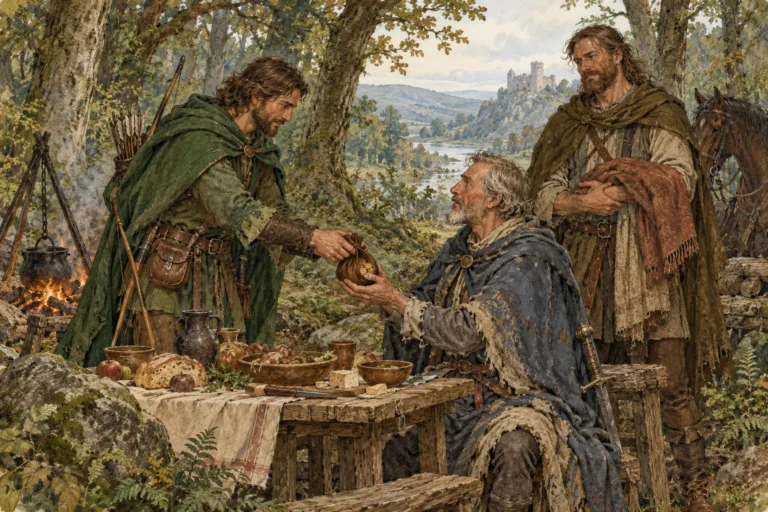
Barnsdale is central to the Gest. Robin’s company finds the distressed knight in its story landscape; after receiving help, the knight blesses Barnsdale and the men who have rescued him from ruin. The debt takes him onwards to St Mary’s Abbey at York. Fyttes I–II.
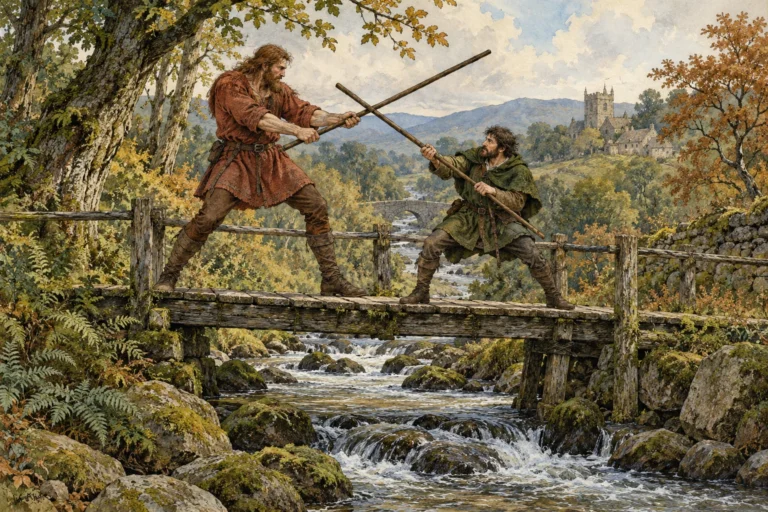
Wentbridge appears in the Potter when Little John explains why he respects the passing traveller: they have met there before, and John remembers the blows. It is a brief reference, but it gives this Yorkshire crossing a direct place in the ballad. It does not describe the later bridge fight in which John first meets Robin. Stanza 6.
Sidgwick’s geographical introduction places Barnsdale around the Great North Road district between Doncaster and Pontefract, with Wentbridge on the River Went. Barnsdale is not simply another spelling for the town of Barnsley. The region, the crossing and individual monuments need to be kept distinct. Geographical introduction.
Associations and distinctions
Two woodland centres
The Gest and the Monk do not organise Robin’s geography in the same way. Sherwood is named as the refuge after the Monk rescue, while Barnsdale anchors the knight’s story. The collection records each association rather than choosing one place for every text.
Robin Hood’s Well is a later structure
Historic England dates the ornamental well cover at Burghwallis to about 1710 and attributes it to Sir John Vanbrugh for the Earl of Carlisle. It also records twentieth-century relocation. This is evidence for the structure’s history, not for Robin drinking there in the Middle Ages. List entry 1314882.
Context and evidence
A place-name in a ballad is a textual association. A dated well cover is a material object. A modern claim about a particular outlaw is a historical hypothesis. Combining all three without showing the steps would make the evidence seem stronger than it is.
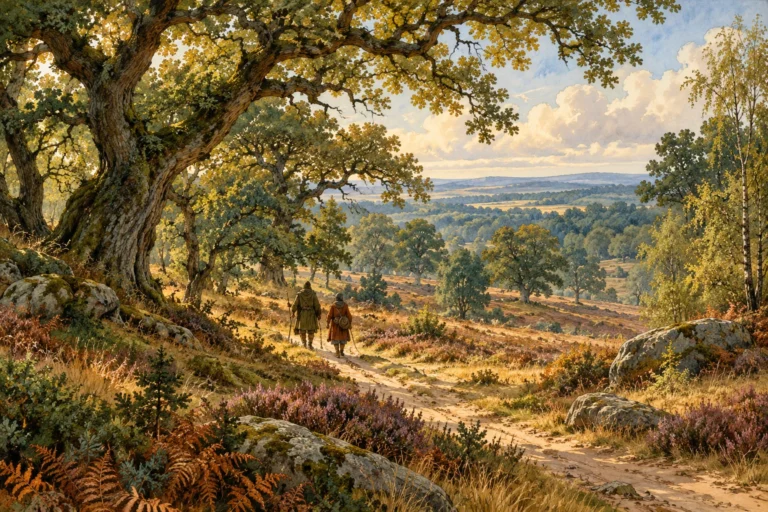
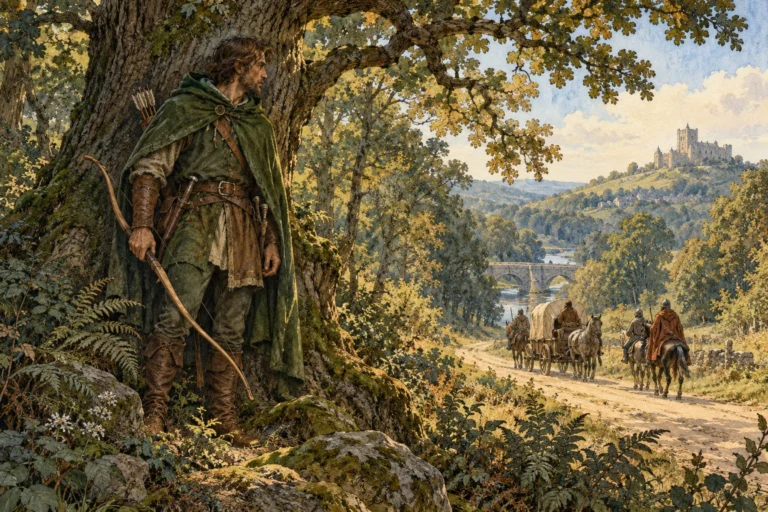
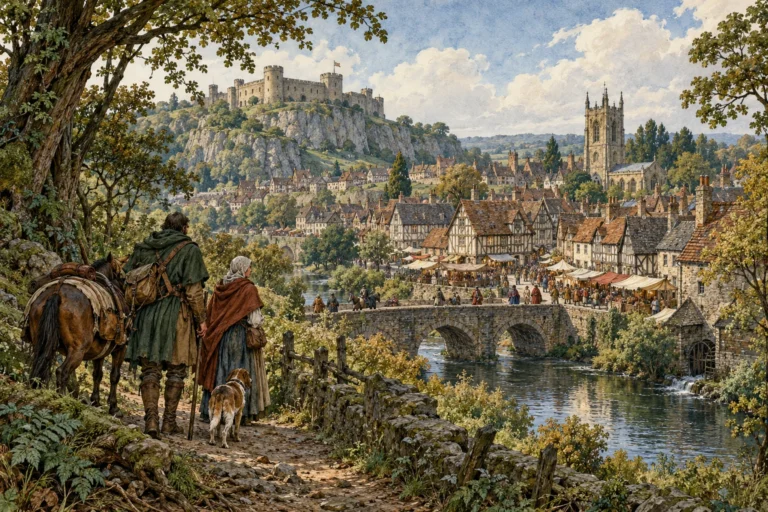
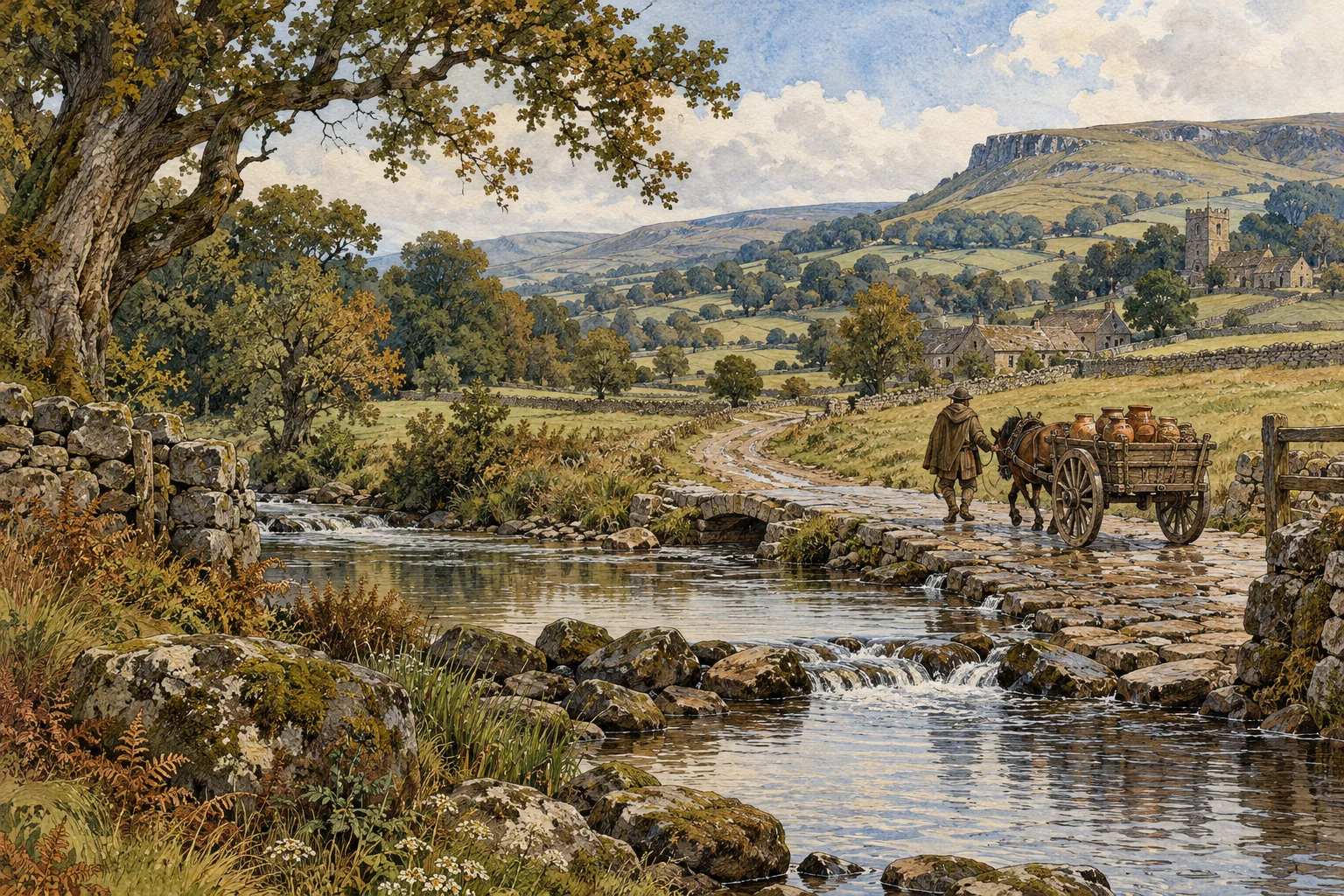
The landscape illustration is an imagined Yorkshire crossing, not a surveyed reconstruction of medieval Wentbridge. This guide does not locate Robin’s camp, identify his birthplace or claim to have checked every local Robin Hood place-name.
Sources for this entry
- Francis James Child, editor, The English and Scottish Popular Ballads, volume III. Boston, Houghton, Mifflin, 1888. No. 117; fyttes I–II, especially stanzas 82–85. Barnsdale and the York journey. Read source · About this book
- Francis James Child, editor, The English and Scottish Popular Ballads, volume III. Boston, Houghton, Mifflin, 1888. No. 121; stanza 6. Wentbridge reference. Read source · About this book
- Frank Sidgwick, editor, Ballads of Robin Hood and other Outlaws. Popular Ballads of the Olden Time, fourth series, 1912. Introduction, geographical discussion of Barnsdale, Wentbridge and Sherwood. regional orientation. Read source · About this book
- Historic England, Robin Hood’s Well, Burghwallis: list entry 1314882. Web page, consulted 18 October 2026. “Details”. date and relocation of the ornamental well cover. Read source
Research coverage
The named texts and selected editorial notes have been examined. This entry does not claim to collate every manuscript, broadside, oral performance or modern adaptation.
The Myths · Robin Hood collection · Editorial approach
Further Reading