Welsh fairy traditions · figure
Tylwyth Teg
The “fair family” encompasses varied Welsh encounters with dancers, neighbours and inhabitants of hidden places.
Also found as: Fair family · Fair folk
Research reviewed 18 October 2026.
A name for the fair folk
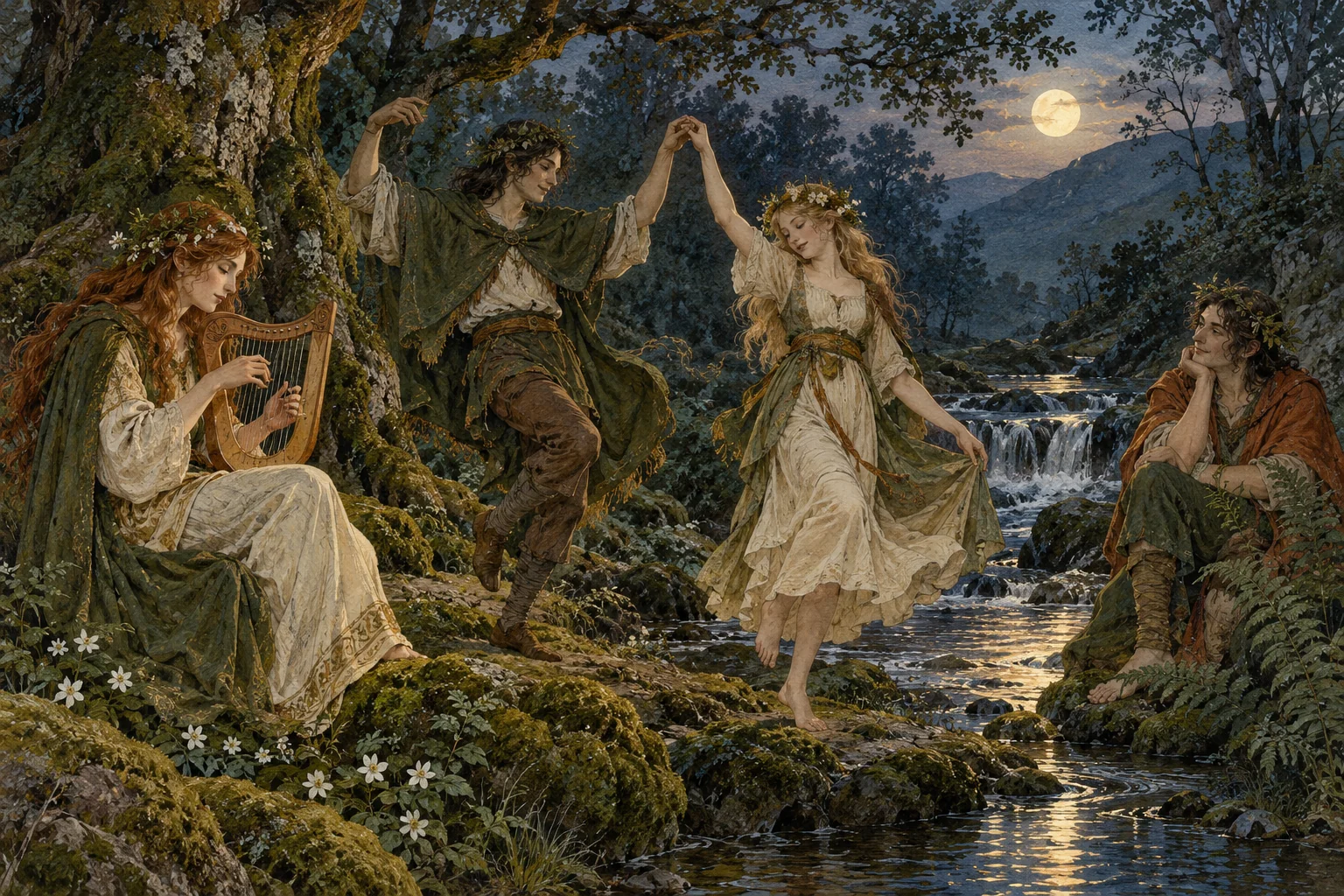
Wirt Sikes introduces Tylwyth Teg as a name for the fair family or fair folk. His book gathers encounters with beings who dance, make music, work around households, carry people away and receive human visitors. It is better read as a range of stories than as a single fixed description of a supernatural species.
Clothing, size and conduct vary. Beauty or a courteous collective name does not guarantee kindness. A traveller may be entertained, misled or unable to leave; a welcome may depend on respecting rules that the visitor does not fully understand.
Two ways into another world
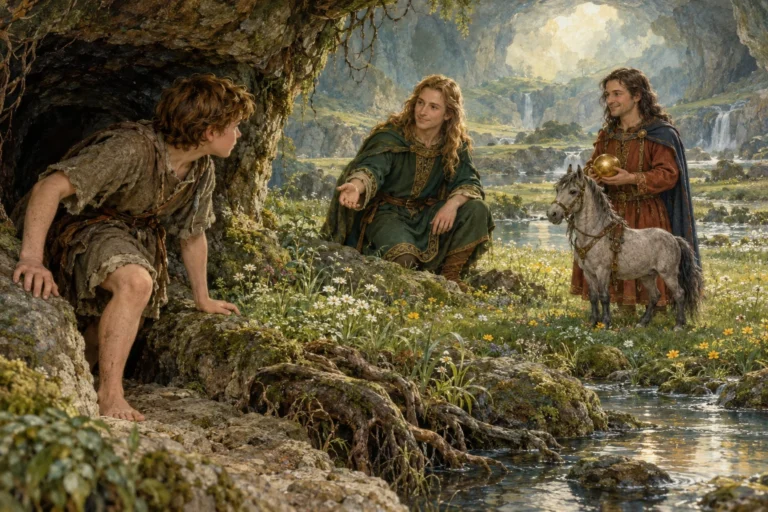
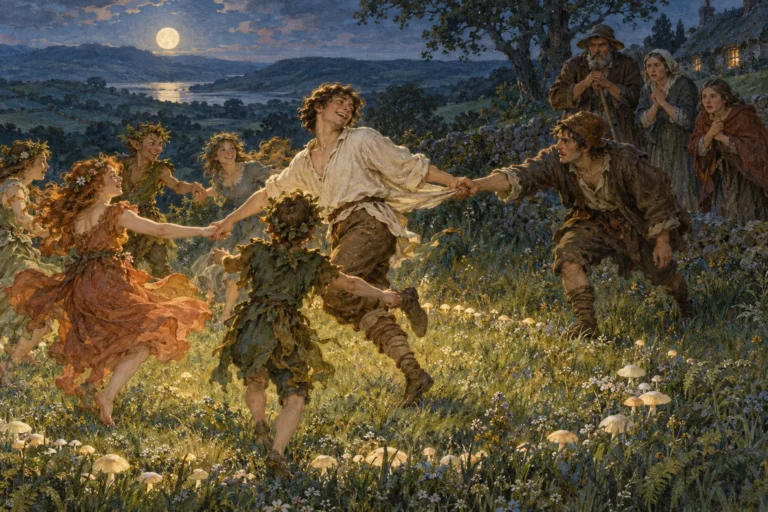
In Elidyr’s story, the boy learns the language of a small, truth-loving people and visits repeatedly until a theft breaks the relationship. In Rhys and Llewellyn, the boundary is a dance circle: outsiders cannot perceive it until they stand in the right relationship to its edge. These are different imagined encounters, not chapters of one consistent system.
Versions and variations
Medieval text and Victorian classification
Gerald of Wales’s Elidorus passage predates Sikes by centuries. Sikes places it within his discussion of Tylwyth Teg and quotes an English translation. Calling it a Tylwyth Teg story describes that later framing; it does not establish the original storyteller’s terminology.
Local names and overlapping categories
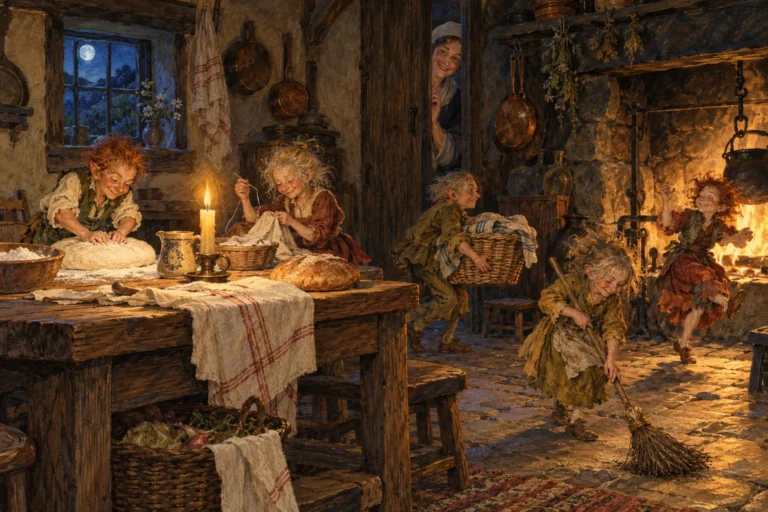
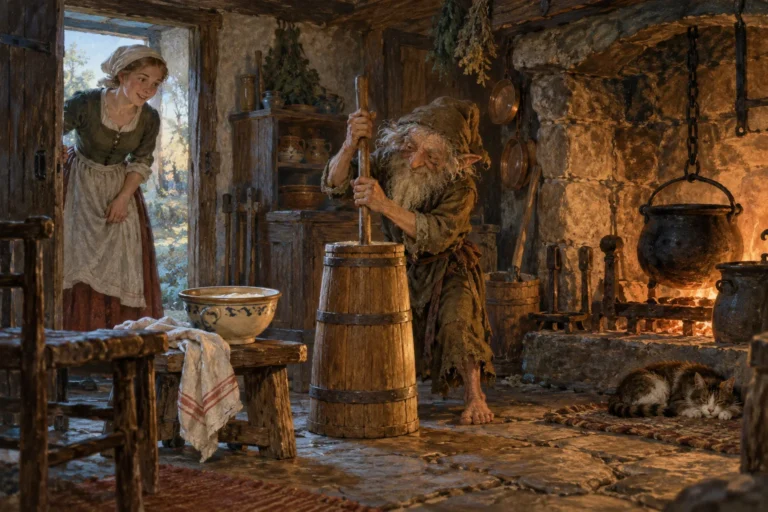
Sikes also uses words such as ellyllon and discusses household figures such as the bwbach. His categories are editorial arrangements, and the linked stories should retain their own names. The Pwca of Trwyn need not be rewritten as a generic fairy to make a connection.
Context and evidence
These accounts preserve literary choices, local associations and reported beliefs. They do not supply a uniform set of facts about beings independently observed. Nor does a nineteenth-century collector’s theory of origins become established history simply because it sits next to a tale.
The useful comparisons are specific: music, lost time, household work, gifts and restrictions. Follow those details through individual sources rather than assume that every Welsh supernatural figure belongs to one taxonomy.
Sources for this entry
- Wirt Sikes, British Goblins: Welsh Folk-Lore, Fairy Mythology, Legends and Traditions. London, 1880. Book I, chapter II and chapter VI, §§I, IV–V. Read source — Terminology, Elidurus, Rhys and Llewellyn and the separate farmer account. About this book
- Gerald of Wales; translated by Sir Richard Colt Hoare, The Itinerary of Archbishop Baldwin through Wales. Medieval Latin work, in Hoare’s English translation; Project Gutenberg transcription. Book I, chapter VIII, Elidorus passage. Read source — Earliest account examined here; Gerald reports what Bishop David told him about Elidorus. About this book
Research coverage
The passages named below have been read and compared. This entry does not claim to include every oral performance, manuscript witness or modern adaptation; unexamined leads are identified separately.
The Myths · Welsh collection · Editorial approach
Further Reading