Welsh mountain-lake folklore · place
Llyn Cwm Llwch
A glacial lake below the Beacons, remembered in stories of a vanished fairy island and a guardian who refuses to let its water be drained.
Also found as: Llyn Cwm Llwch lake
Research reviewed 18 October 2026.
The lake and its stories
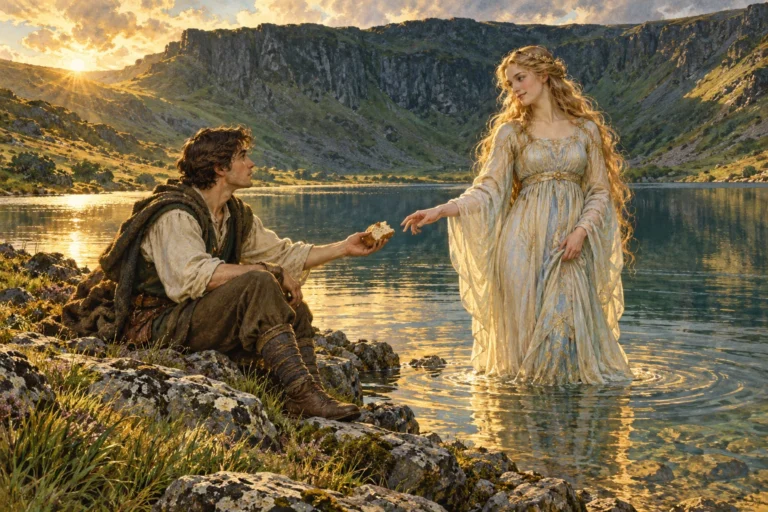
Two groups of stories gather around Llyn Cwm Llwch. One offers access to a hidden island, then withdraws it after a visitor takes a forbidden flower. The other tells of people digging at the lake’s edge and being threatened by a supernatural inhabitant.
Rhŷs keeps important differences visible. Ivor James reports a red-coated man sitting in an armchair on the water, while another account has an old woman. Thomas’s later literary telling gives the threatened flood to a giant and joins it to the lost-island story.
The lake is therefore more than a background. In the island episode it controls access to an abundant otherworld; in the draining episode it protects what lies beneath its surface and threatens the country downhill.
Geology beside tradition
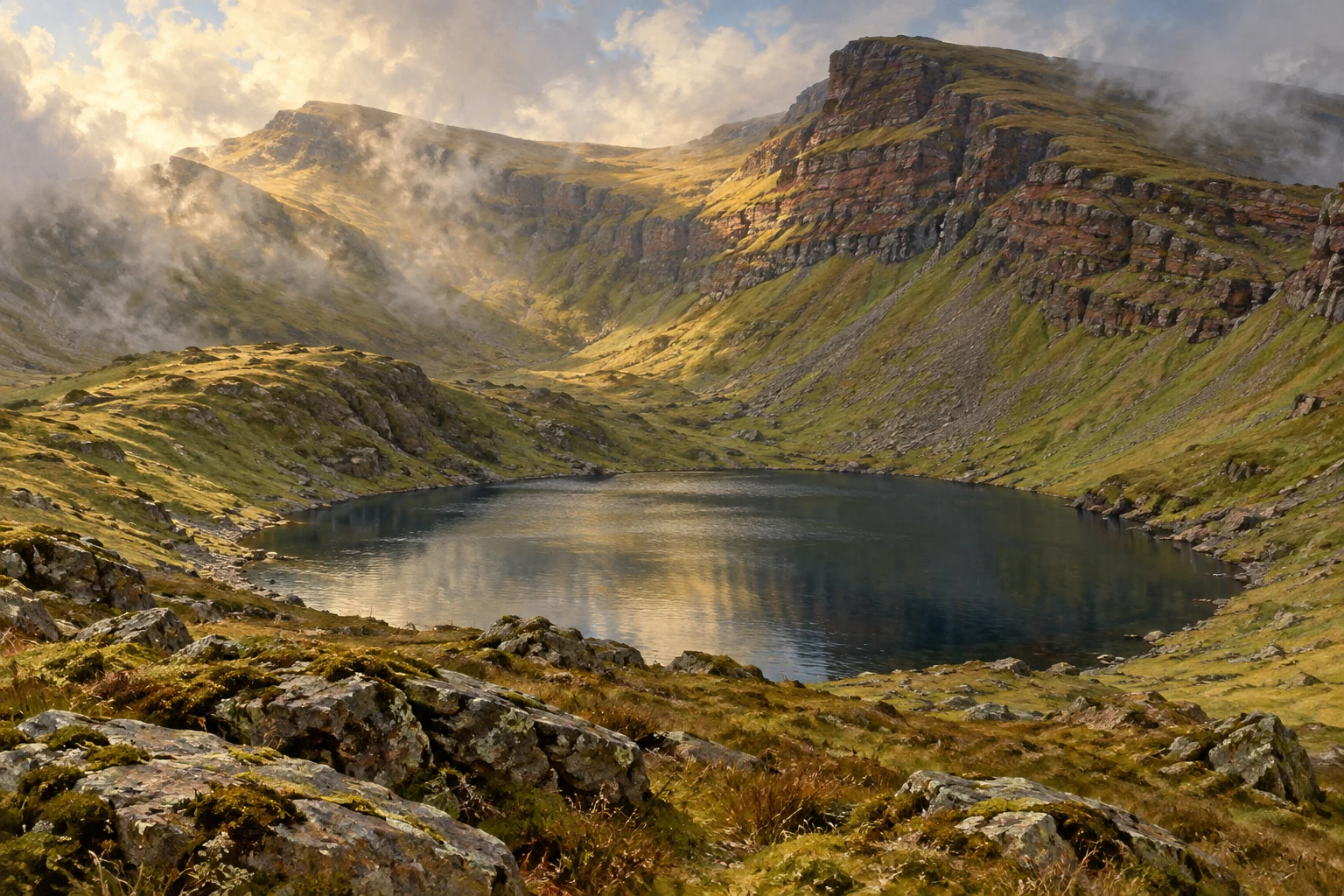
The British Geological Survey places the lake north-west of Pen y Fan, in a shaded valley head cut by a cirque glacier. Deposits left by the ice form the surrounding moraine. This offers a geological account of the basin without requiring a fairy island or buried treasure.
In Rhŷs’s discussion, Ivor James also considers the visible channel near the lake and a natural explanation associated with glacial debris. His letter is part of a historical conversation about the landscape, not a modern excavation report.
Thomas’s claim about a cat appearing in Llyn Syfaddon belongs to a separate story used to suggest a hidden water connection. No inspected geological evidence establishes that journey. Nor does an early reference to marvels at a mountain lake establish every detail of the later May Day doorway.
What can be located?
The lake can be identified; the fairy garden cannot. Its invisibility is part of the tale rather than a missing feature which an illustration should quietly add to the real landscape.
Similarly, the various guardians do not come with one consistent name or appearance. A red coat, an old woman and a giant are alternatives in particular sources. The place guide preserves them as alternatives instead of creating a composite monster.
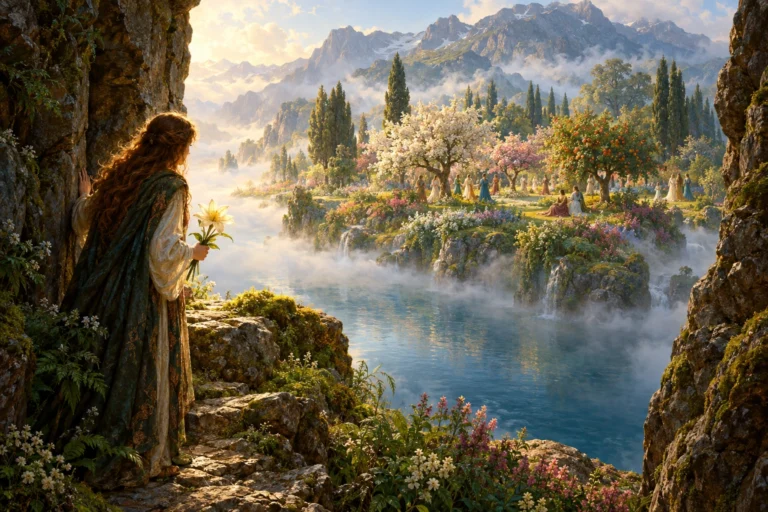
The naturalistic painting accompanying this page omits the island. The story entry has a separate imagined view of the fairy garden, so the two pictures serve different purposes: one evokes the lake’s physical setting, the other the narrated otherworld.
Sources for this entry
- John Rhŷs, Celtic Folklore: Welsh and Manx, volume I. Oxford: Clarendon Press, 1901. Chapter I, pp. 20–23: Davies’s island account and Ivor James’s letter. Read source — Distinguishes the forbidden island, red-coated lake guardian and old-woman variant, with their reported sources. About this book
- W. Jenkyn Thomas, The Welsh Fairy Book. 1908. “Llyn Cwm Llwch”. Read source — Later literary sequence combining the island, draining attempt, giant and cat tradition. About this book
- Rhian Kendall, British Geological Survey, Pen y Fan, South Wales. Office Geology; consulted 18 October 2026. Llyn Cwm Llwch and its glacial setting. Read source — Geological explanation of the lake basin and surrounding moraine.
Research coverage
Rhŷs and Thomas were compared with the British Geological Survey’s landscape explanation. A fairy doorway, buried hoard and underground connection to Llyn Syfaddon have not been demonstrated by the evidence examined.
The Myths · Welsh collection · Editorial approach
Further Reading