place · England
Sherwood Forest
The Nottinghamshire greenwood is both a real historic landscape and one of Robin Hood’s most enduring story settings.
Also found as: Sherwood · Birklands · Major Oak. Research reviewed 18 October 2026.
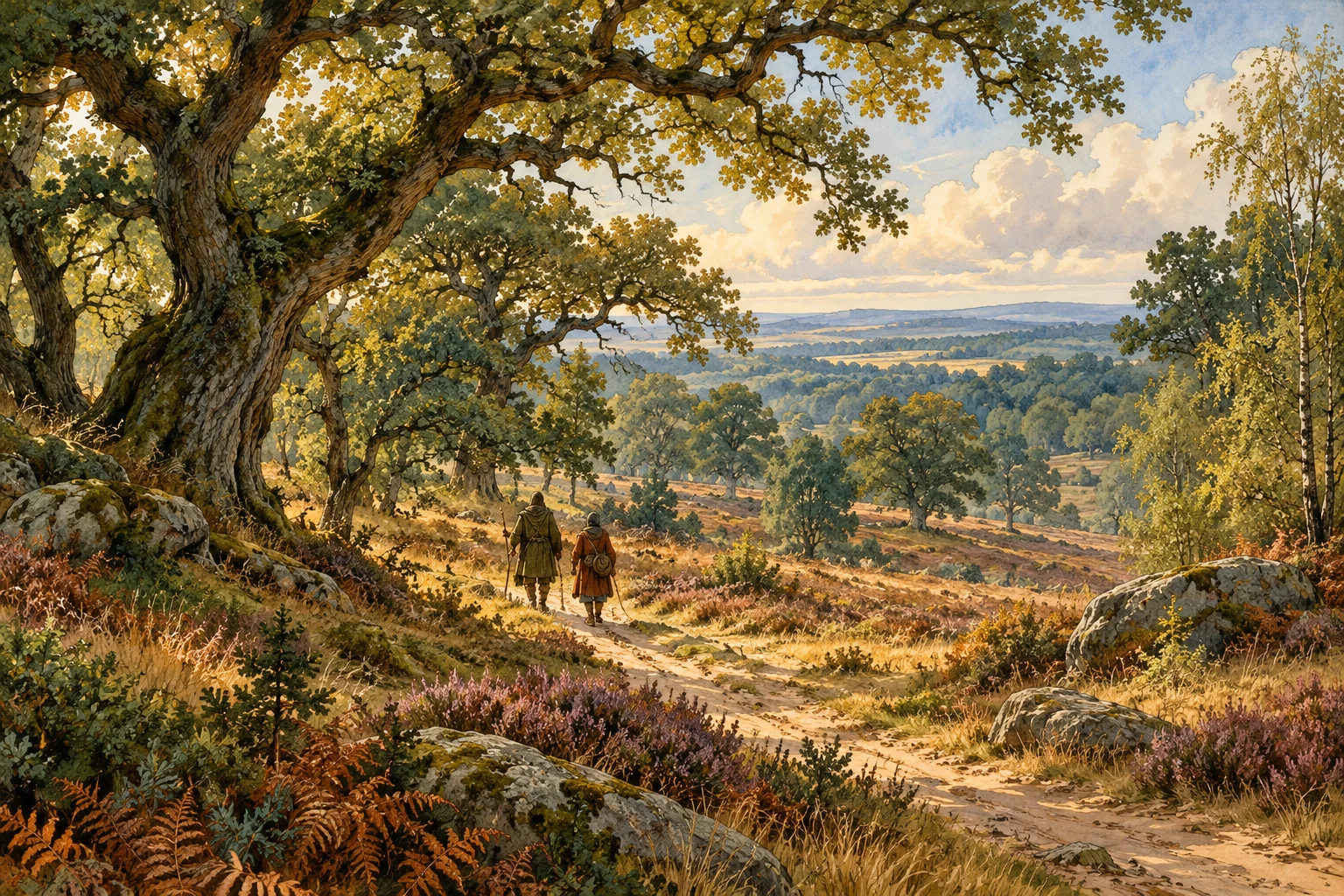
Sherwood is a place of return in the Monk. Once John has freed Robin from Nottingham, the ballad brings him back into its trees. The forest is the place where the company can gather again, beyond the immediate reach of the sheriff. Stanza 76 and conclusion.
Pyle makes Sherwood the continuing home of a much more connected company. His epilogue returns Robin to the familiar clearing after years away, and the sound of his horn draws old companions back. This remembered woodland belongs to the emotional structure of the book, not to a surviving record of an outlaw camp. Epilogue.
The real medieval forest was a legally defined area, not simply an unbroken mass of trees. The county council describes a landscape of woodland, heath and rough grassland, used and managed by people. That history gives a better starting point than an empty wilderness in which nobody but outlaws lived. Landscape history.
Associations and distinctions
Sherwood and Barnsdale
Sherwood’s fame should not erase Barnsdale. The knight’s episodes in the Gest are rooted in the latter district. Different texts can make different places central without a need to move every adventure to one forest. Fyttes I–II.
The Major Oak
The tree’s name commemorates Major Hayman Rooke, whose 1790 publication helped bring it to wider attention. Its association with Robin is part of the later life of the legend; the ballads examined here do not identify it as his hiding place. Major Oak section.
A dated update matters: on 18 June 2026 the RSPB announced that experts believed the Major Oak had died after failing to come into leaf. The organisation described its continuing value as a landmark and habitat. Older descriptions of it as a living tree therefore need care. Read the RSPB announcement.
Context and evidence
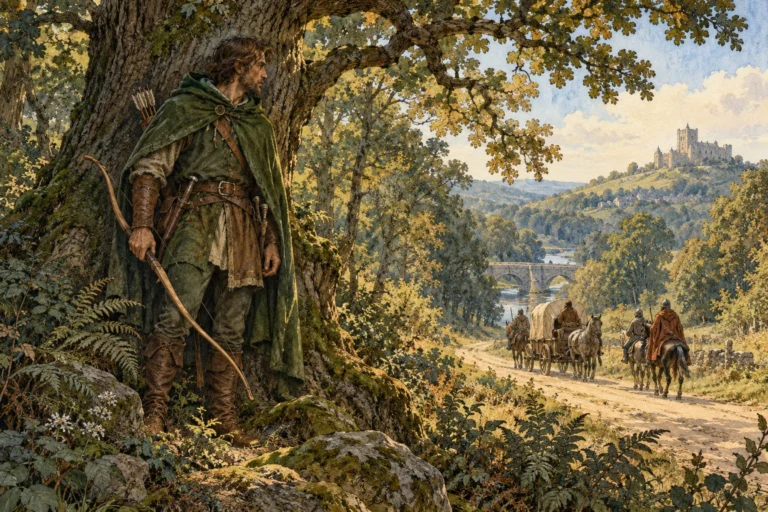
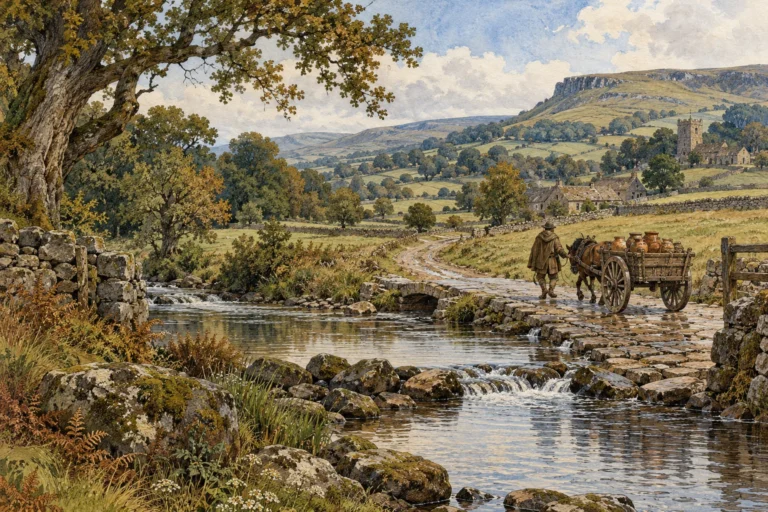
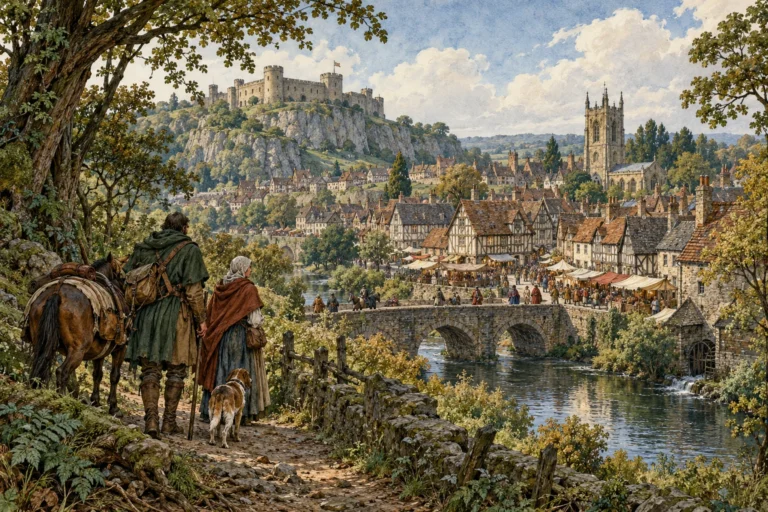
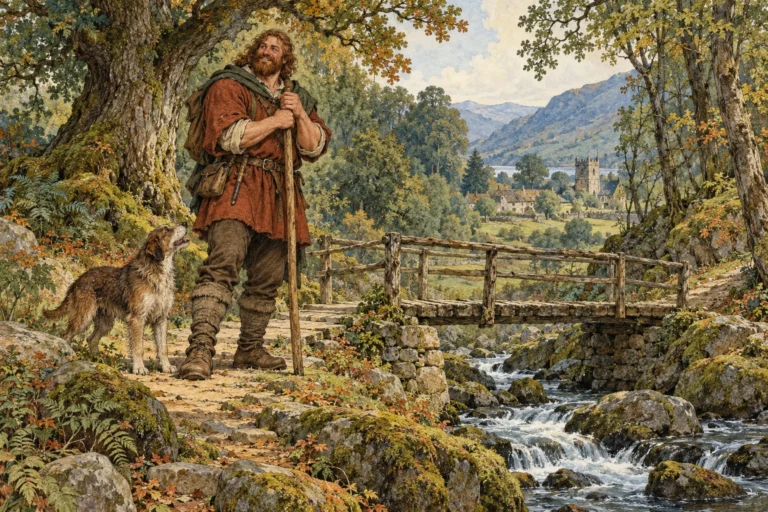
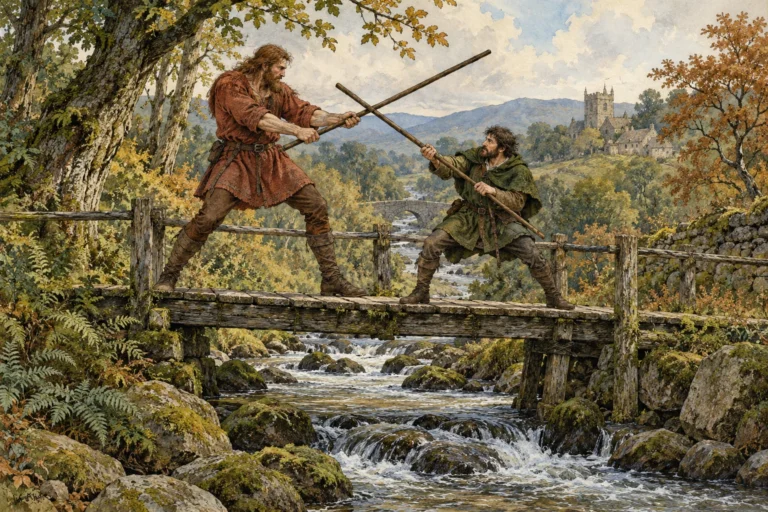
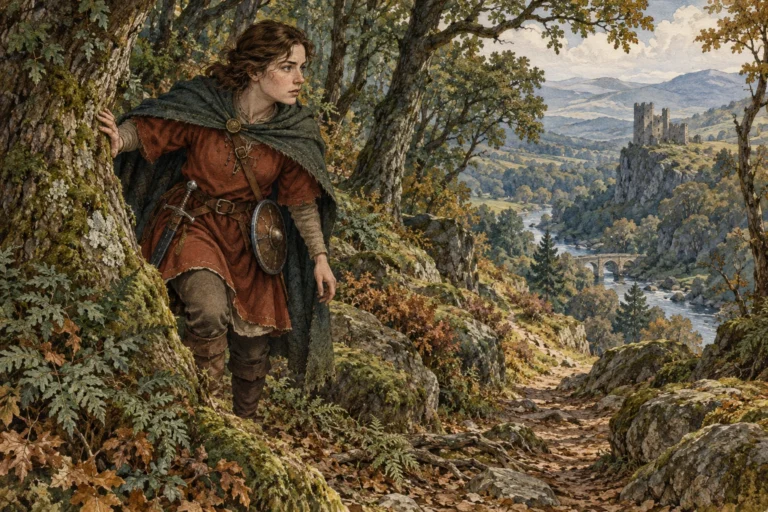
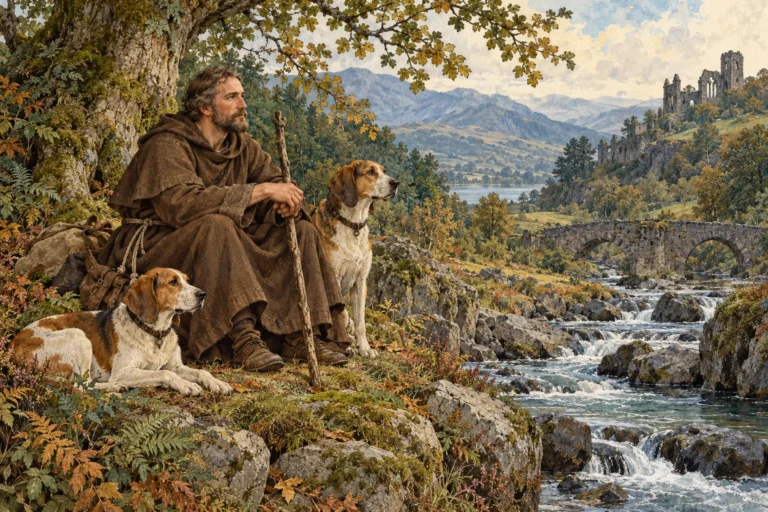
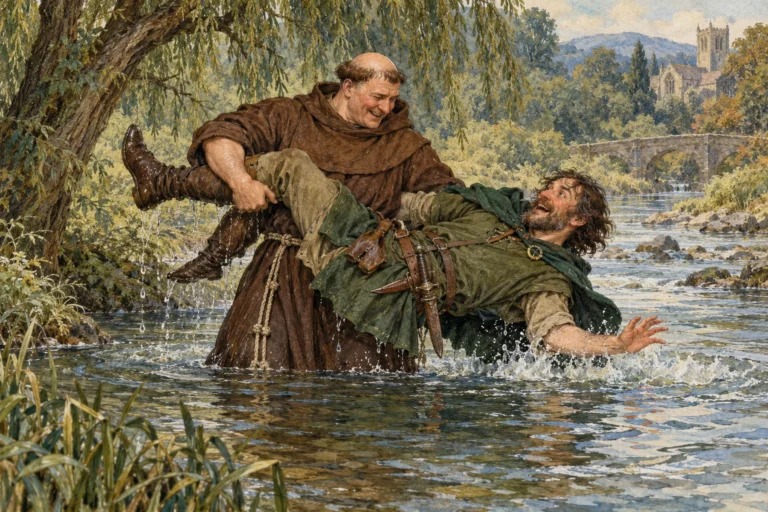
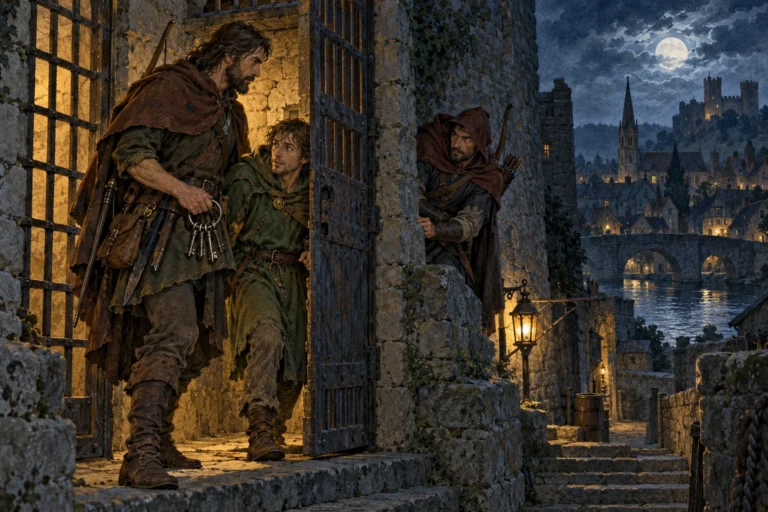
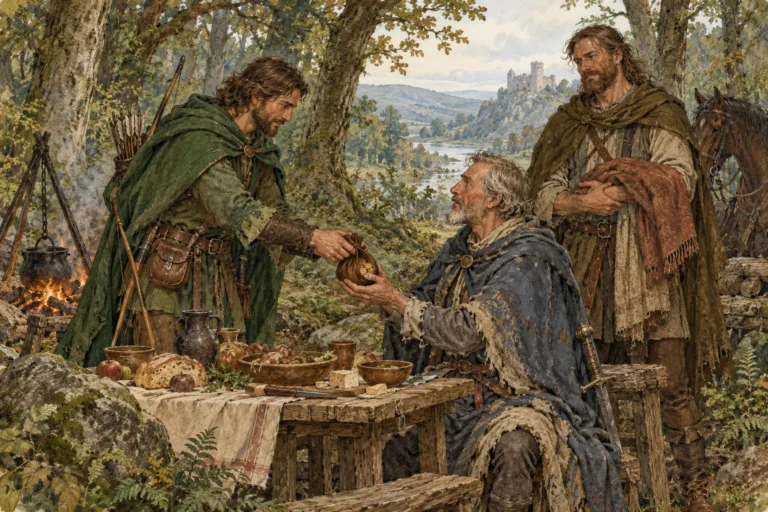
A historic forest, a notable oak and a literary refuge are related but different kinds of evidence. None by itself proves that the Robin of the ballads lived here. The illustration imagines a story landscape and does not reconstruct an identified medieval camp.
Follow the associated stories below, then compare the Yorkshire place guide. The differences between them are part of the collection rather than a competition that one modern county has to win.
Sources for this entry
- Francis James Child, editor, The English and Scottish Popular Ballads, volume III. Boston, Houghton, Mifflin, 1888. No. 119; stanza 76. named Sherwood refuge. Read source · About this book
- Francis James Child, editor, The English and Scottish Popular Ballads, volume III. Boston, Houghton, Mifflin, 1888. No. 117; opening and fyttes I–II. Barnsdale comparison. Read source · About this book
- Howard Pyle, The Merry Adventures of Robin Hood. 1883; Project Gutenberg text. Epilogue, return to the clearing. later literary woodland. Read source · About this book
- Nottinghamshire County Council, History of Sherwood Forest, Robin Hood and Major Oak. Web page, consulted 18 October 2026. “Royal hunting forest”, “The medieval landscape” and “Victorian Sherwood and The Major Oak”. legal landscape and later commemoration; current tree condition checked separately. Read source
- RSPB, The Major Oak: A new chapter for a legend of Sherwood Forest. 18 June 2026; consulted 18 October 2026. Announcement of 18 June 2026; opening and “An enduring legacy”. dated update on the tree’s condition. Read source
Research coverage
The named texts and selected editorial notes have been examined. This entry does not claim to collate every manuscript, broadside, oral performance or modern adaptation.
The Myths · Robin Hood collection · Editorial approach
Further Reading