Local folklore · figure
The Buggane
Manx stories give the buggane several roles: a giant rival, a destroyer of church roofs and a creature beside a waterfall.
Also found as: Buggane of St Trinian’s · Buggane of Glen Meay
Research reviewed 17 October 2026.
A name carried by different stories
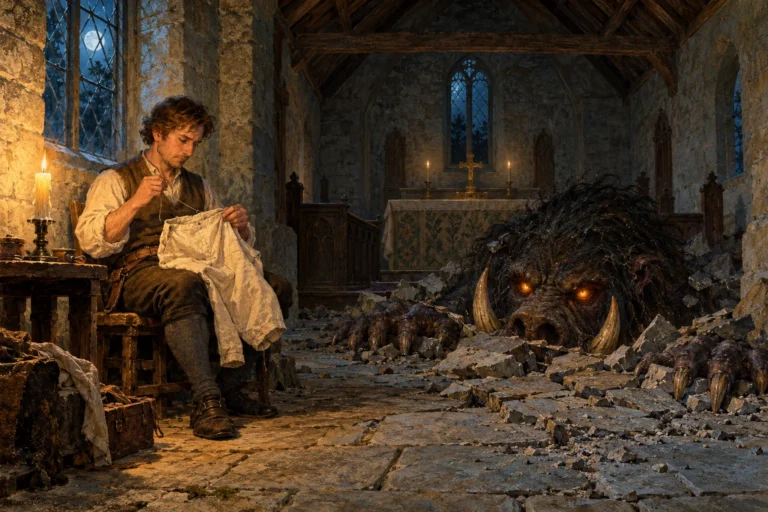
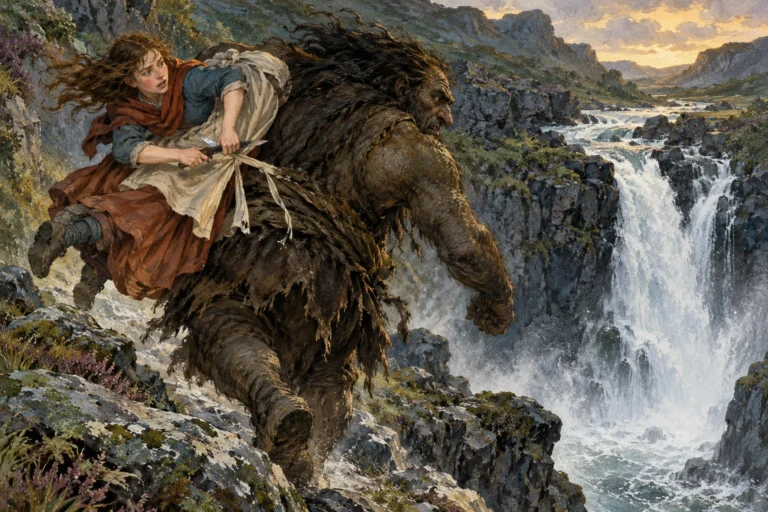
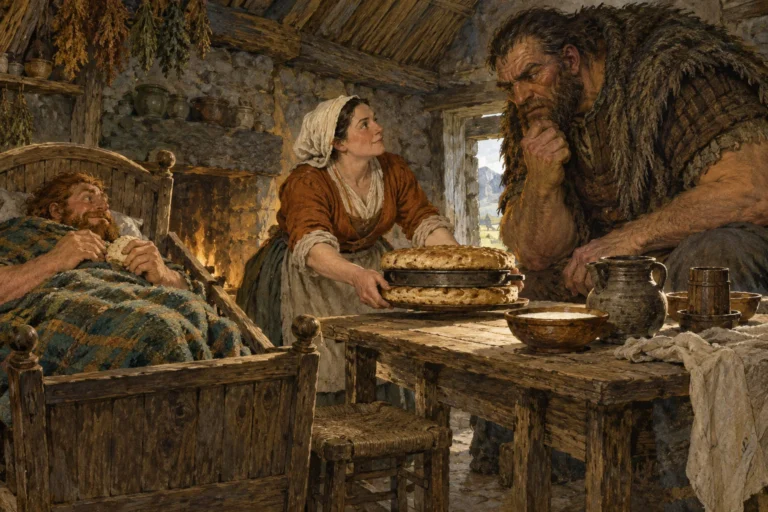
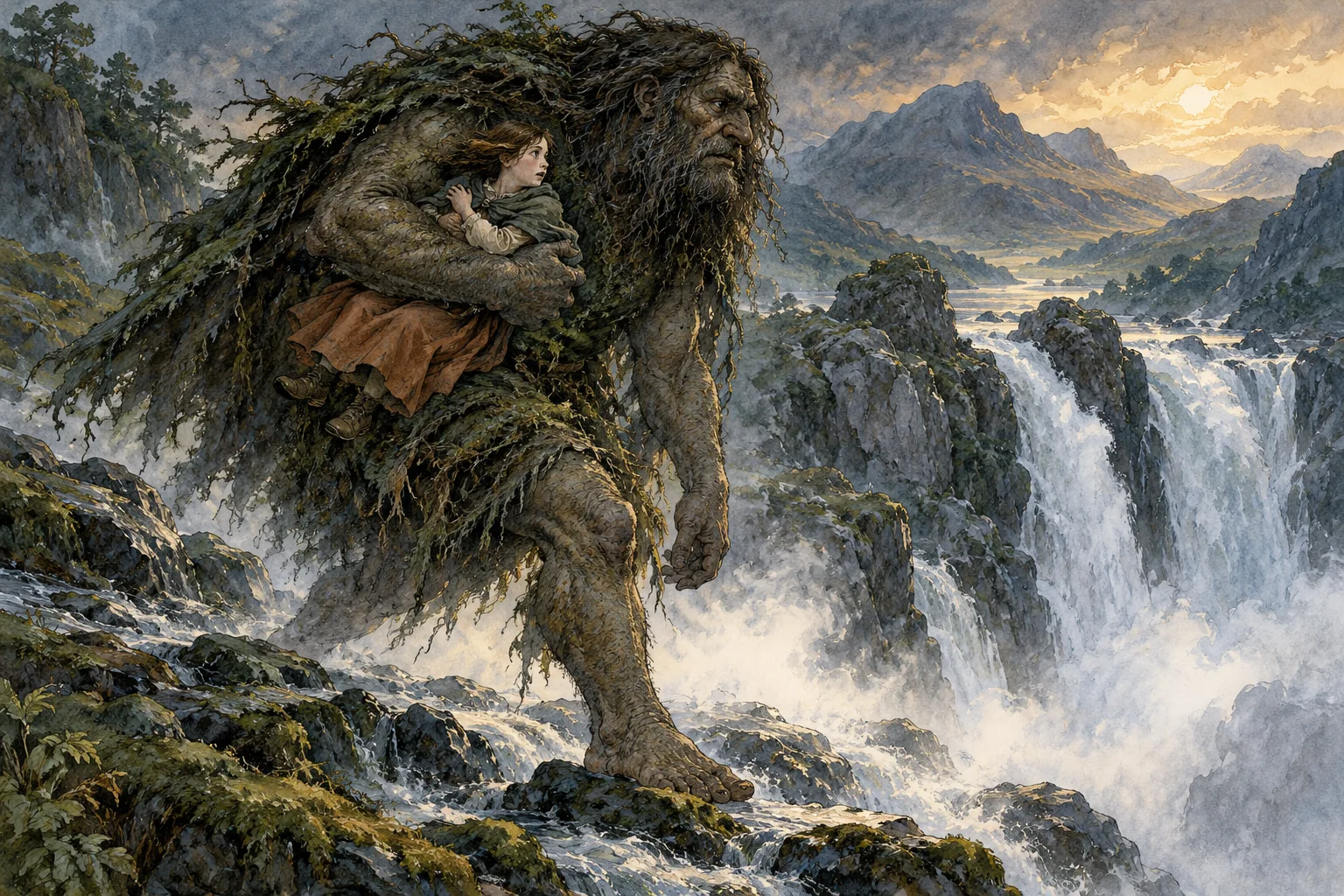
The buggane is best approached through particular encounters rather than a fixed description. In the St Trinian’s narratives it is a threatening being who emerges through the church floor and destroys the roof. In Morrison’s Glen Meay story it carries Kirry towards a waterfall. The existing Finn MacCooilley entry gives it a different role again, in a contest involving a giant.
A shared name does not prove that these are successive adventures of one individual. The scale, motives and limits of the being depend on the account. This guide keeps the different story groups visible and directs readers to their source comparisons.
The St Trinian’s creature is especially variable. Its anger can concern bells or the destruction of its mountain retreat. Timothy may be protected by consecrated ground or by a river. Hall Caine’s headless survivor belongs to his own ending, not to every description of a buggane.
Versions and variations
Different works, different kinds of evidence
Morrison gives developed storytelling narratives. Moore’s St Trinian’s passage explicitly credits Train, so a second publication does not create a second independent oral source. Hall Caine presents an elaborate literary recollection of a childhood story. Their relationships matter as much as their publication dates.
Buggane and Glashtin are not interchangeable
The Glen Meay account can be compared with a Glashtan dress-cutting episode preserved by Moore from Campbell. The similar escape action does not justify renaming the Glashtan a buggane or importing every trait associated with one into the other.
Places shape the creature
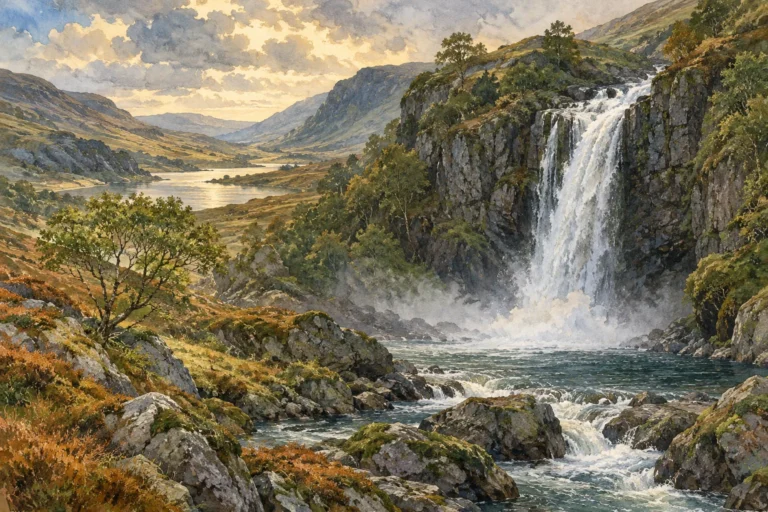
A roof, churchyard boundary, river or waterfall changes what can happen to a human facing the monster. These settings help explain the narrative action; they are not evidence for a single universal list of supernatural rules.
Context and evidence
The Isle of Man has its own collecting and literary history. Connections with Irish giant stories and other household or landscape spirits are routes for comparison, not a reason to absorb Manx accounts into another country’s collection.
No physical evidence for a buggane is established here. Archaeological evidence at St Trinian’s concerns the history of the building. Distinguishing the two lets the place be studied seriously without stripping the legend of its interest.
Sources for this entry
- Sophia Morrison, Manx Fairy Tales. London: David Nutt, 1911. “The Buggane of St. Trinian’s”, pp.153–160. Read source — Main narrative: bells, Timothy’s wager and escape into Marown churchyard. About this book
- Sophia Morrison, Manx Fairy Tales. London: David Nutt, 1911. “The Buggane of Glen Meay Waterfall”, pp.8–13. Read source — Main narrative: Kirry, the apron and the waterfall. About this book
- A. W. Moore, The Folk-Lore of the Isle of Man. Douglas: Brown & Son; London: D. Nutt, 1891. Chapter IV, “Mythical Beings”, St Trinian’s passage credited to Train; also the Glashtin account credited to Campbell. Read source — Named earlier material transmitted by Moore; not counted as a new oral witness merely because it appears in his book. About this book
- W. Ralph Hall Caine, The Isle of Man. London: Adam and Charles Black, 1909. Chapter XXIII, “The Legend of the Buggane”. Read source — A literary version with a disturbed mountain dwelling, a river escape and a surviving headless buggane. About this book
Research coverage
This guide covers the named St Trinian’s and Glen Meay texts and links to the separately sourced Finn cluster. It is not a full inventory of every Manx buggane, cave story or later retelling.
The Myths · Manx collection · Editorial approach
Further Reading