Place · Greeba, Isle of Man
St Trinian’s Church
A roofless church where architectural evidence and the buggane legend offer different kinds of explanation.
Also found as: St Trinian · Keeill Vrisht. Research reviewed 17 October 2026.
The church in the stories
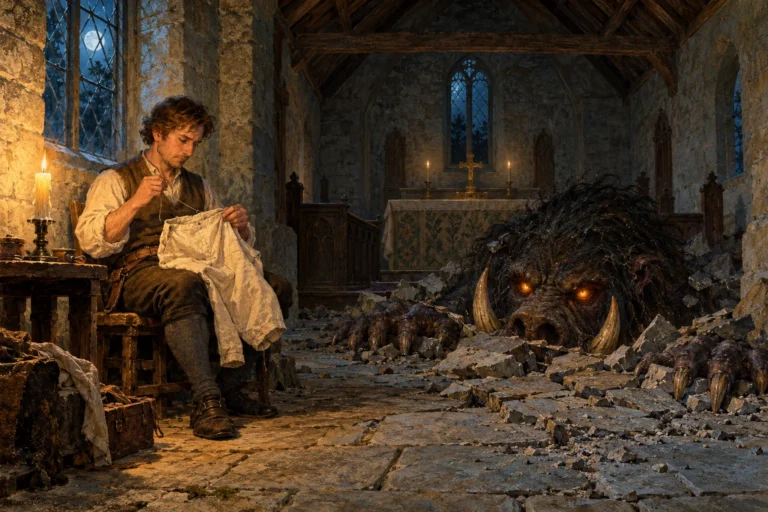
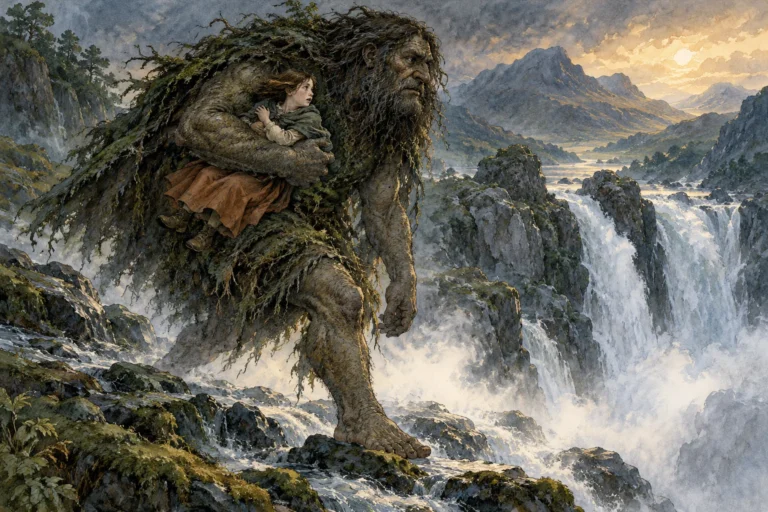
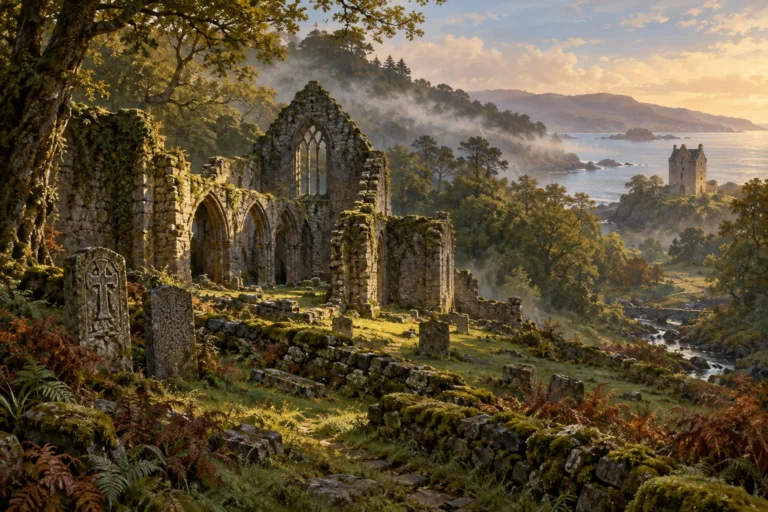
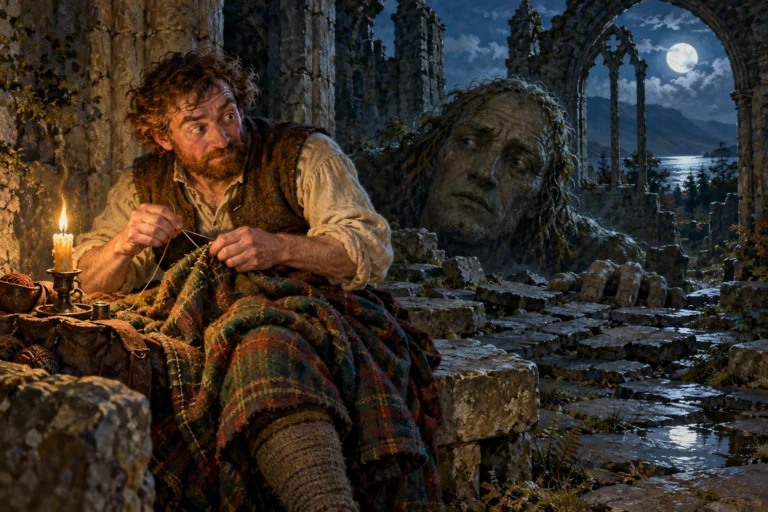
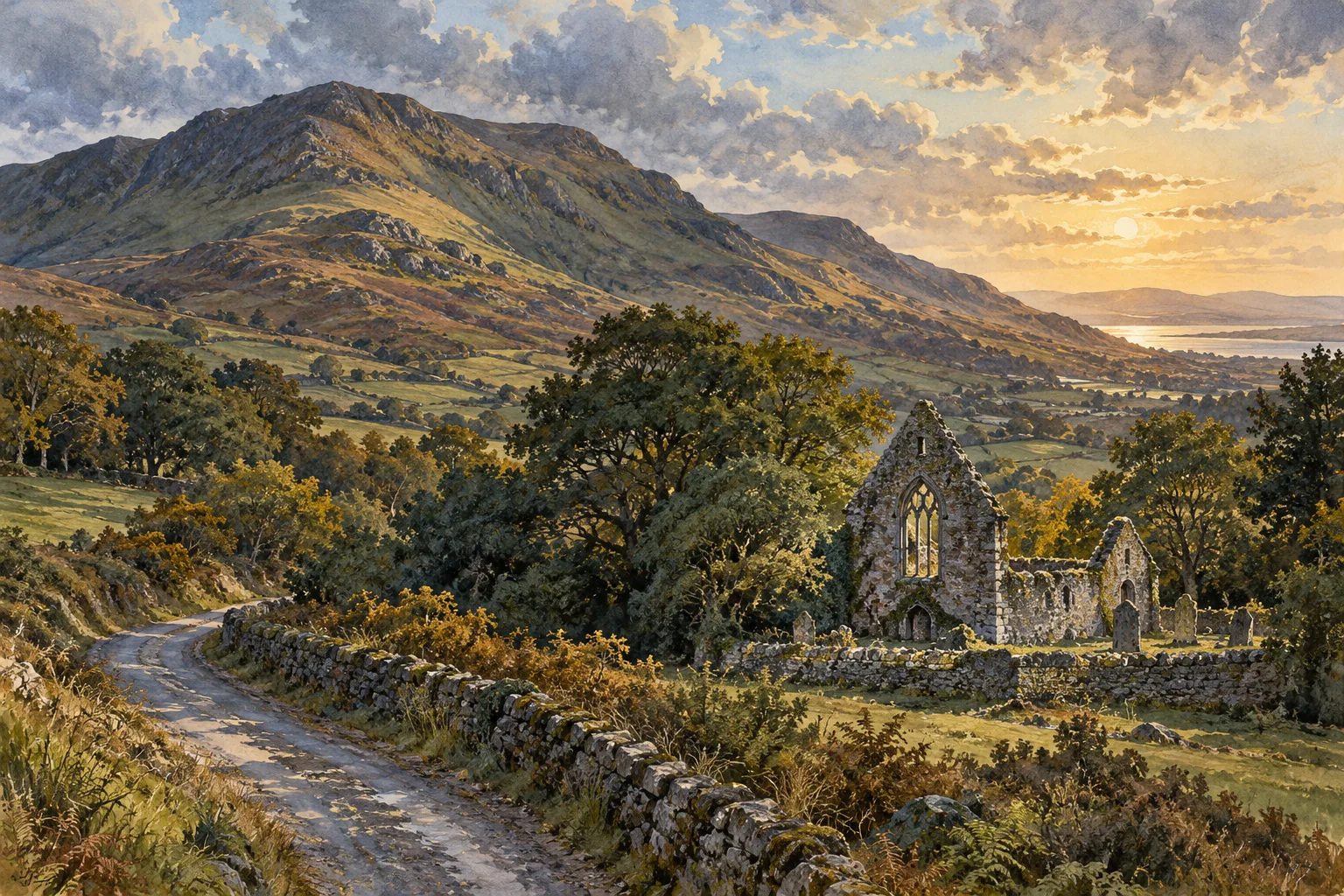
Morrison places the church between Greeba Mountain and the road. Its missing roof becomes the lasting sign of the buggane’s interference. Hall Caine supplies another motive, with quarrying said to have destroyed the creature’s mountain home. A single visible ruin can sustain different explanations.
The pursuit does not end at the church in every telling. Morrison takes Timothy to Marown churchyard; Hall Caine has him cross a river. Those places belong to different narrative routes. They should not be joined into one supposedly original escape itinerary.
What the stonework can tell us
A report on discoveries in 1909–10, printed in the Manx Museum trustees’ sixth annual report, describes carved and moulded fragments reused in the church and surrounding walls. Its author considered them evidence of earlier building work. The report offered alternatives: a succession of churches, or enlargement and embellishment of an original stone building.
That uncertainty should remain visible. The report also records reconstruction choices, including stones whose original arrangement was not certain. It is evidence of observation and restoration in the early twentieth century, not an unqualified statement that every feature now stands exactly where a medieval builder put it.
History and legend together
Reused architectural fragments support a history of building and alteration. They cannot demonstrate that a giant tore off a roof. Conversely, the legend is useful evidence for the way the ruin was remembered and explained. The story and the site deserve separate source trails, linked so that readers can move between them.
No precise date for a supernatural event, or proof of Timothy as a historical tailor, is claimed here.
Sources for this place
- Manx Museum and Ancient Monuments Trustees; report signed P. M. C. K., St. Trinian’s Church, Isle of Man: Report on Details Found, 1909–10. Sixth Annual Report; contemporary report transcribed in A Manx Note Book. Opening assessment and numbered architectural fragments 1–5. Read source — Evidence about reused stonework and restoration, with the report’s uncertainties retained.
- Sophia Morrison, Manx Fairy Tales. London: David Nutt, 1911. “The Buggane of St. Trinian’s”, pp.153–160. Read source — Main narrative: bells, Timothy’s wager and escape into Marown churchyard. About this book
- W. Ralph Hall Caine, The Isle of Man. London: Adam and Charles Black, 1909. Chapter XXIII, “The Legend of the Buggane”. Read source — A literary version with a disturbed mountain dwelling, a river escape and a surviving headless buggane. About this book
Research coverage
The complete linked 1909–10 report and the Morrison and Hall Caine story passages were examined. The report’s suggested building sequence is preserved as a suggestion, not a settled modern excavation chronology.
Further connections
The Myths · Manx collection · Editorial approach
Further Reading