Kintyre buildings and folklore · place
Saddell Abbey and Castle
A ruined church, a glen and a castle gate give the Sprightly Tailor his night’s work and escape route. The surviving buildings have histories distinct from the pursuing giant.
Also found as: Saddell · Saddell church
Research reviewed 18 October 2026.
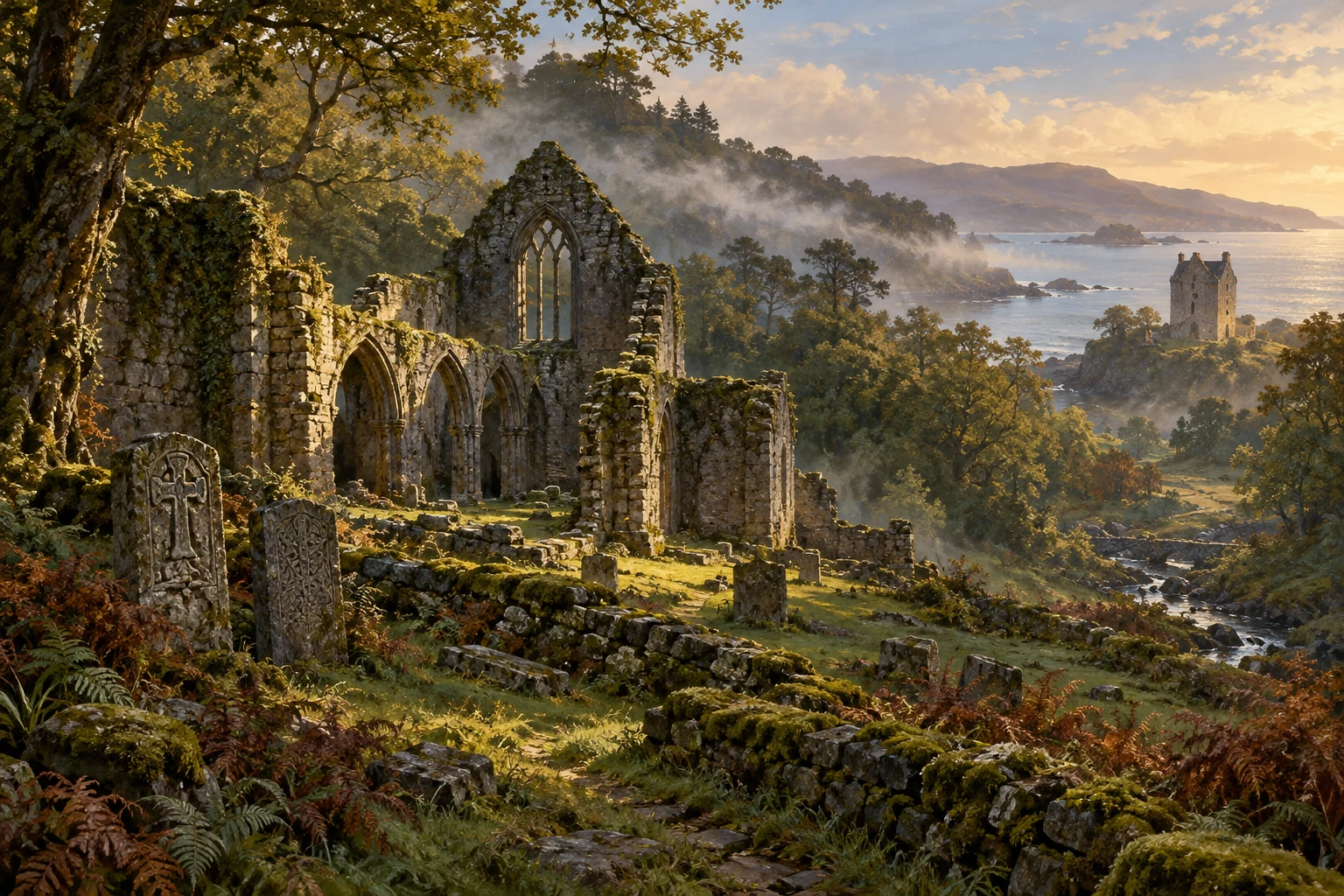
The tailor’s landscape
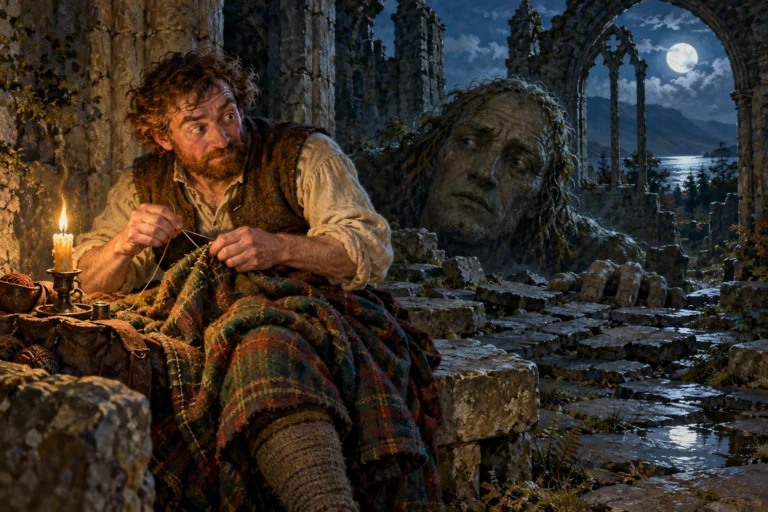
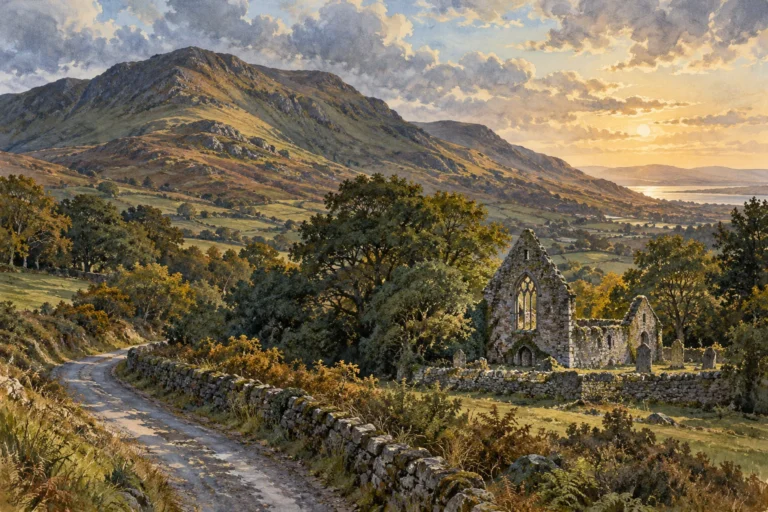
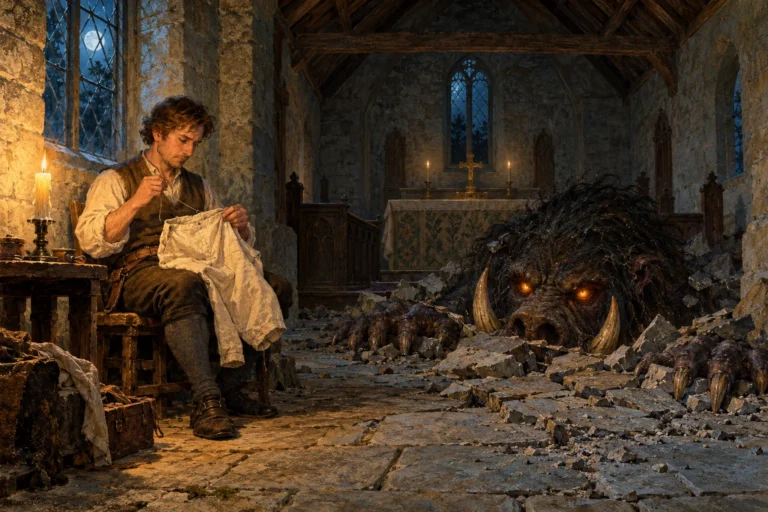
Jacobs’s story begins with Macdonald at Saddell Castle and sends the tailor roughly half a mile up the glen to the old church. Sewing among its stones is the challenge. Reaching the castle again is the escape.
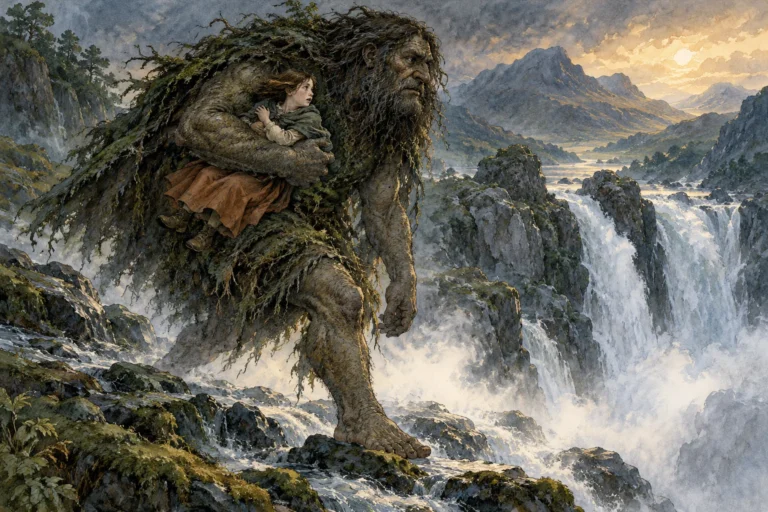
The apparition rises through the floor in stages, so the church becomes a place where ordinary work must be completed under an extraordinary time limit. The final flight follows the glen back to the employer’s gate.
According to the story, the creature strikes the wall above that gate and leaves five finger marks. This is the narrative’s surviving trace. No physical set of marks has been independently identified in the research for this entry.
Real buildings and a related Manx church
Historic Environment Scotland records Saddell as a Cistercian abbey site with surviving church remains and medieval carved stones. Its historical discussion connects the abbey’s later history with the bishopric of Argyll. These are monument records, not corroboration of the tailor’s encounter.
The Landmark Trust dates the coastal tower house to the early sixteenth-century building programme of the Bishop of Argyll, with 1508 central to its account. The castle’s documented history should not be forced into the legend’s unspecified Macdonald household.
The Manx parallel takes place at St Trinian’s, where Timothy the tailor escapes a buggane and a collapsing roof. He reaches another churchyard rather than a castle. Linking the two places helps readers compare how a similar challenge acquires different local landmarks; it does not make Saddell’s apparition a Manx buggane.
Reading a local trace
A mark in stone can serve a story as a final invitation to believe. Here it appears after the tailor has already escaped and received his reward. The print makes the enormous hand seem to leave something which a later visitor might still see.
That literary function can be explained without claiming that every worn hollow or damaged stone at Saddell is the alleged print. The relevant next step would be a documented local description or survey, followed by comparison with the printed tale.
The illustration brings ruins, glen and coastal tower into one imagined landscape. It does not reproduce the precise surviving plan or the tailor’s route. The linked official monument record supplies the historical description of the abbey itself.
Sources for this entry
- Joseph Jacobs, Celtic Fairy Tales. 1892. VIII, “The Sprightly Tailor”, and Notes and References, VIII. Read source — Saddell narrative and attribution to Cuthbert Bede in Notes and Queries, 21 December 1861. That earlier article was not directly inspected. About this book
- Sophia Morrison, Manx Fairy Tales. London: David Nutt, 1911. “The Buggane of St. Trinian’s”, pp. 153–160. Read source — Close Manx comparison with Timothy the tailor, a fallen roof, churchyard refuge and an exploding head. About this book
- Historic Environment Scotland, Saddell Abbey. Scheduled monument SM3645; consulted 18 October 2026. Description and historical context. Read source — Monument evidence for the abbey and carved stones, separate from the tailor legend.
- The Landmark Trust, Saddell Castle. Property history; consulted 18 October 2026. Overview and history. Read source — Historical context for the coastal tower house.
Research coverage
The printed story and Manx comparison were read alongside the official abbey record and the castle owner’s history. No named tailor, precisely identified Macdonald or verified giant-hand impression has been established.
The Myths · Scottish collection · Editorial approach
Further Reading