Manx fairy traditions · figure
Themselves: the Manx Little People
A courteous name for dangerous neighbours: riders, hunters and hosts whose invitations are not always safe.
Also found as: Little People · Little Fellows · Little Ones
Research reviewed 18 October 2026.
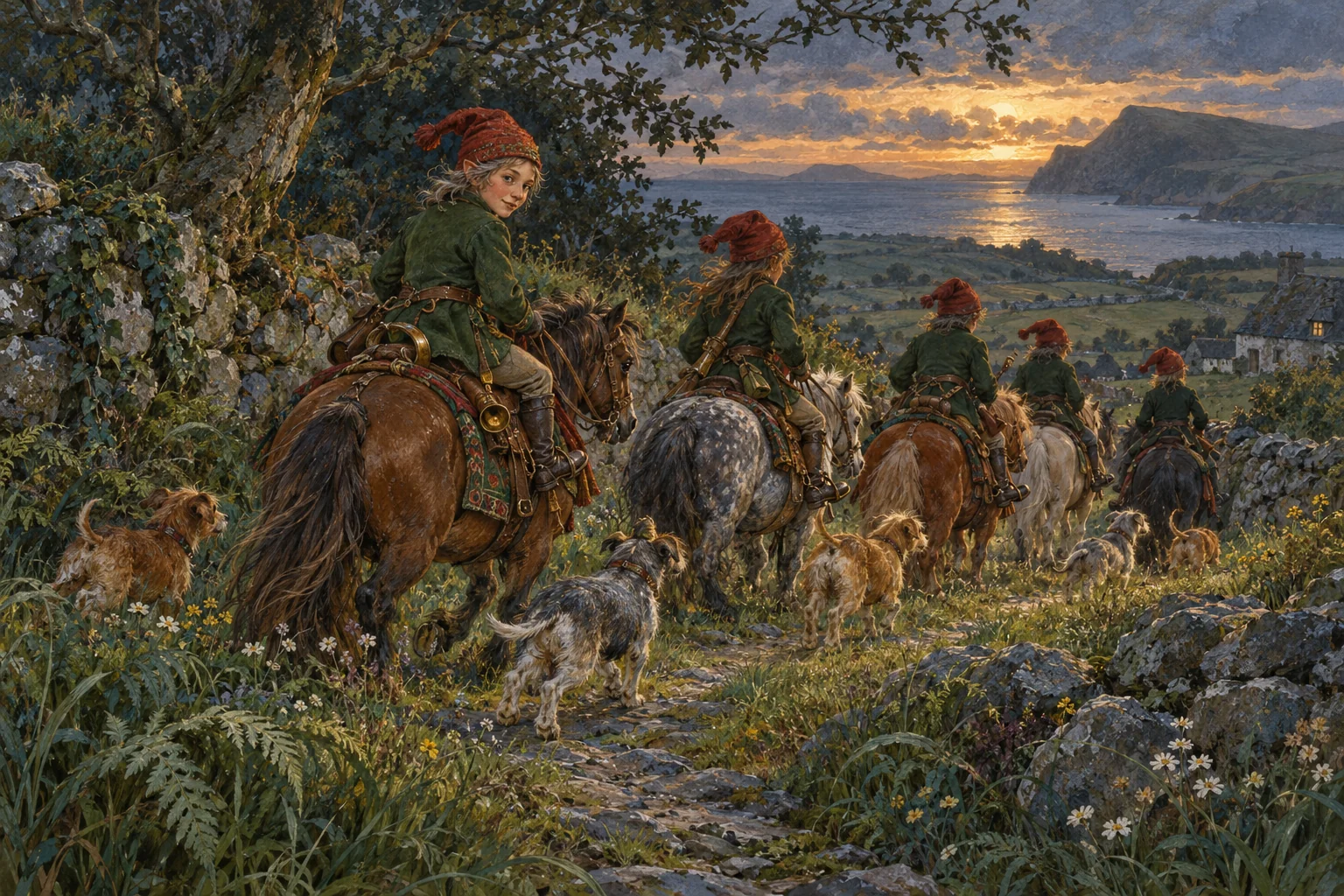
Why call them Themselves?
In her 1911 preface, Sophia Morrison explains names such as Themselves, the Little People and the Little Fellows as cautious ways of speaking about beings who might be listening. Her explanation records a way of talking about belief; it is not a rule that every Manx speaker always followed.
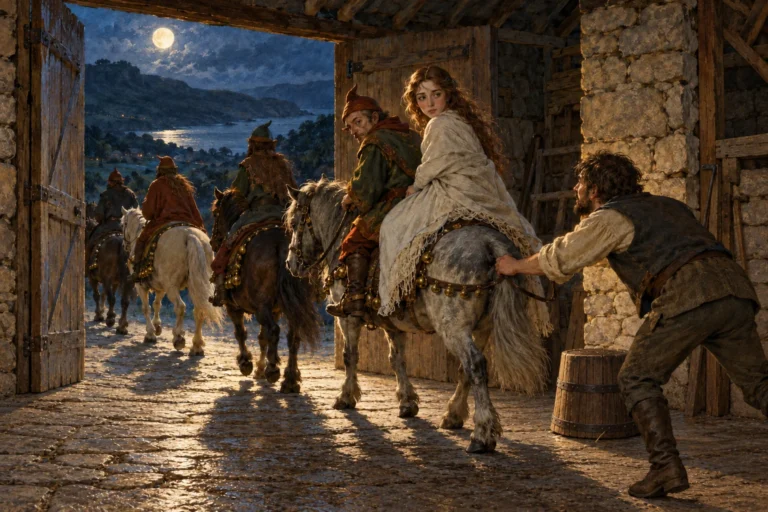
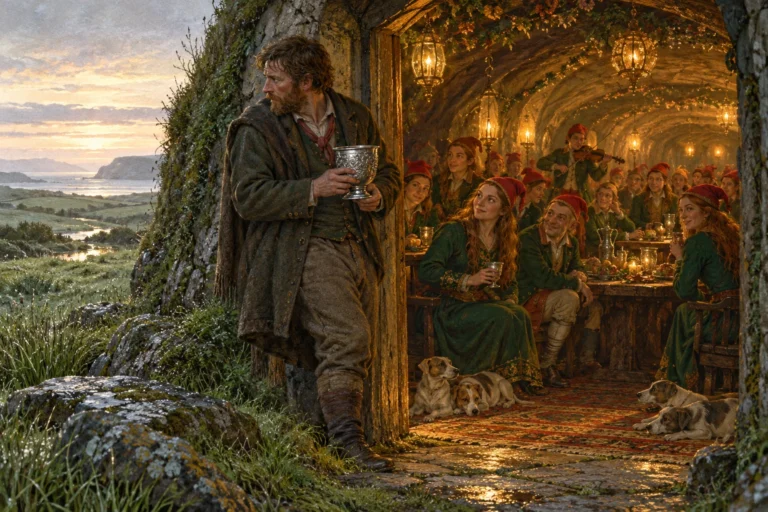
Morrison describes small humanlike people, commonly two or three feet high, with red caps and green jackets. They are fond of hunting on horseback with tiny, brightly coloured hounds. Her introductory portrait differs from the winged fairies of some illustrated children’s books.
Neighbours who can hold you
In The silver cup, the fairy gathering includes recognisable people, and eating or drinking would endanger the visitor’s return. In The lost wife of Ballaleece, the missing woman knows the exact conditions under which she might be recovered. Both stories imagine a boundary that can be crossed, but only under difficult conditions.
Versions and variations
Morrison’s own distinctions
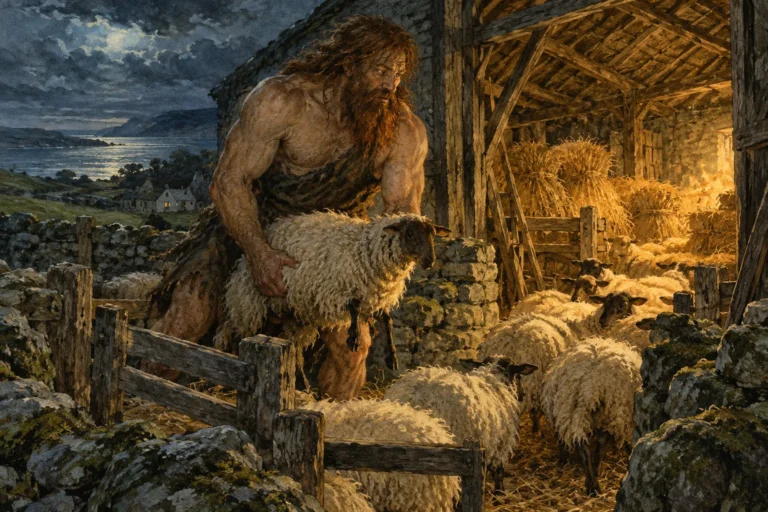
Her preface separately introduces the strong, hairy Fynoderee and the frightening, shape-changing bugganes. Those distinctions should survive in the directory. Themselves is not a reason to flatten every Manx supernatural figure into one description.
Compare the actual narratives
Moore’s Waldron-derived cup story names Kirk Malew, while Morrison names Rushen. Moore’s Jenkinson-derived Ballaleece passage uses the second horse, while Morrison uses the last. These differences show why a general figure guide should send readers back to individual source panels.
Clothing across borders
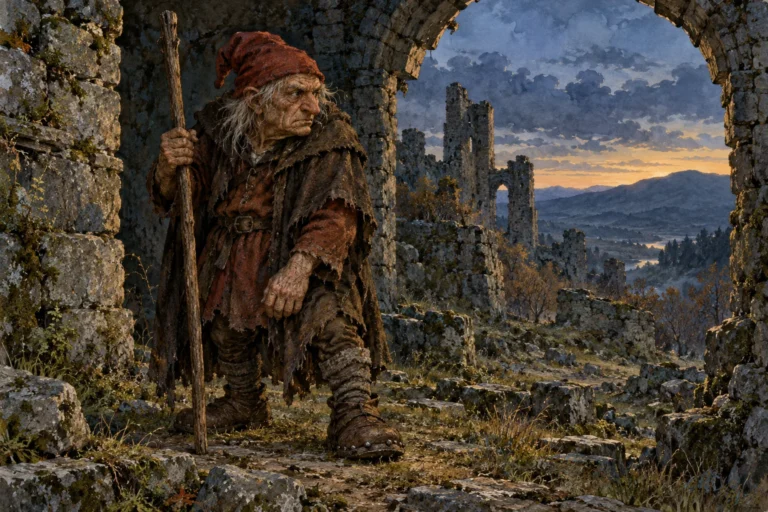
A red cap also appears in Scottish Redcap lore, but the shared item of clothing does not make the Manx riders castle-haunting murderers. Similar names and appearances are starting points for comparison, not identities.
Context and evidence
Morrison thanks several oral contributors in her preface and identifies a small number of tales that were not personally told to her. That helps describe the book’s making, but it does not assign a named teller to every sentence in every story.
The guide covers the preface and the named narratives examined here. Other Manx collections and later recordings can extend or challenge this picture; they should be added with their own dates, tellers and circumstances.
Sources for this entry
- Sophia Morrison, Manx Fairy Tales. London: David Nutt, 1911. Preface, pp.iii–v; “The Silver Cup”; “The Lost Wife of Ballaleece”. Read source — Terminology, appearance and specific encounters. About this book
- A. W. Moore, The Folk-Lore of the Isle of Man. Douglas and London, 1891. Chapter III, Kirk Malew cup and Ballaleece passages. Read source — Comparisons with two explicitly credited earlier sources. About this book
Research coverage
The passages named below have been read and compared. This entry does not claim to include every oral performance, manuscript witness or modern adaptation; unexamined leads are identified separately.
The Myths · Manx collection · Editorial approach
Further Reading