Place · County Louth, Ireland
Cooley Peninsula
The homeland of the Brown Bull in the Táin: a real landscape whose rivers, passes and names are woven into an epic.
Also found as: Cooley · Cúailnge · Cuailnge · Cualnge · Cuailgne · Brown Bull of Cooley
The country at the centre of the raid
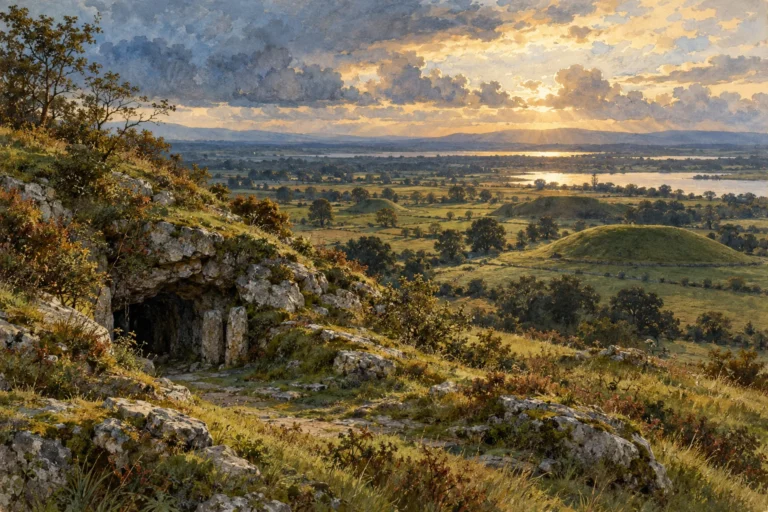
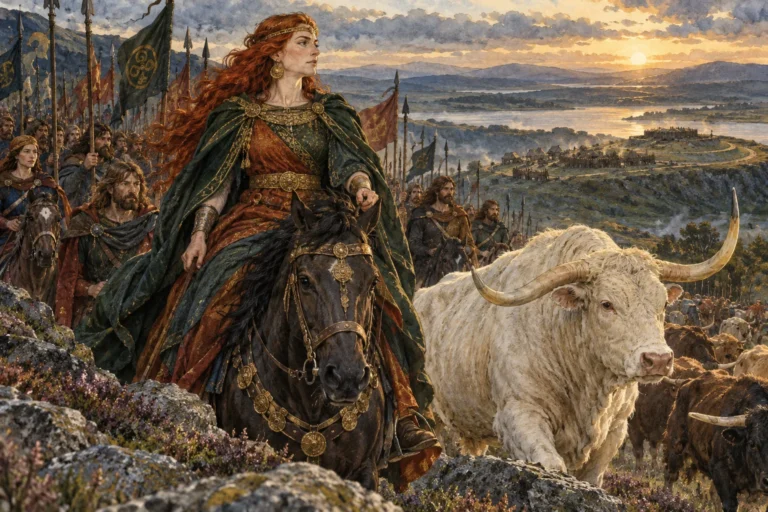
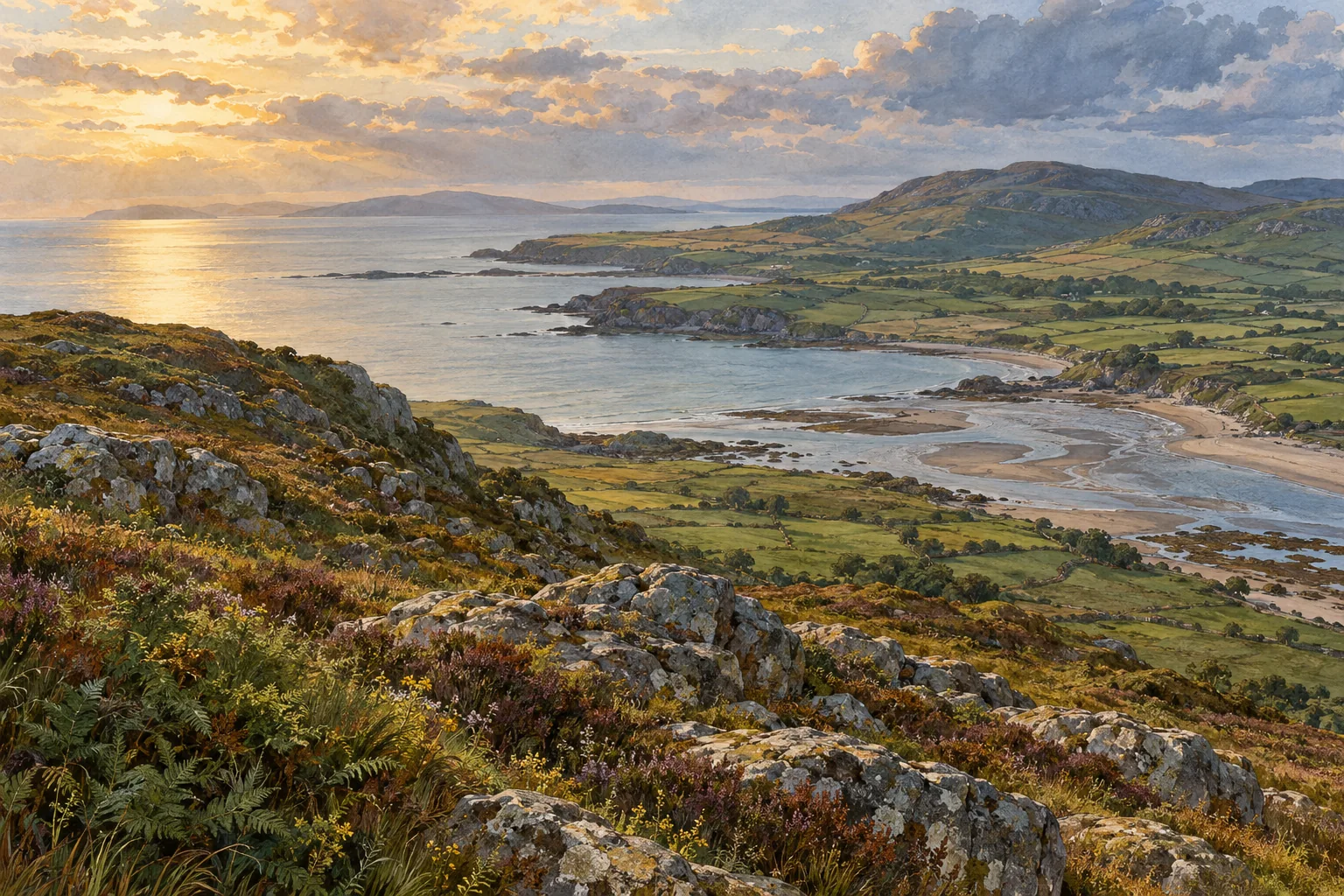
Cooley is a peninsula in County Louth, and Cúailnge is the place-name in the title Táin Bó Cúailnge, usually called the Cattle Raid of Cooley. The destination matters because the bull sought by Medb’s expedition belongs to this country. Readers can begin with Visit Louth’s introduction and then compare the longer texts.
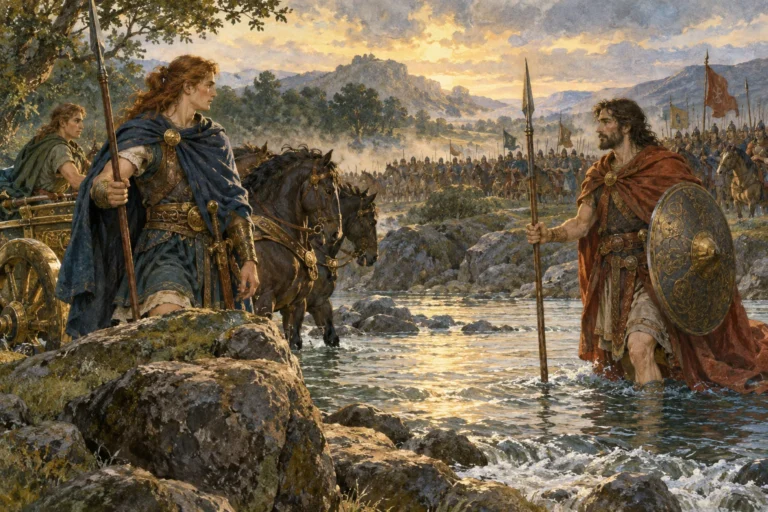
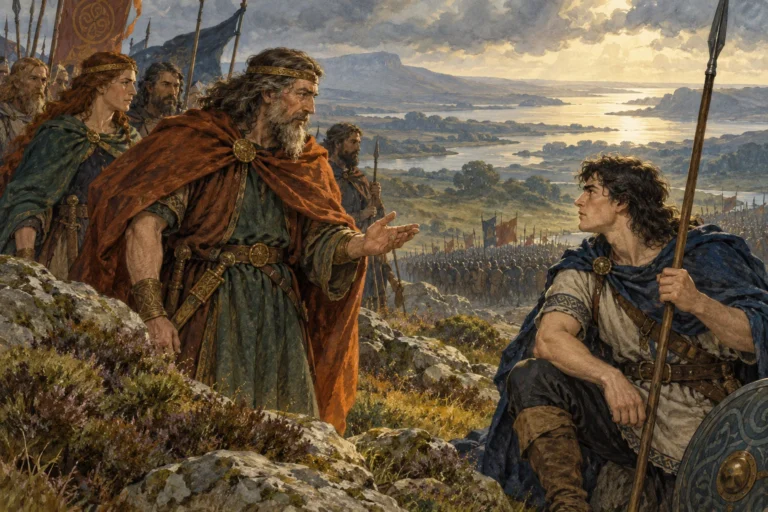
In Joseph Dunn’s translation, negotiations for the bull fail and an expedition is assembled at Cruachan. The story’s movement eastward turns a dispute over possession into encounters with rivers, settlements, warriors and supernatural resistance. Its chapters on the ravaging of Cúailnge and the discovery of the bull make the landscape an active part of the narrative, rather than an interchangeable battlefield. Dunn, chapters II–VI, VIIIf and XII.
Why the names need research
A named ford or pass can invite an apparently simple question: where is it? The answer is often less settled than a modern map suggests. Paul Gosling’s 2015 heritage guide compares the medieval narrative with topography and previous scholarly reconstructions. His proposed location for Medb’s camp at Finnabair Chúailnge differs from the identification used by Thomas Kinsella. The guide also distinguishes the natural gap at Barnavave from the story explaining its creation. Gosling, The route of Táin Bó Cúailnge in County Louth.
That is a useful model for this directory: record the textual name, identify a proposed modern location, and name the person making the connection. A persuasive topographical argument can help explain how a story uses real terrain. It does not make every episode along that route a verified historical event.
Follow the larger story landscape
The raid is wider than the peninsula. Rathcroghan is the western royal centre from which the expedition begins; Emain Macha belongs to the Ulster court; and the fighting extends through a larger part of Louth. The linked account of Cú Chulainn and Ferdiad examines one of the epic’s most developed encounters and the differences between its versions.
Gosling identifies the traditional setting of that combat as Ardee, outside the Cooley Peninsula itself. His guide also notes that Castletown Mount, associated with Cú Chulainn, includes an Anglo-Norman motte. A later building at a named legendary place should not be presented as the hero’s surviving castle.
These distinctions allow a reader to move from one place to another without compressing the whole epic into a single spot. They also make room for local traditions and changing scholarly proposals alongside the written stories.
Sources for this place
- Visit Louth, Táin Bó Cuailgne. Introduction to the tale and Cooley setting. Read source — Modern geographical orientation.
- Joseph Dunn, translator, The Ancient Irish Epic Tale Táin Bó Cúalnge. 1914. Chapters II–VI, VIIIf, XII and XX. Read source — Literary route, the bull and the combat sequence; Dunn combines Book of Leinster and allied material. About this book
- Paul Gosling, The route of Táin Bó Cúailnge in County Louth. Archaeology Ireland Heritage Guide 69, June 2015. Cooley Point, Barnavave, Castletown Mount and Ardee discussions. Read source — Scholarly topographical proposals and distinctions between landscape, monument chronology and narrative.
Research coverage
This entry introduces Cooley’s role in the Táin and selected issues in locating its places. It is not a complete route reconstruction or a separate full retelling of the cattle raid. The linked Ferdiad page compares that episode in detail. Reviewed 17 October 2026.
The Myths · Irish collection · Editorial approach
Further Reading