Mythological Cycle; connections to other cycles require source-specific treatment · figure
Lugh
The many-skilled champion who wins admission to Tara, leads the Tuatha Dé Danann against Balor, and demands the terrible compensation paid by the sons of Tuireann.
Also found as: Lug · Lugh Lámhfhada · Lug Lámfada · Lugh of the Long Hand · Samildánach · Ildánach · Lui Lavada · Luga of the Long Arms
Research reviewed 17 October 2026.
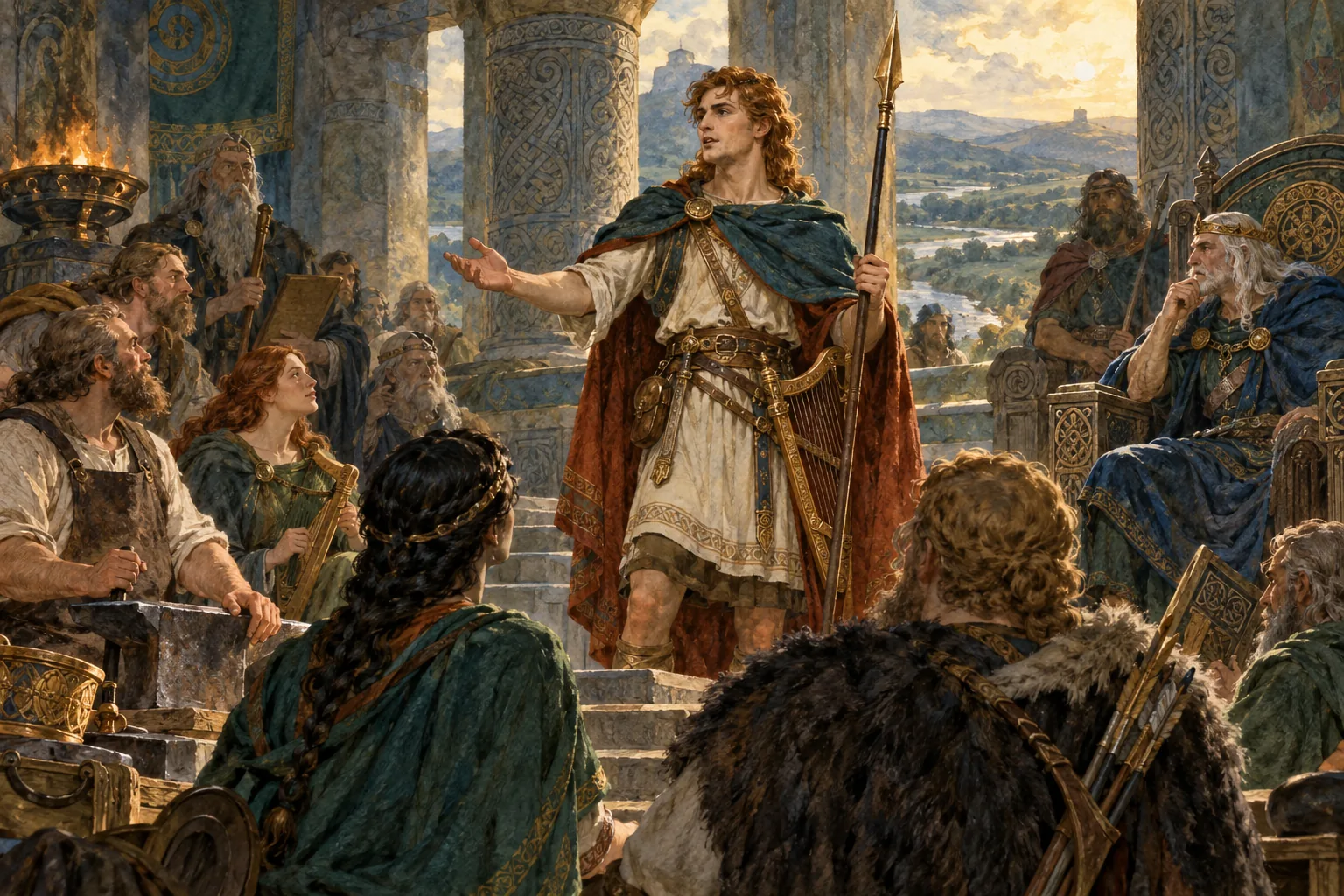
Lugh is a central figure in the stories of the Tuatha Dé Danann. His literary identity includes several roles: craftsman, musician, warrior, organiser and an unforgiving son. Calling him simply a fighter misses the point of his arrival at Tara: the court already has experts, but he can unite their skills in one person. The name Samildánach is attached to that ability in Cath Maige Tuired. Stokes, §§53–74.
The stranger at the gate
Nuada’s doorkeeper repeatedly refuses Lugh because the household already has someone who practises each art he offers. Lugh changes the question: does anyone there possess all of them? Once admitted and tested, he receives the king’s seat temporarily. The episode makes knowledge a qualification for leadership. Later he asks each specialist what they can contribute to the war. His achievement is both personal excellence and the coordination of other people’s work. Stokes, §§56–74 and the consultations before battle.
Family on both sides of the conflict
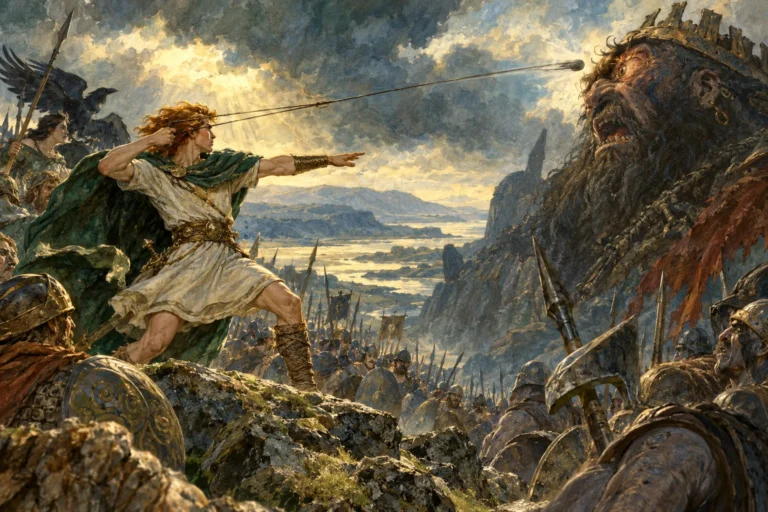
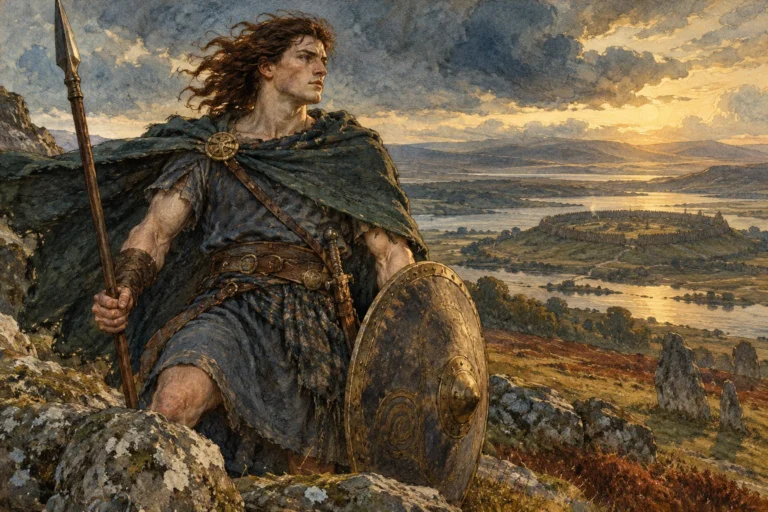
The same saga names his father as Cian, son of Dian Cécht, and his mother as Ethne, daughter of Balor. Lugh therefore has kin among the Fomorians he fights. His confrontation with Balor is also a confrontation with his maternal grandfather. In this text the fatal weapon is a sling-stone, although a spear belongs among Lugh’s associated treasures. Those are distinct details: possession of a spear does not mean that every account gives him a spear for this killing. Stokes, opening treasure and parentage passages; §§133–135.
Justice and vengeance
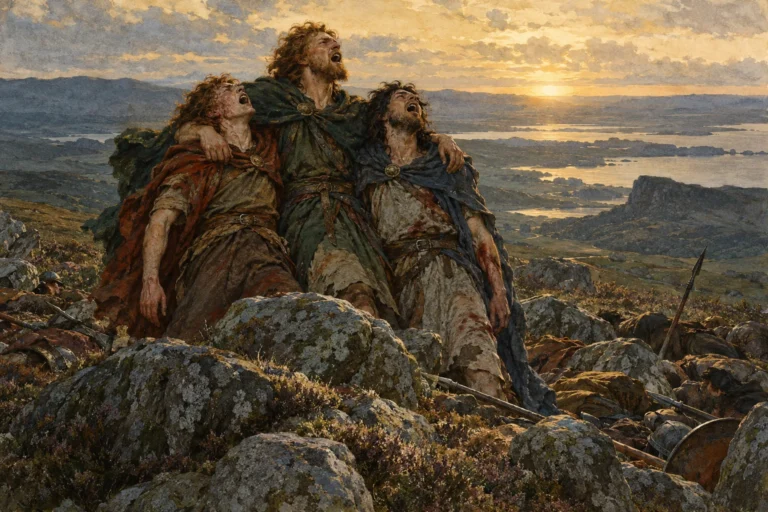
In the Children of Tuireann, Lugh learns that three brothers have killed Cian. He demands extraordinary objects as compensation, then refuses the means to heal them when they return mortally wounded. In Gregory’s telling the brothers ask for the pigskin at the end; in Joyce’s they ask for the apples. Reading that story alongside the battle of Mag Tuired prevents Lugh from becoming a uniformly benevolent hero. His actions have to be considered within each telling. Gregory, Book Two, chapter II; Joyce, “Children of Turenn”, chapter XV.
A figure with more than one biography
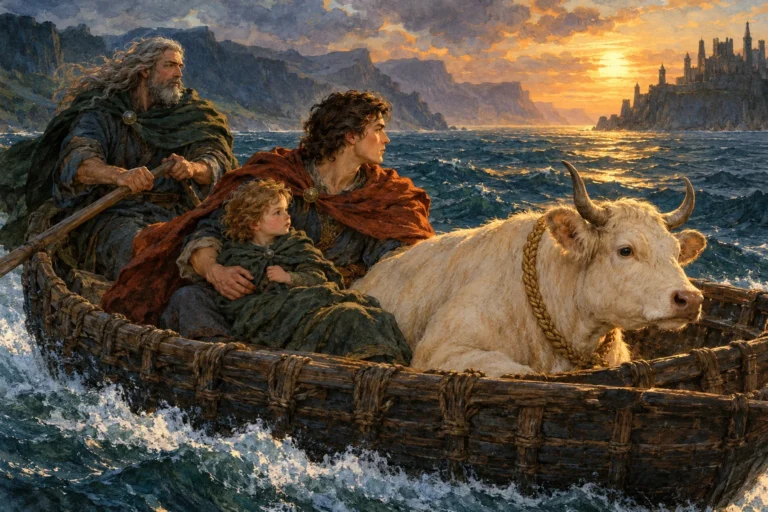
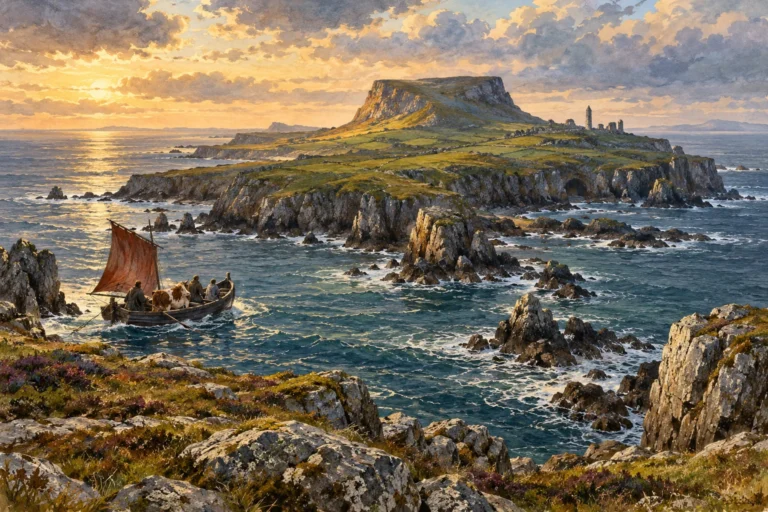
Later collected stories do not simply repeat the manuscript saga. Curtin’s Lui Lavada is raised within a plot about a stolen magical cow and Balor’s attempt to escape death at a grandson’s hands. One account names his father Fin MacKinealy; another calls him Cian. The smith’s forge, Tory and Gweedore give these narratives a different geography and a different sequence of events. They belong in Lugh’s cluster with their own source labels. Curtin, the two Balor tales, pp. 283–311.
This page therefore offers routes through a body of stories rather than one fixed chronological life. Start with his test at Tara, follow his leadership at Mag Tuired, then compare the consequences of Cian’s murder. The changes between those accounts are part of what the figure has become in literature and storytelling.
Lugh and Cú Chulainn’s birth
The birth traditions of Cú Chulainn extend this cluster into the Ulster tales. The new comparison distinguishes Gregory’s sequence of dream, disappearance and bird-women from the other major conception account. The figure’s parentage should be read through those specific sources, rather than assigned one uncontested family tree.
Versions and variations
Names: Lug and Lugh are forms used for the figure; Lámhfhada is represented in English as “of the Long Hand” and, in Joyce, “of the Long Arms”. Curtin writes Lui Lavada and gives that name a particular story explanation. An alias helps readers find the material, but it does not erase differences between accounts. Joyce, “Children of Turenn”; Curtin, “Balor on Tory Island”, p. 291.
Birth and fosterage: the manuscript saga briefly states the parents’ alliance. Gregory builds a longer birth story involving Ethlinn’s confinement, the theft of the cow, Birog’s help and the child’s rescue. Her own account then rejects a report that Balor killed Cian because it conflicts with the Tuireann story she has chosen. That rejection is Gregory’s editorial decision and should remain visible. Stokes, opening parentage passage; Gregory, “The Coming of Lugh”.
Context and evidence
The sources assembled here establish Lugh as a figure in mythological narrative and later storytelling. They do not establish a recoverable historical person with a secure birth date, reign or grave. A profile of his religious significance needs a further, distinct comparison of texts, language, festival traditions and scholarship. It should not turn the stories into a historical biography by assigning their events unqualified dates.
Sources for this entry
- Anonymous; edited and translated by Whitley Stokes, The Second Battle of Moytura (Cath Maige Tuired). Revue Celtique 12 (1891), pp. 52–130, 306–308; CELT electronic edition T300011. Opening parentage and four treasures; §§53–74, Tara; consultations before battle; §§133–135, Balor. Read source — Primary narrative basis for skills, family relationships, leadership and sling-stone..
- Lady Gregory, Gods and Fighting Men. 1905 edition; first published 1904. Part One, Book Two, chapters I–III; Notes III, Authorities. Read source — Compared literary synthesis, birth story, treatment of conflicting accounts and Tuireann episode.. About this book
- P. W. Joyce, Old Celtic Romances. 1920 reprint, including the 1907 third-edition preface; first published 1879. “The Fate of the Children of Turenn”, chapters I and XV; preface pp. x–xi. Read source — Name forms and alternative healing object.. About this book
- Jeremiah Curtin, collector, Hero-Tales of Ireland. London: Macmillan, 1894. “Balor on Tory Island”, pp. 283–295, and “Balor of the Evil Eye and Lui Lavada, his Grandson”, pp. 296–311. Read source — Compared collected narratives and differing family and place details.. About this book
Research coverage
This profile covers the Tara–Mag Tuired–Tuireann cluster and Curtin’s two Balor accounts. Lughnasa and Tailtiu, Baile in Scáil, Lebor Gabála, continental comparisons and a wider oral-archive search are identified for further source-led expansion; they are not claimed to be researched here. The separate Cú Chulainn birth entry now examines that connection through named accounts.
The Myths · Irish collection · Editorial approach
Further Reading