Place · Off the north coast of County Donegal
Tory Island
An inhabited Atlantic island whose cliffs and sea crossings form the setting of Curtin’s Balor tale, while other tellings place the same conflict in a different geography.
Also found as: Toraigh · Tory · Tor Mor in Curtin’s account
An island within a particular telling
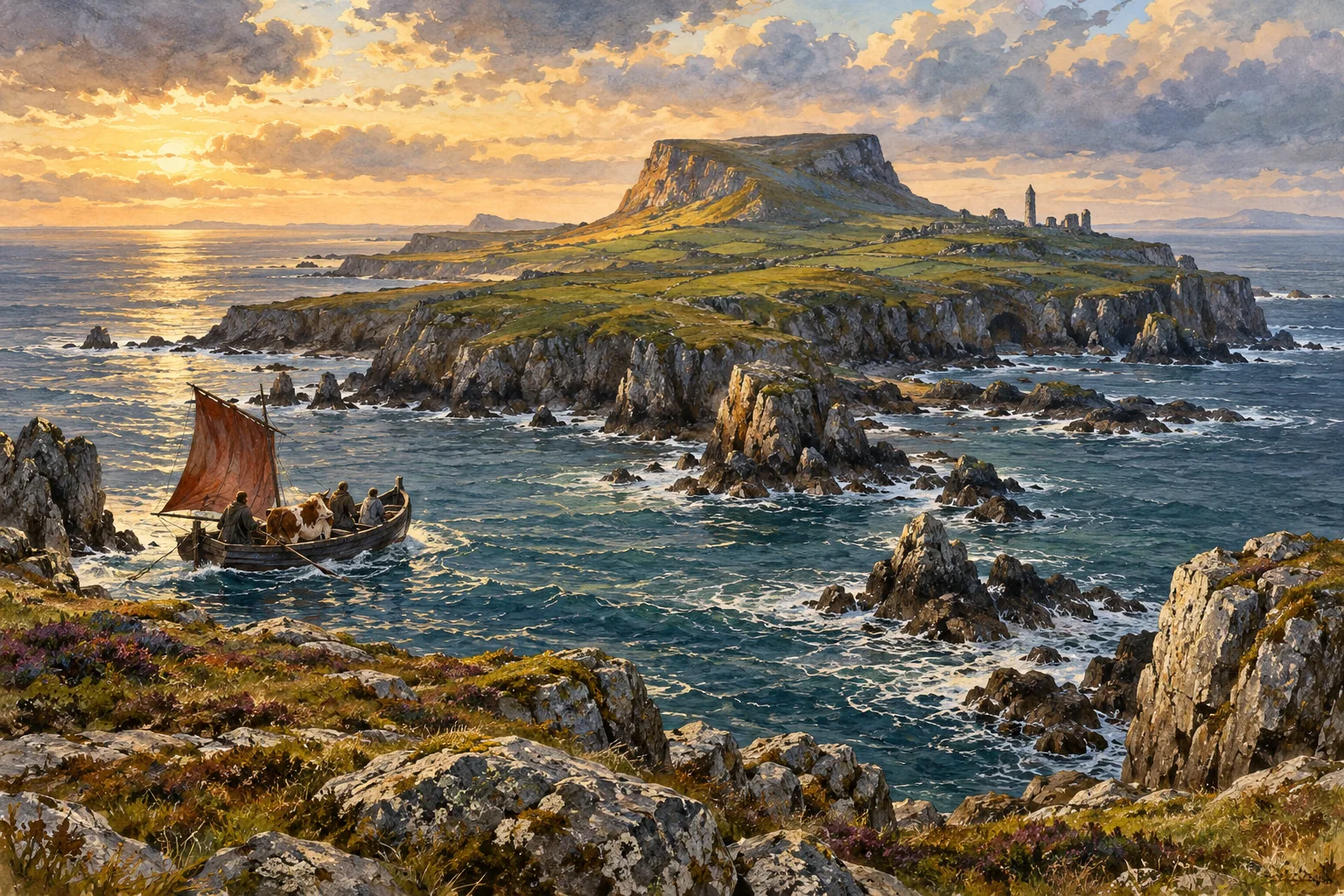
In Jeremiah Curtin’s ‘Balor on Tory Island’, pp. 283–295, Balor chooses the island to evade a prophecy: his daughter’s son will kill him. The daughter is guarded in a castle on Tor Mor, surrounded by alarm cords and bells. The sea separates that household from the mainland smith whose extraordinary cow Balor covets. It is a barrier that the story repeatedly crosses.
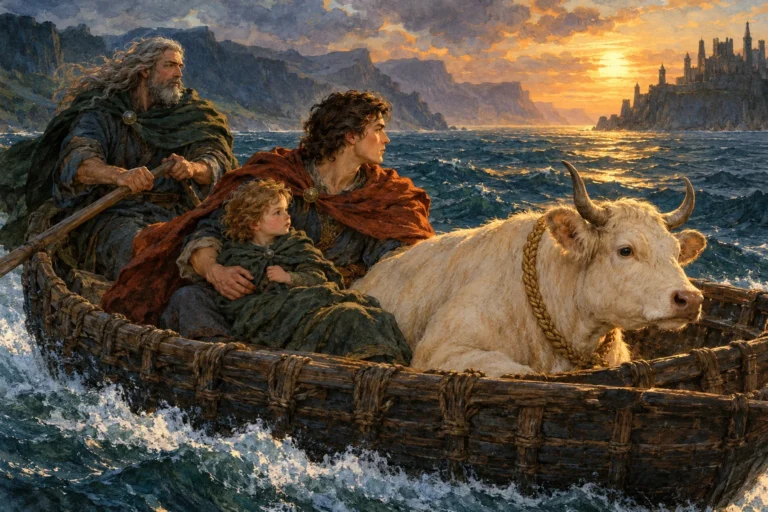
The stolen cow travels by boat through Inis Bofin and lands on Tory. Fin MacKinealy follows with the fairy helper Gial Duv. Later journeys bring the newborn children off the island, return the surviving grandson to his mother for nursing, and finally take him away again. The island is therefore more than a picturesque backdrop: its separation makes concealment possible, while boats, helpers and family obligations keep undoing it.
How the story was recorded
Curtin’s concluding note says that he wrote the printed account down on the mainland. He also reports another mainland version and two incomplete versions on Tory itself. This gives evidence for the tale’s circulation around the island and coast, but it does not make the printed text a verbatim record from an identified Tory resident. The additional versions are not reproduced in full in that note.
Place-names also receive explanations within the narrative. A well on Inis Bofin recalls the cow; a dropped fastening accompanies the loss of children at sea; the aftermath of Balor’s death explains Gweedore Loch. These are the tale’s explanations of landscape. They are not geological accounts or independently verified derivations of every place-name.
Compare the geography
The Glas Gavlen story compares Curtin with John McGinty’s telling from Achill, published by William Larminie. McGinty’s account begins in an eastern world and later reaches the kingdoms of the cold. Manannán supplies the boat and becomes the child’s foster-father. That is a different narrative geography; assigning it automatically to Tory would remove one of the differences the collection is intended to preserve.
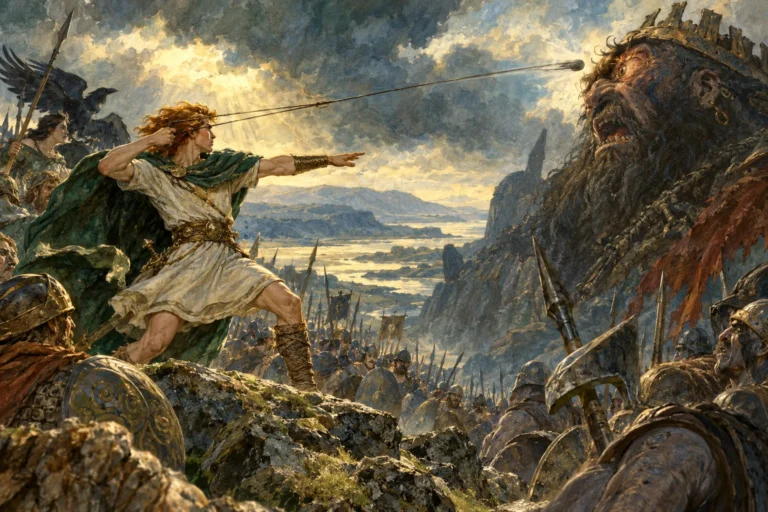
The same comparison leads to Lugh and Manannán. A place may connect a body of stories without becoming the setting of every episode involving their figures. The mainland killing in Curtin’s tale is also separate from the battlefield setting in the Mag Tuired narrative.
The island and material evidence
Fáilte Ireland’s island overview places Tory about 12 kilometres off north Donegal and identifies its round tower, monastic remains and Tau Cross among the surviving heritage features. These belong to the island’s material and religious history. The overview is used here for that limited orientation, not as an archaeological demonstration of Balor’s castle.
No monument examined for this page identifies Balor, his daughter or the cow as historical individuals. Detailed archaeological records and further local accounts remain work to do. Begin with the story and its comparison, then use the Curtin book record to follow the published source.
Sources for this place
- Jeremiah Curtin, collector, Hero-Tales of Ireland. London: Macmillan, 1894. ‘Balor on Tory Island’, pp. 283–295, especially opening setting and concluding provenance note. Read source — Narrative geography and explicit mainland/Tory collection distinction. About this book
- William Larminie, collector and translator; John McGinty, narrator, West Irish Folk-Tales and Romances. London: Elliot Stock, 1893. ‘The Gloss Gavlen’, pp. 1–9; notes pp. 251–252. Read source — Compared geographical difference; Tory is not inserted into this account. About this book
- Fáilte Ireland, Toraigh (Tory Island). Web page consulted 17 October 2026. Island introduction and heritage overview. Read source — Limited physical orientation and list of heritage features; no archaeological claim for Balor.
Research coverage
This first place guide examines the island’s role in one complete Curtin tale and its collection note, alongside Larminie’s different geography. It is not a complete collection of Tory folklore. Individual local oral records, archaeological monument reports and the island’s Colmcille traditions require separate study.
The Myths · Irish collection · Editorial approach
Further Reading