Ulster Cycle · figure
Emer
Cú Chulainn’s wife is a skilled speaker, a determined chooser of her own marriage and a voice the hero sometimes refuses to hear. Her role changes across the courtship, Connla and otherworld stories.
Also found as: Émer · Éimhear · Eimhear · Emer daughter of Forgall · Forgall’s Daughter
Research reviewed 17 October 2026.
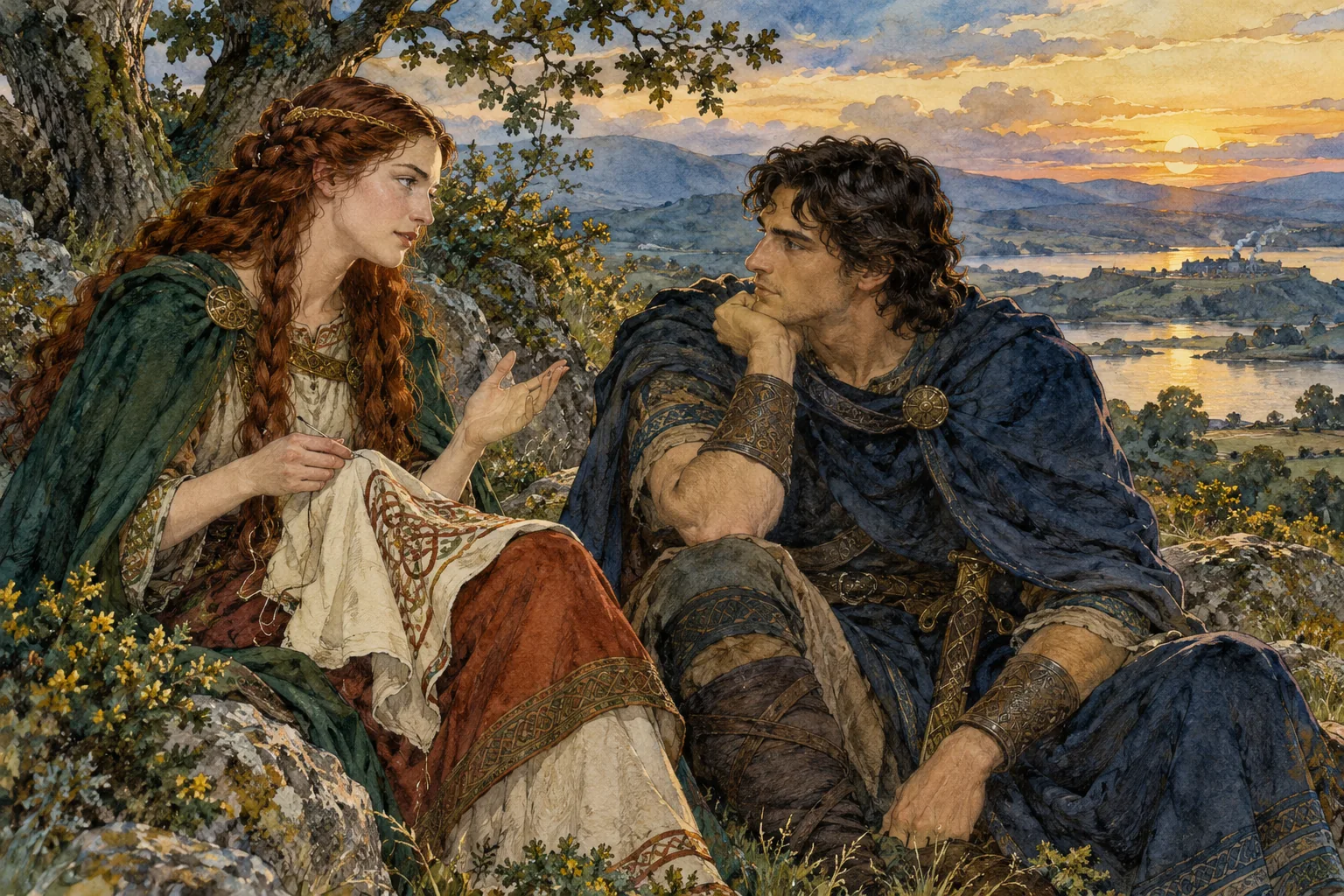
Emer is the daughter of Forgall and the wife of Cú Chulainn in a substantial group of Ulster narratives. Her best introduction is the Wooing of Emer, where she meets the famous young warrior as someone capable of testing him. She belongs among the cycle’s important speakers and decision-makers, not merely among names in the hero’s family tree.
The woman who understands the riddles
In Kuno Meyer’s translation of Tochmarc Emire, Emer teaches needlework to the young women around her. The narrator praises six accomplishments: beauty, voice, pleasing speech, needlework, wisdom and chastity. Cú Chulainn’s approach becomes a conversation in a learned language of riddles, genealogy and place-name stories. He is attracted to a woman who can converse with him on those terms, while she refuses to accept a recital of youthful achievements as sufficient proof of mature ability. Meyer, pp. 70–75 and 150.
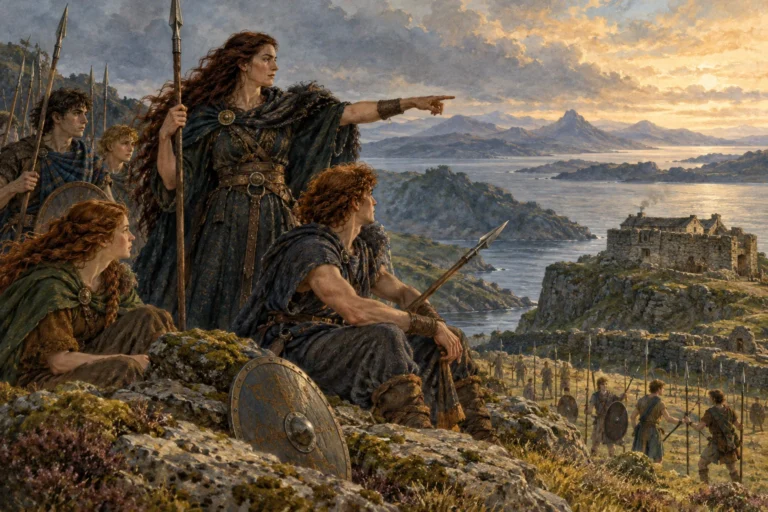
The conditions Emer sets anticipate the eventual escape from her father’s residence. Cú Chulainn must overcome the defences while sparing her brothers, and bring her foster-sister with them. She also detects Forgall’s attempt to send him abroad to his death. When her father subsequently promises her to Lugaid, Emer tells the prospective husband where her loyalty lies and makes the proposed marriage an issue of his honour. He withdraws. Her refusal has a direct effect on the plot. Meyer, pp. 232–234 and 300–301.
A warning before Connla’s death
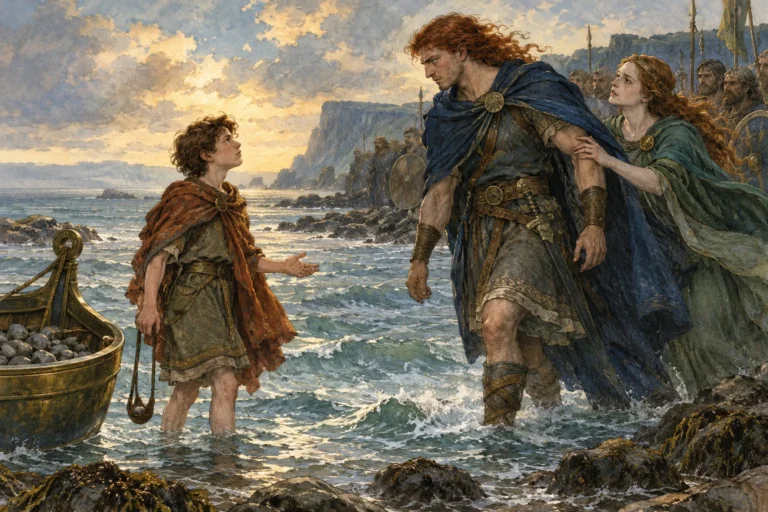
Emer’s role in the death of Connla is essential to understanding that tragedy. In the early account translated by Meyer, she puts her arm around Cú Chulainn and warns him that the boy he is about to confront is his own son. He rejects her advice in the name of Ulster’s honour. Her presence makes the episode more than an innocent failure to recognise a stranger. Gregory’s later “Only Son of Aoife” omits this warning, so readers of that adaptation encounter a markedly different balance of knowledge and responsibility. Aided Óenfir Aífe, sections 8–10; Gregory, chapter XVIII.
Jealousy, grief and choice
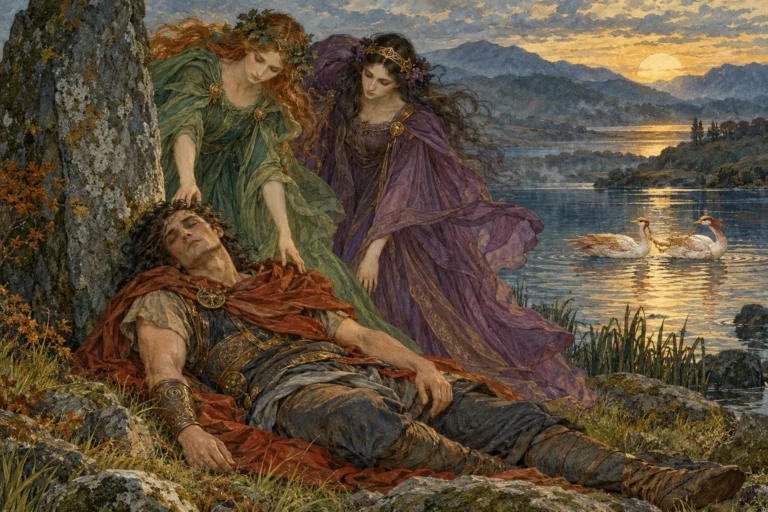
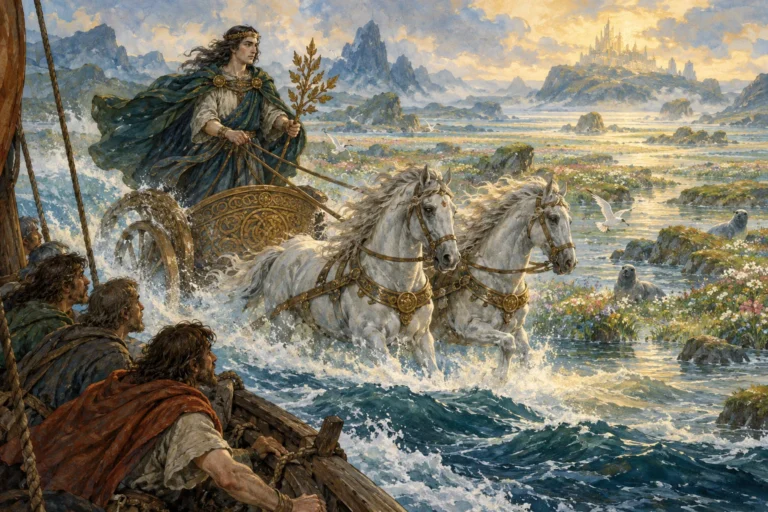
In The Sick-bed of Cuchulain, also associated with the title “The Jealousy of Emer”, Cú Chulainn’s relationship with the otherworldly Fand threatens their marriage. Emer approaches with armed women, but the confrontation moves beyond a simple contest between rivals. She challenges the idea that a newly desired woman is necessarily better than a familiar wife. When Cú Chulainn reaffirms his affection, Emer and Fand each offer to surrender him. Fand finally leaves with Manannán; forgetfulness is administered to the human couple. Leahy, “The Sick-bed of Cuchulain”, concluding encounter and separation.
The transmitted Sick-bed is itself composite. Leahy discusses overlapping narrative forms and the presence of both Ethne and Emer in its textual history. That complication should remain visible, rather than being repaired into a seamless marital biography. The different tales were not chapters drafted together by one author. Leahy, special introduction and notes to “The Sick-bed”.
Across these accounts, Emer’s intelligence repeatedly exposes a limit in heroic confidence. She can decode a courtship, frustrate an unwanted marriage and understand a danger that Cú Chulainn refuses to acknowledge. That is a reading grounded in particular scenes; it does not establish a historical woman behind them. Her connections lead readers through Emain Macha, the Boyne, Scáthach’s teaching and several conflicting portraits of the hero she marries.
Versions and variations
Emer’s presence and agency should be checked story by story. The long Wooing gives her extensive learned dialogue and a successful refusal of Lugaid; the early Connla tale gives her a warning that Gregory’s later adaptation removes. The Sick-bed combines narrative strands whose personal names and transitions do not form an entirely smooth account. This guide keeps those differences visible instead of assigning every incident to one certain life history. Wooing; Connla, sections 8–9; Leahy’s introduction to the Sick-bed.
Context and evidence
Emer is a literary figure of the Ulster Cycle. No contemporary personal record or securely attributed archaeological object establishing her historical existence is supplied by the sources examined here. Locations in her stories have their own historical and archaeological records, which must be assessed separately from the deeds attributed to her.
Sources for this entry
- Anonymous; translated by Kuno Meyer, The Wooing of Emer. The Archaeological Review 1 (1888), pp. 68–75, 150–155, 231–235, 298–307; CELT T301021. pp. 70–75 and 150: gifts and courtship; pp. 232–234: conditions and warning; pp. 300–301: rejection of Lugaid; pp. 305–306: escape and wedding. Read source — Principal account of Emer’s family, accomplishments, choices and marriage.
- Anonymous; translated by Kuno Meyer; Irish text edited by A. G. van Hamel, Aided Óenfir Aífe / The Death of Conla. Meyer, Ériu 1 (1904), pp. 114–121; van Hamel (1933), pp. 11–15; Irish Sagas Online presentation. §§8–9: Emer’s warning and Cú Chulainn’s reply. Read source — Early text establishing Emer’s intervention before the fatal combat.
- A. H. Leahy, translator, Heroic Romances of Ireland, volume I. London: David Nutt, 1905; Project Gutenberg text. “The Sick-bed of Cuchulain”: special introduction; concluding encounter with Emer and Fand; General Notes, especially notes labelled pp. 57, 68–69 and 80–81. Read source — Public-domain translation of the otherworld romance and discussion of its combined narrative strands. About this book
- Lady Augusta Gregory, Cuchulain of Muirthemne. London: John Murray, 1902. XVIII, “The Only Son of Aoife”, pp. 313–319. Read source — Compared later adaptation that omits Emer’s warning. About this book
Research coverage
Guide based on the long Wooing, the early Connla text, Leahy’s Sick-bed translation and editorial discussion and Gregory’s Connla adaptation. Further work should compare the short Wooing recension, Fled Bricrenn’s contest between the heroes’ wives, all death-lament material and modern retellings. It is not a catalogue of every appearance.
The Myths · Irish collection · Editorial approach
Further Reading