Place · County Sligo, Ireland
Kesh Caves
The caves of Keshcorran connect a visible limestone landscape with stories of enchanted captivity and rescue.
Also found as: Keash Caves · Caves of Keash · Keshcorran · Ceiscoran · Kesh Corann
A hillside with an opening into story
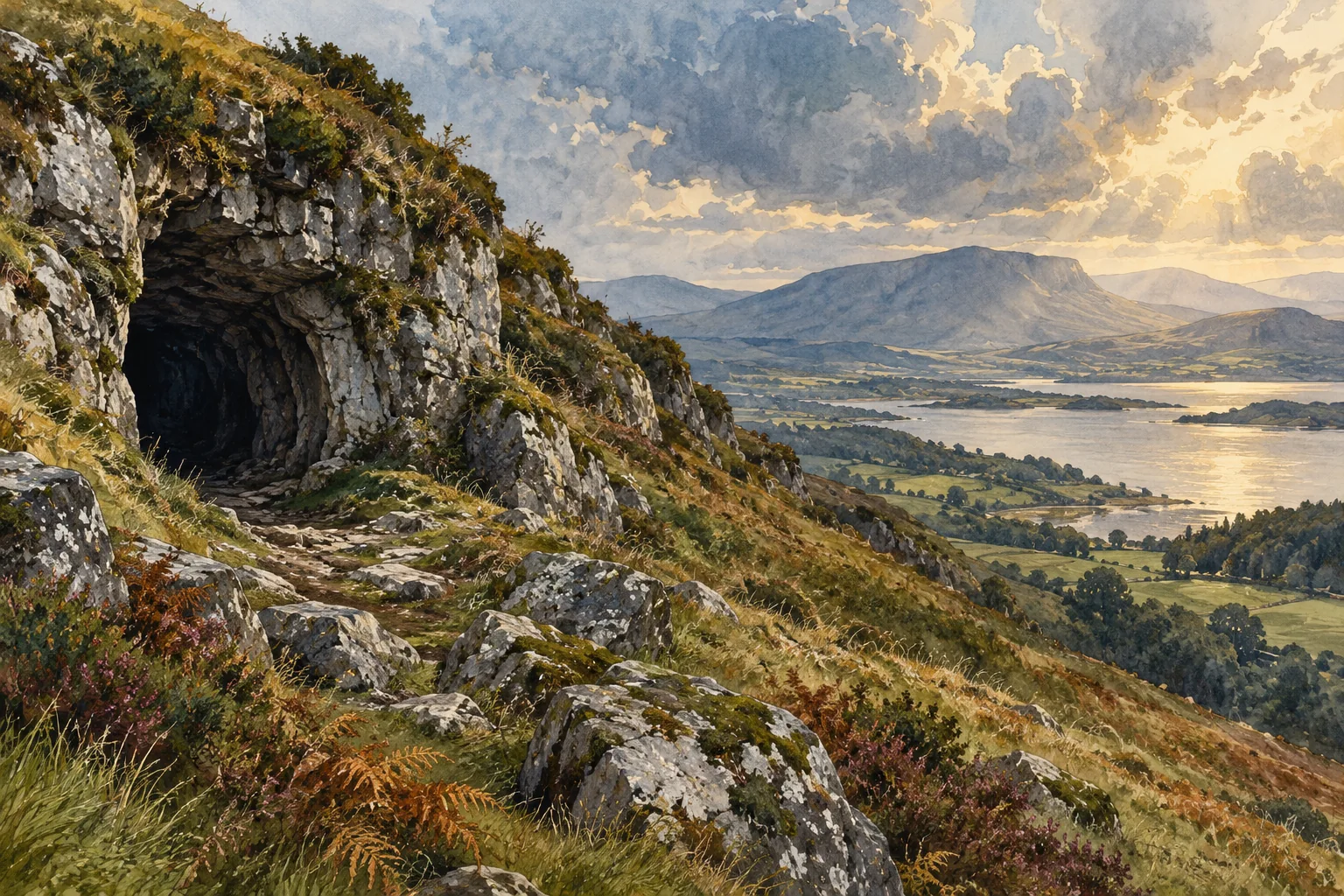
The caves of Kesh, also written Keash, lie on the western side of Keshcorran in County Sligo. Sligo Walks’ county walking guide describes seventeen caves and a cairn on the hill above them. The same guide records a local connection with the childhood of Cormac mac Airt. Those are different kinds of information: a description of the landscape and a record of an associated story. Sligo Walking Guide, “Keash Hill Trail”.
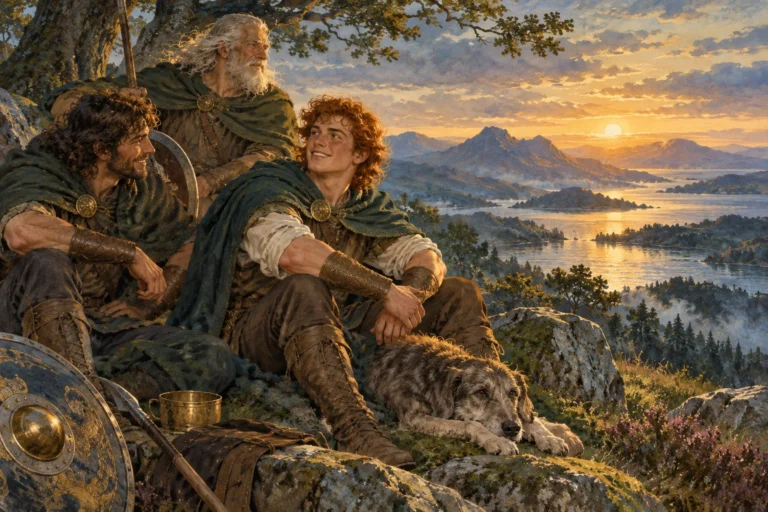
Fionn’s company loses its strength
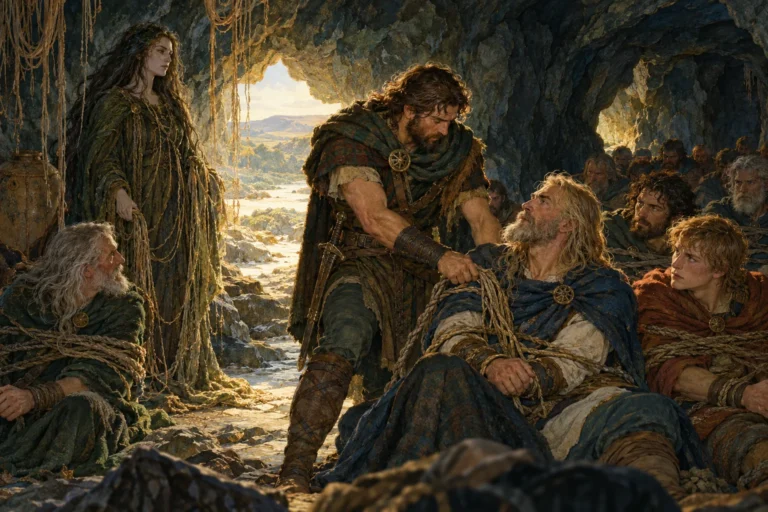
Gregory calls the place Ceiscoran. Fionn is hunting in the surrounding country when Conaran, its supernatural ruler, resents the intrusion. His daughters sit at a cave mouth working enchanted yarn. Fionn and Conan approach; crossing the threads leaves them powerless. More of the Fianna follow, and the cave becomes a prison for warriors who usually depend on their physical ability. Gregory, “The Cave of Ceiscoran”.
The scene makes the entrance itself important. Outside are hounds waiting for their masters and the spoils of a successful hunt; inside, the hunters have become captives. Their normal authority over the landscape has been reversed. The linked story and version comparison follows the rescue and explains how later writers develop the episode.
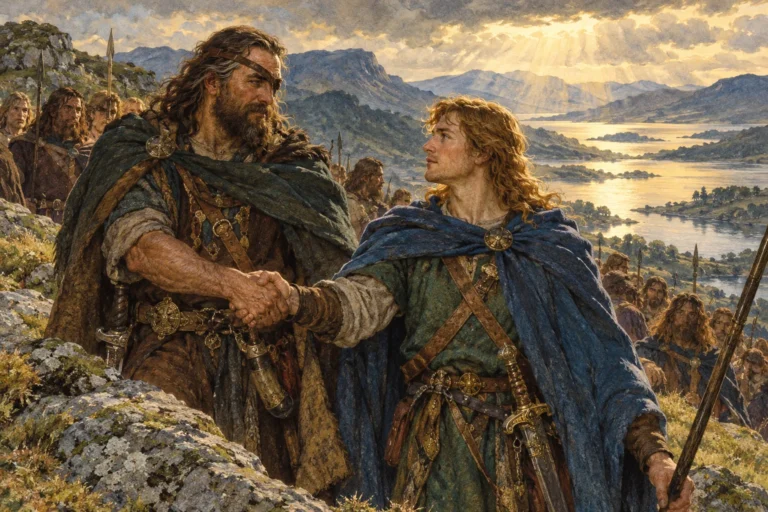
The association also opens a route to Goll mac Morna, whose relationship with Fionn is more complicated than a simple division between friends and enemies. Stories of service and rescue belong beside stories of rivalry when examining the Fianna as a company. The place therefore connects character study with the narrative, rather than serving only as a picturesque backdrop.
What the name establishes
Gregory names Ceiscoran and cites Silva Gadelica for this chapter in her source list. That gives a reader a traceable literary route to investigate. It does not identify one numbered cavity as the independently verified prison of the tale, or establish a date for the magical episode. The story page distinguishes the texts actually examined from those still awaiting comparison.
The Cormac childhood tradition mentioned by Sligo Walks is also distinct from Cormac’s Otherworld adventure. A shared character is a useful connection, but it is not a reason to relocate the latter tale to these caves. This library keeps the association and the narrative setting separate.
Sources for this place
- Sligo Walks, Sligo Walking Guide. County guide, hosted PDF. Keash Hill Trail, printed page 5. Read source — Landscape description and reported Cormac childhood association.
- Lady Gregory, Gods and Fighting Men. Digital text bearing 1905; first published 1904. Part Two, Book Four, chapter II, The Cave of Ceiscoran; source note under the same title. Read source — Named cave setting and the captivity narrative. About this book
Research coverage
The literary cave episode and the county guide’s landscape description are covered here. This page has not yet reviewed excavation reports or catalogued every local cave tradition. The Cormac childhood association is a research lead, not a full variant study. Reviewed 17 October 2026.
The Myths · Irish collection · Editorial approach
Further Reading