figure · Britain · shared tradition
King Arthur
War leader, marvel-working companion, conqueror and king of a troubled court: Arthur changes with the texts that tell his story.
Also found as: Arthur · Arthur Pendragon. Research reviewed 18 October 2026.
Begin with the version
There is no single medieval biography into which every Arthurian story fits. A reader who begins with the Welsh Culhwch and Olwen meets an active leader of extraordinary companions. A reader of Geoffrey of Monmouth meets a king whose campaigns reshape Britain and reach far beyond it. Malory gives a long account of a fellowship’s creation and collapse. These Arthurs overlap, but their differences matter.
The ninth-century Historia Brittonum already places Arthur in a list of battles, while its marvels associate him with a boar hunt. Such material demonstrates that Arthur was being written about before Geoffrey; it is not a contemporary record of a securely identified man.
A route through the stories
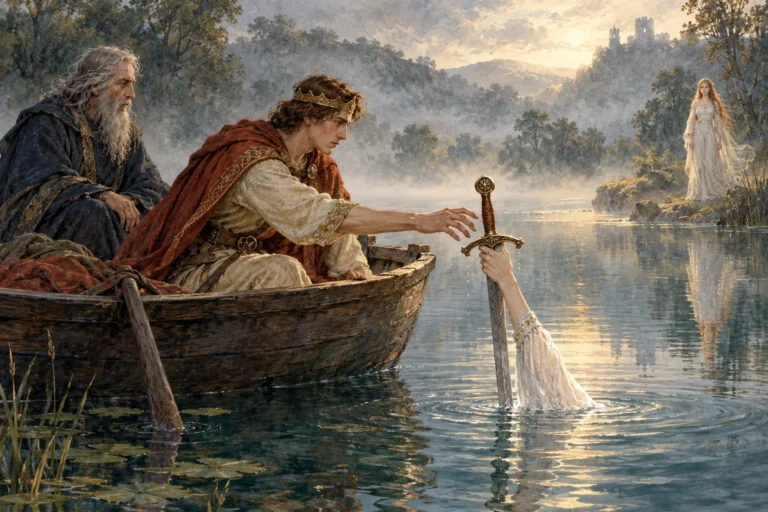
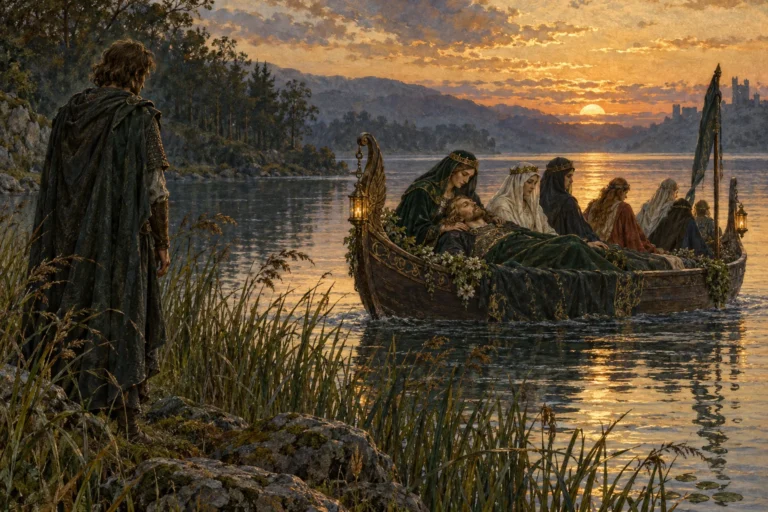
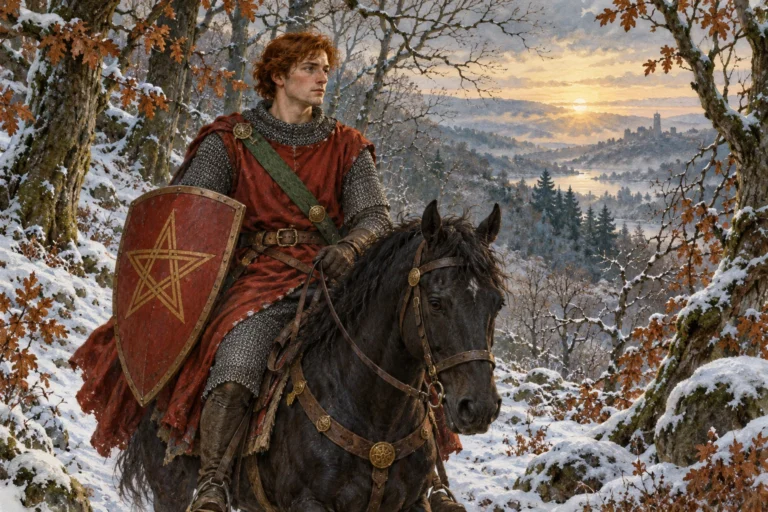
Start with the sword in the stone for Malory’s unexpected accession and Excalibur for the different sword traditions. Turn to Culhwch’s marriage quest to see Arthur directing a company of Welsh heroes. Gawain’s challenge shifts attention from king to nephew. The voyage to Avalon brings the fellowship’s ending into focus.
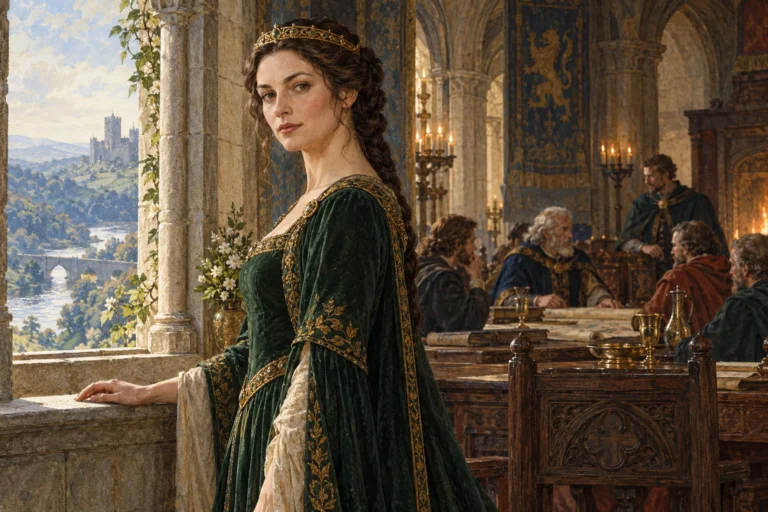
The Round Table is an important image of the court, but not a feature to insert into every early Arthurian account. Wace’s Roman de Brut describes its arrangement as a way to prevent disputes over precedence. Malory gives the table a family history: it comes to Arthur with his marriage to Guinevere, from her father Leodegrance, who had received it from Uther.
Versions and variations
Family relationships change
In Geoffrey’s final conflict, Modred is Arthur’s nephew. In Malory, Mordred is also his son. Bedwyr in the Welsh marriage quest is a capable, one-handed companion; Malory’s Bedivere becomes the witness of Arthur’s last departure. Similar names do not guarantee that every role remains unchanged.
Welsh and English collections
Arthur belongs in both routes through this library. The labels help readers find texts and places; they do not award exclusive ownership of the figure to a modern country. French-language romance is included where it shaped the stories being examined.
An Arthurian map needs dates
Tintagel, Caerleon and Glastonbury have distinct associations. A conception story, a royal literary court and a medieval tomb claim are different kinds of connection, not three interchangeable answers to “Where was Camelot?”
Context and evidence
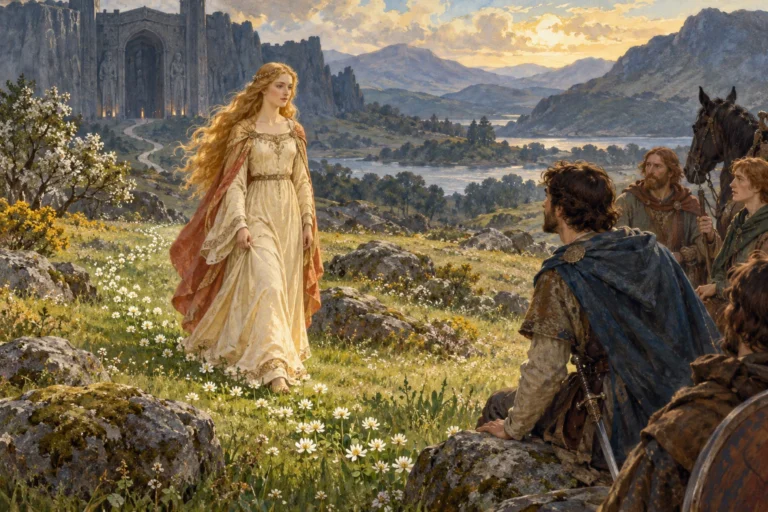
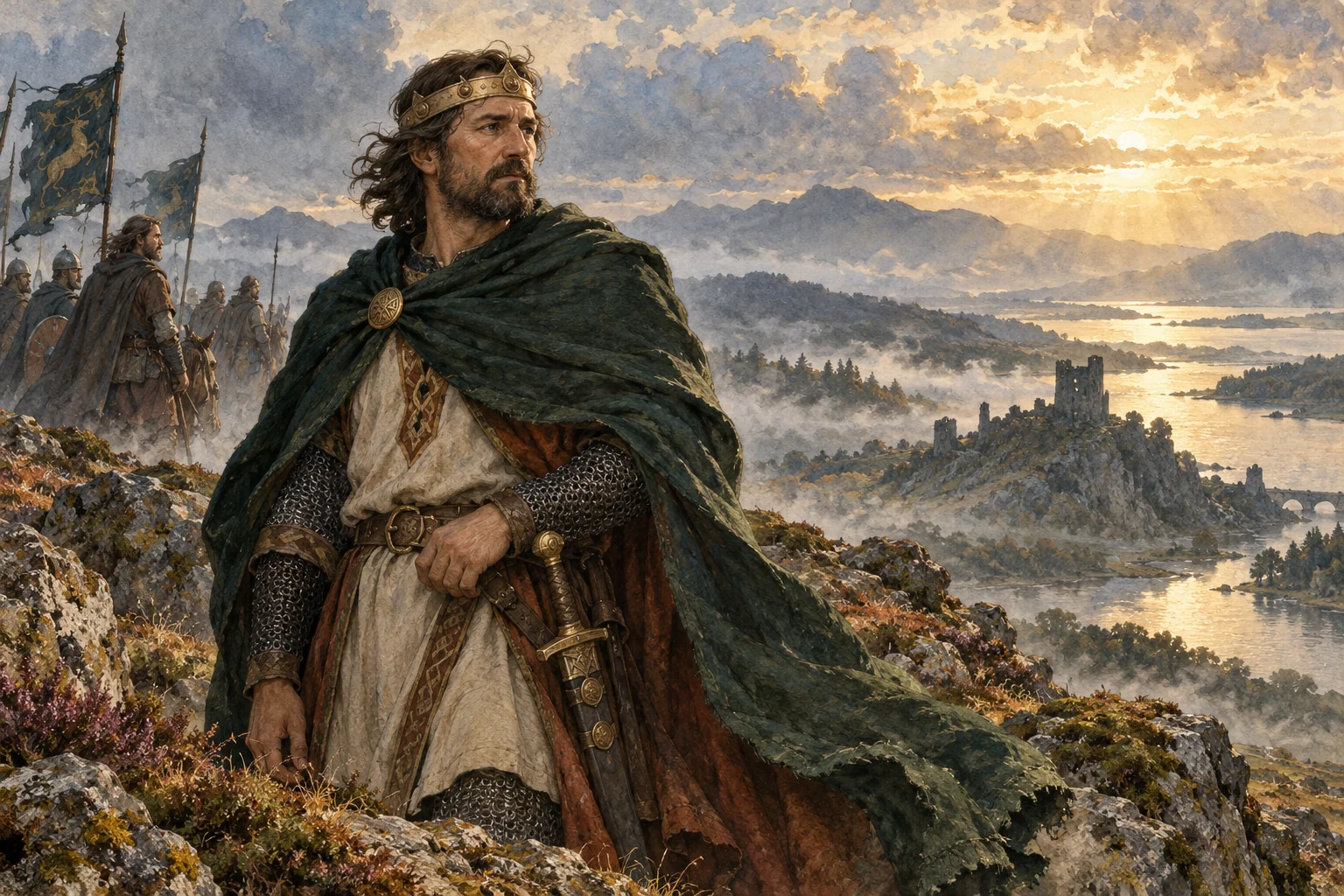
A historical person behind part of the tradition remains unproven. The evidence guide separates early testimony, later chronicle, romance and archaeology. Neither a real early medieval settlement nor a convincing illustration supplies the missing personal identification.
This first guide covers the sources named below. Grail narratives, the full French prose cycles, Scottish Arthurian traditions, Welsh poetry and triads, and many local sleeping-king legends need further dedicated comparisons.
Sources for this entry
- Anonymous compiler, traditionally attributed to Nennius, Historia Brittonum (History of the Britons). Ninth-century compilation; Fordham transcription of Giles (1848), with §§56 and 73 supplied from the Camelot Project. Sections 56 and 73. Arthur in a ninth-century compilation. Read source · About this book
- Anonymous Welsh storytellers; translated by Charlotte Guest, The Mabinogion. Nineteenth-century translation, collected edition; Project Gutenberg 5160. “Kilhwch and Olwen”. Welsh leader and company. Read source · About this book
- Geoffrey of Monmouth, History of the Kings of Britain, Book IX. Composed c.1136–38; Giles collection (1848). Book IX, chapters 1–15. Accession, campaigns and court. Read source · About this book
- Geoffrey of Monmouth, History of the Kings of Britain, Book XI. Composed c.1136–38; Giles collection (1848). Book XI, chapters 1–2. Modred and Avalon. Read source · About this book
- Wace; translated by Eugene Mason, Arthurian Chronicles: Roman de Brut. Wace completed his French poem in 1155; Mason translation, with introduction by Lucy Allen Paton (1912). Arthur’s Round Table passage. Literary explanation of precedence. Read source · About this book
- Thomas Malory, Le Morte Darthur, volume I. Caxton book-and-chapter arrangement, first printed 1485; Project Gutenberg 1251. Book I, chapters 5–9 and 23–25; Book III, chapters 1–2. Accession, swords and marriage gift. Read source · About this book
- Thomas Malory, Le Morte Darthur, volume II. Caxton book-and-chapter arrangement, first printed 1485; Project Gutenberg 1252. Book XXI, chapters 4–7. Final conflict and departure. Read source · About this book
Research coverage
The named passages have been examined and compared. This is a first source-led guide, not a collation of every manuscript, translation, local telling or adaptation.
The Myths · Arthurian collection · Editorial approach
Further Reading