Regional names and encounters · figure
English fairies and pixies
Tiny hearth visitors and adult-sized fairy households belong to different tellings. This guide keeps their local names and source histories visible.
Also found as: Fairies · Pixies · Pixy
Research reviewed 18 October 2026.
Begin with a particular story
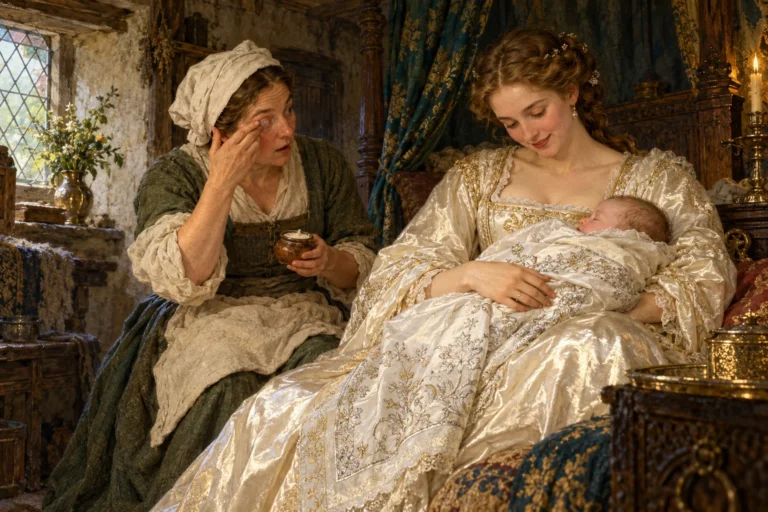
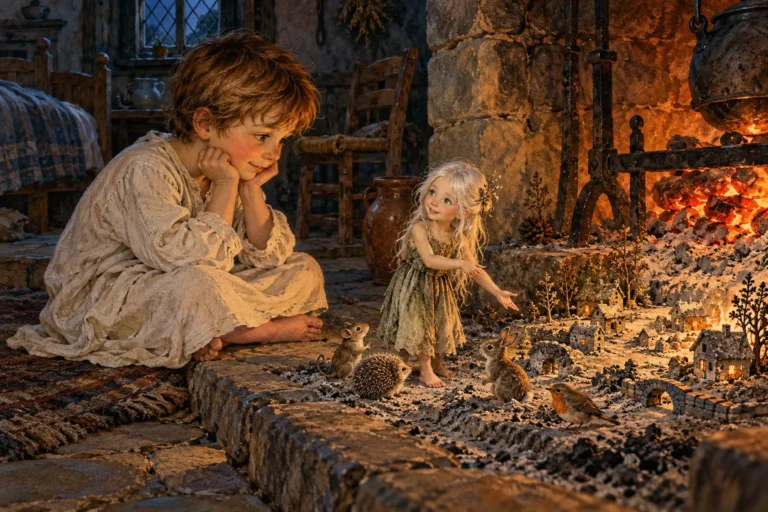
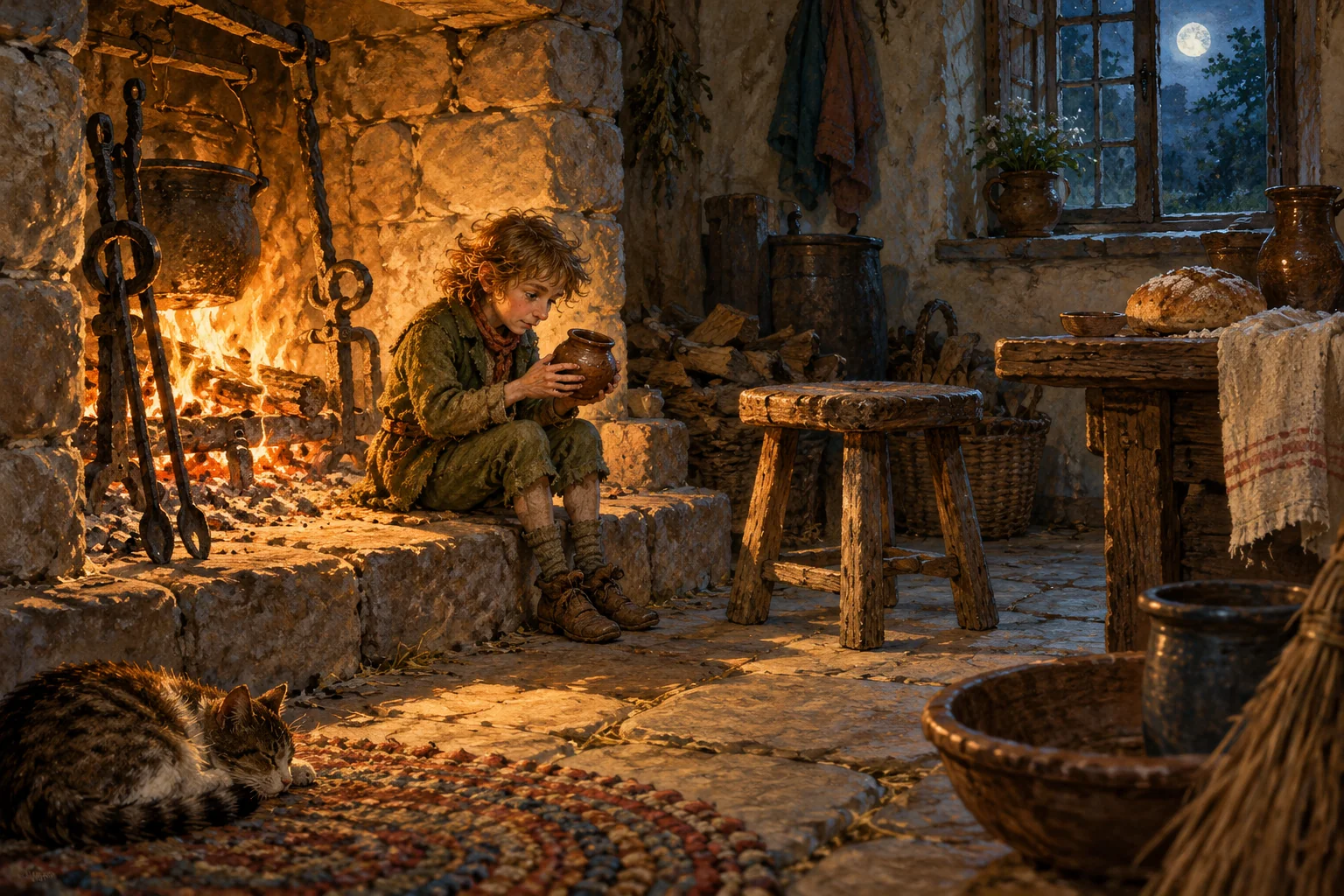
In Jacobs’s “My Own Self”, a tiny visitor comes down a Northumbrian cottage chimney and plays beside the fire. In “Fairy Ointment”, a nurse enters a household whose appearance changes when she touches salve to her eye. There is no need to give both encounters the same size, costume or rules.
The words fairy and pixy or pixie can be used differently by narrators and editors. The safest approach is to name the word used in a particular passage and describe what happens there, rather than impose a universal distinction.
When a narrator insists on a difference
Baring-Gould’s Morada account explicitly calls its prince and princess fairies rather than pixies. They are an exiled couple with a family story, and the prince’s final payment complicates his harmful act. That distinction belongs to this account; it should not be projected onto all Devon folklore.
Versions and variations
Northern household encounter
Jacobs’s source note for “My Own Self” names Mrs Balfour and Mrs W. of North Sunderland. The printed story is his rewriting of that material, while Ainsel and other parallels are listed as further leads.
South-western supernatural sight
Jacobs’s ointment story depends on Mrs Bray through Hartland. Baring-Gould gives a different chain for Morada, through Whiteway and Nurse Warren. These are distinct printed presentations; their independence at every earlier stage has not been proved.
Neighbours in the directory
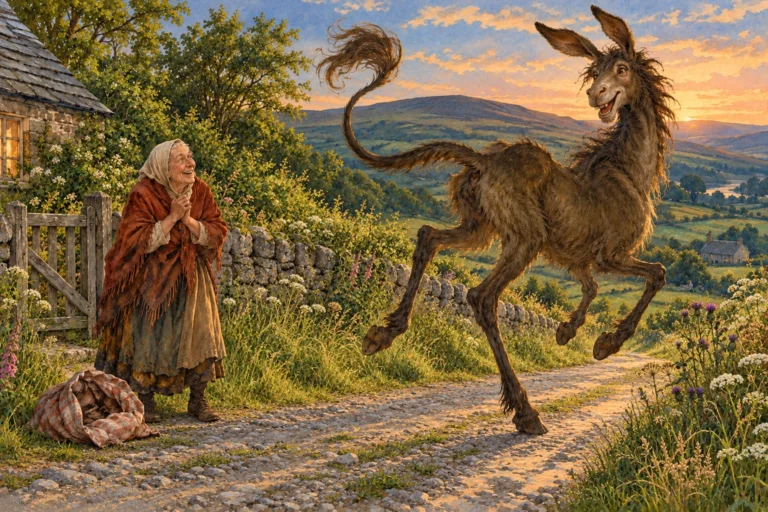
The Hedley Kow and Cauld Lad of Hylton offer useful comparisons with local spirits. Linking them here does not turn the shape-changer or the castle figure into a pixie.
Context and evidence
The surviving books mix remembered stories, collector commentary and literary revision. They are evidence for the circulation of narratives, not verified records of supernatural beings.
Compare actions before appearances: a name can divert blame, a gift can reveal an obligation, and a glimpse can break the conditions of an encounter. A shared action makes a useful research link without proving a common origin.
Sources for this entry
- Joseph Jacobs, More English Fairy Tales. New York and London, 1894. XLVII, “My Own Self”. Read source — Complete literary retelling. About this book
- Joseph Jacobs, More English Fairy Tales. New York and London, 1894. Notes and References, XLVII. Read source — Balfour and Mrs W. source chain, original title, and bibliographic parallels. About this book
- Joseph Jacobs, English Fairy Tales. First published 1890; later revised impression transcribed at Wikisource. XL, “Fairy Ointment”. Read source — Complete Dame Goody telling. About this book
- Joseph Jacobs, English Fairy Tales. First published 1890; later revised impression transcribed at Wikisource. Notes and References, XL. Read source — Acknowledges Mrs Bray through Hartland and Jacobs’s own changes to the midwife’s name and description. About this book
- Sabine Baring-Gould, A Book of the West, volume I: Devon. London: Methuen, 1899. Dartmoor fairy account, Morada near Holne, pp.187–193. Read source — A different named midwife narrative, attributed through T. W. Whiteway to Nurse Warren. About this book
Research coverage
The passages named below have been read and compared. This entry does not claim to include every oral performance, manuscript witness or modern adaptation; unexamined leads are identified separately.
The Myths · English collection · Editorial approach
Further Reading