Ulster Cycle · figure
Scáthach
The formidable teacher whose training links Cú Chulainn, Ferdiad and Connla. Her literary stronghold, prophetic knowledge and later association with Skye belong to related but distinct layers of tradition.
Also found as: Scathach · Scáthach Úanann · Scáthach Úanaind · Sgàthach · Scathach of the Shadow
Research reviewed 17 October 2026.
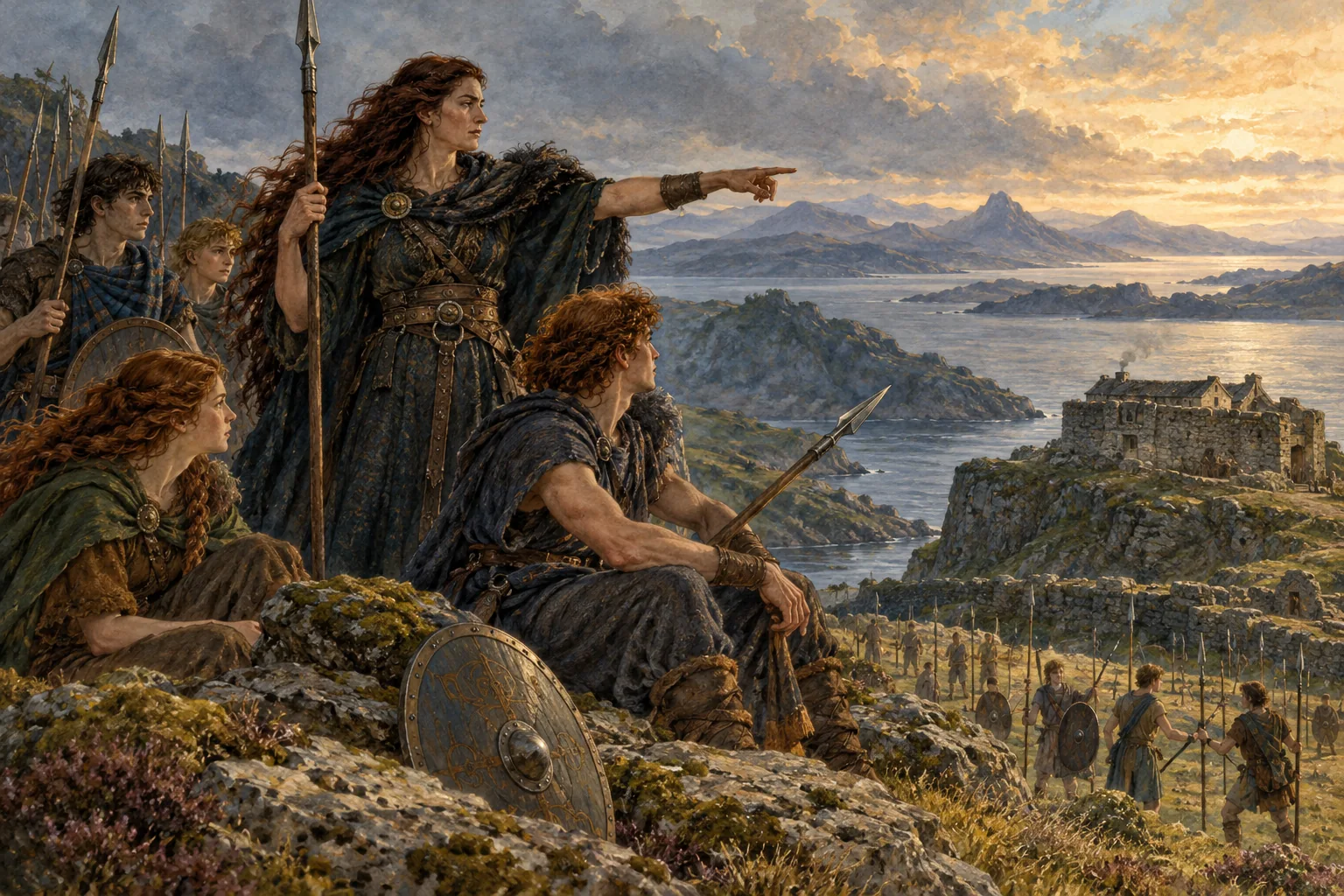
Scáthach is the teacher whom Cú Chulainn must reach to complete his martial education in the Wooing of Emer. She commands a household, trains warriors and possesses knowledge of the future. Her importance extends beyond a single adventure: the skills acquired with her connect some of the most painful conflicts in the hero’s later career.
Reaching the teacher
In Kuno Meyer’s long Wooing, the journey begins with Forgall’s scheme to remove his daughter’s suitor. Cú Chulainn first trains with Domnall in Alba, then learns that Scáthach lives farther east. The route becomes a landscape of peril: trapping ground, hostile creatures and a bridge that throws challengers back. Reaching her is already a demonstration of exceptional ability. It should not be read as an ordinary itinerary whose every obstacle can be plotted on a modern map. Meyer, pp. 233–235 and 298–299.
Scáthach’s family is part of the teaching household. Her daughter Uathach helps the newcomer; her sons Cuar and Cett are also pupils. After killing one of the household’s warriors, Cú Chulainn offers to take on his service. Uathach tells him how to secure her mother’s instruction by threatening her with a sword. The encounter places the teacher under coercion even while acknowledging that she holds knowledge he cannot supply for himself. The source is more troubling than a simple story of a master gladly welcoming a gifted student. Meyer, pp. 299–300.
War, protection and prophecy
When Scáthach fights Aífe’s forces, she gives Cú Chulainn a sleeping potion to keep him out of danger. It works for only an hour. He joins her sons, kills their opponents and fights Aífe in Scáthach’s place. Scáthach’s advice about Aífe’s love for her horses and chariot enables the trick that wins that combat. Before Cú Chulainn finally leaves, she foretells his future. The teacher is therefore also a protector, strategist and seer within the narrative. Meyer, pp. 301–303.
The story itself preserves alternatives. Meyer notes versions that include Ferdiad and other Irish heroes among the students at this point, and another account in which Scáthach becomes Cú Chulainn’s sexual partner. His principal narrative instead develops the relationship with Uathach. Gregory selects and reshapes this material: she explicitly places Ferdiad and the sons of Usnach at the school and makes Scáthach predict a brilliant but short life. Meyer, pp. 299–300; Gregory, pp. 34–39.
Knowledge that cannot save the pupils
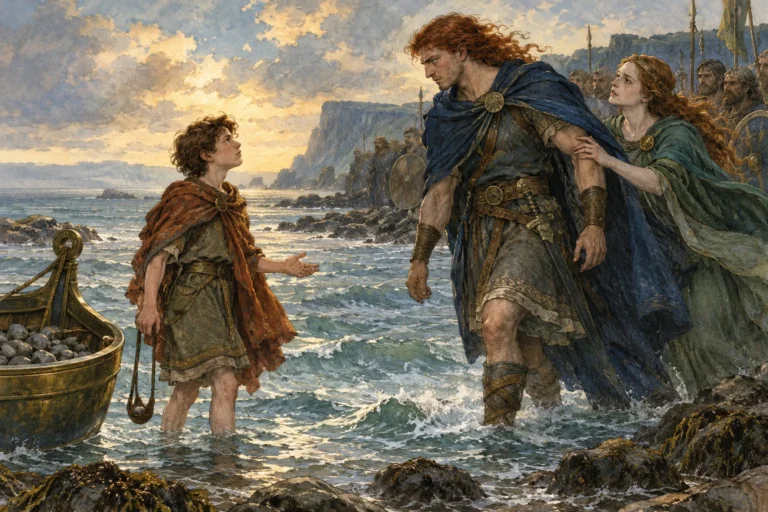
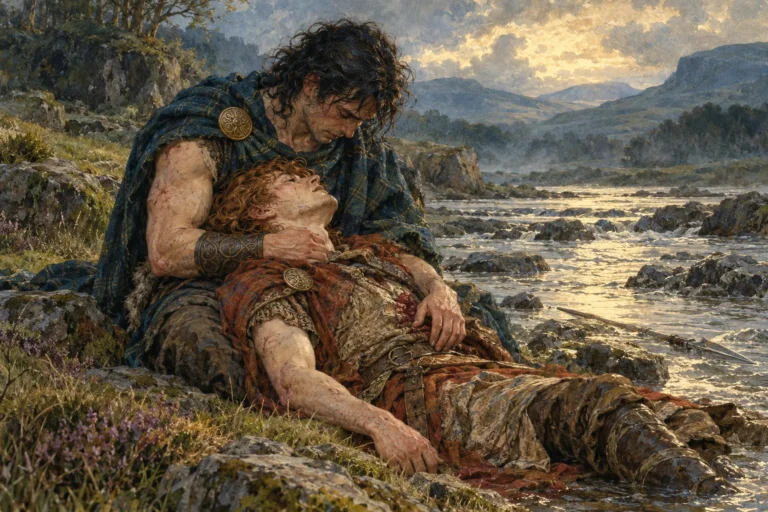
In the early Connla tale, Scáthach has taught the use of the gae bolga to Cú Chulainn alone. His son discovers that exclusion only when the weapon wounds him. Emer’s warning also invokes the grief the news will bring Scáthach. The familiar association of the school with Ferdiad similarly places shared learning behind a disastrous combat. These connections make the teaching relationship emotionally important, rather than merely an explanation of a weapon’s powers. Aided Óenfir Aífe, sections 8 and 11–12.
Alba, Letha and Skye
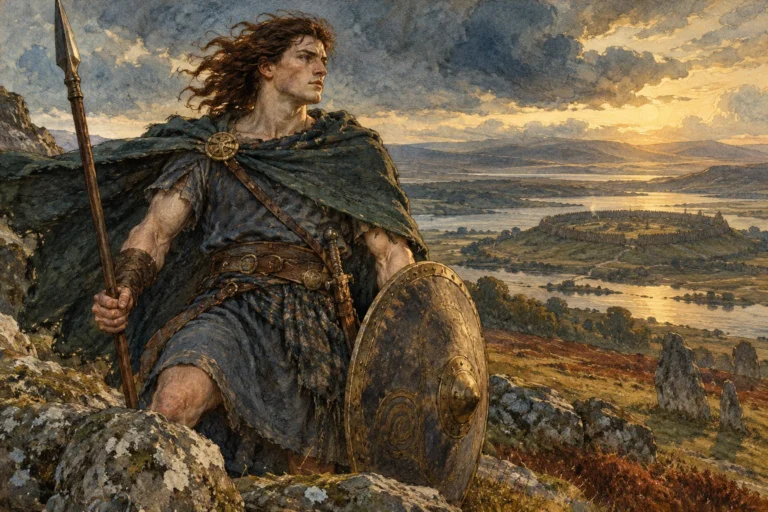
The locations vary. Meyer’s Wooing sends the hero through Alba to a place east of it; the early Connla text names Letha. Gregory’s geographical notes identify Dún Scáthach with the Isle of Skye. That later identification should be labelled as such. The real ruined castle at Dun Scaich, Tokavaig, has an official heritage record, but its existence does not demonstrate that the legendary teacher lived there. This guide does not assign an ancient date to its surviving masonry or claim that archaeology has found her school. Wooing, p. 234; Connla, section 1; Gregory’s place-name table; Historic Environment Scotland, SM954.
Versions and variations
The examined texts present Scáthach through related but distinct roles: warrior-teacher and prophet in the long Wooing, the source of unequal weapons training in the early Connla tale, and a figure explicitly associated with Skye in Gregory’s later geographical notes. Meyer also reports a sexual relationship in an alternative passage that his principal narrative does not follow. These details should be attached to their sources rather than combined into a supposed fixed biography. A claim that she is universally a goddess of death would require evidence beyond the passages examined here.
Context and evidence
Scáthach’s story provides a natural bridge between Irish and Scottish traditions, but “Scottish setting” needs qualification for each text. The literary names Alba and Letha, Gregory’s geographical identification, local traditions surrounding Dunscaith and the history of an actual castle are different kinds of evidence. No contemporary record identifying a historical Scáthach has been established by this research.
Sources for this entry
- Anonymous; translated by Kuno Meyer, The Wooing of Emer. The Archaeological Review 1 (1888), pp. 68–75, 150–155, 231–235, 298–307; CELT T301021. p. 234: east of Alba; pp. 298–300: approach, household and variant relationships; pp. 301–303: war, training and prophecy. Read source — Principal narrative evidence, including alternatives expressly identified within the translation.
- Anonymous; translated by Kuno Meyer; Irish text edited by A. G. van Hamel, Aided Óenfir Aífe / The Death of Conla. Meyer, Ériu 1 (1904), pp. 114–121; van Hamel (1933), pp. 11–15; Irish Sagas Online. §1: Scáthach Úanaind and Letha; §8: Emer invokes her; §§11–12: gae bolga instruction and exclusion of Connla. Read source — Second narrative account of the teacher and the consequences of training.
- Lady Augusta Gregory, Cuchulain of Muirthemne. London: John Murray, 1902. III, “Courting of Emer”, pp. 34–39; Notes, geographical table “Dun Scathach — Isle of Skye” and source-list statement. Read source — Examined adaptation; names pupils and expands prophecy; dependent on earlier published sources. About this book
- Lady Augusta Gregory, Cuchulain of Muirthemne: Notes. London: John Murray, 1902. Place-name table, “Dun Scathach — Isle of Skye”; pp. 359–360, “Courting of Emer”. Read source — Direct documentary witness to Gregory’s Skye identification and listed dependencies. About this book
- Historic Environment Scotland, Dun Scaich, castle, Tokavaig, SM954. Online designation record; supplementary information updated 28 March 2018; accessed 17 October 2026. Site title, location and monument classification. Read source — Evidence for the real monument only; not proof of Scáthach or her training school.
Research coverage
Examined the long Wooing and its reported alternatives, the early Connla narrative, Gregory’s adaptation and her Skye identification. The separate later Foglaim Con Culainn, Verba Scáthaige and Scottish oral collections remain priorities. The guide does not claim an exhaustive record of Scáthach traditions or identify archaeological remains as her actual home.
The Myths · Irish collection · Editorial approach
Further Reading