Place · Harlech, North Wales
Harlech
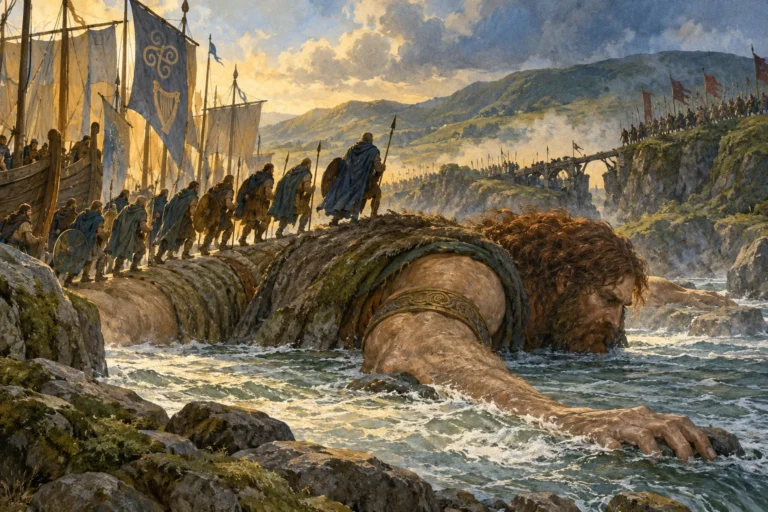
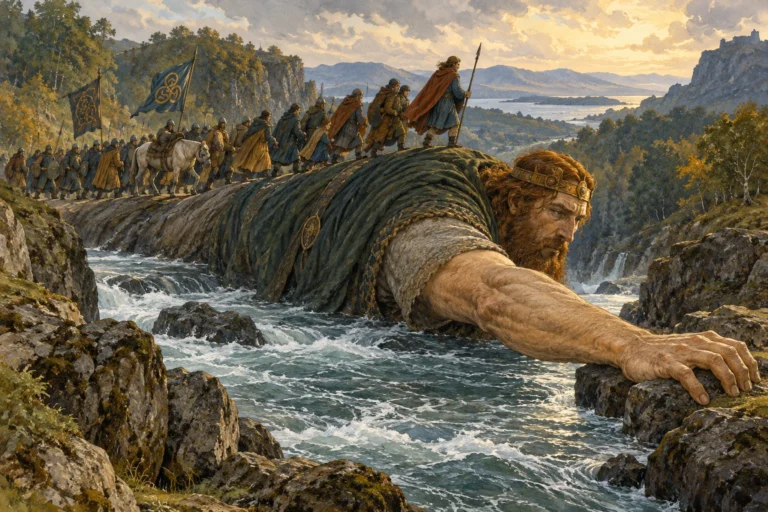
A real coastal town with an Edward I castle, and a recurring setting in the Second Branch: the place of Matholwch's arrival and the survivors' seven-year feast with Bendigeidfran's head.
Also found as: Harlech in the Mabinogi · Harddlech. Research reviewed 17 October 2026.
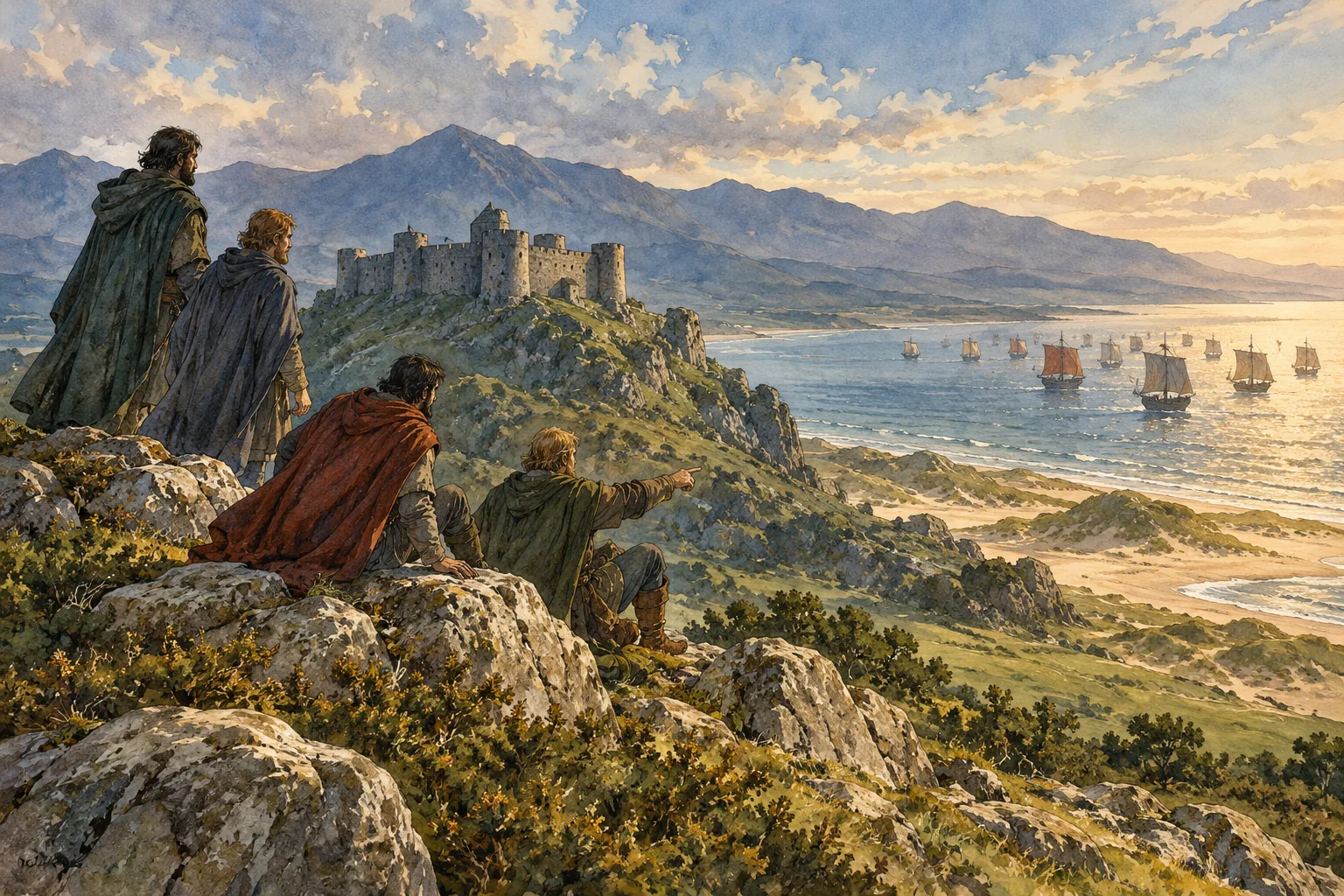
Harlech brings together a striking real landscape and two memorable scenes from Branwen, Daughter of Llŷr. The surviving castle stands on a rocky height above dunes, with the sea now farther away and Eryri behind it. Cadw identifies it as one of Edward I’s coastal fortresses, built in seven years under Master James of St George. Its defensive walls are material history. The giant king’s court belongs to a different kind of evidence: the medieval story.
The Second Branch begins with Bendigeidfran at Harlech, accompanied by his brother Manawydan and the half-brothers Nisien and Efnisien. From the rock they see thirteen ships approaching from Ireland. Matholwch has come to seek a marriage with Branwen. Harlech is therefore a point of contact across the sea: the first negotiations promise friendship between the islands before family violence destroys that hope. Guest’s translation places this opening on pp. 39–40.
Several later events are easily drawn towards the famous castle in a simplified retelling, but the narrative gives them other locations. The wedding feast is at Aberffraw. Branwen’s trained starling finds her brother at Caer Seiont, after her marriage has turned into captivity and humiliation. Harlech should not absorb every scene simply because it is the best-known landmark associated with the story. Following those changes of place preserves the journey’s scale and helps distinguish a literary itinerary from a single illustrated setting.
Harlech becomes important again after the expedition to Ireland. Seven survivors bring home Bendigeidfran’s severed head. Branwen dies after their landing at Aber Alaw, but the companions continue according to the king’s instructions. At Harlech they feast for seven years while three extraordinary birds sing. His head remains a companion, and the music offers a respite from what they have suffered. The closing section of the Branch, pp. 57–60, then moves the company to Gwales for the separate eighty-year stay.
The distinction matters when looking for evidence. A named place in a medieval text is evidence of that place’s role in storytelling. It does not establish that the present fortress was Bendigeidfran’s palace, that the feast took place in an identifiable room, or that the head can be located beneath the site. The tale ultimately sends the head to London. No excavation claim is used here to turn its marvellous episodes into documented events.
Read the complete story and comparison alongside this place guide, then return to the Welsh collection. For the surviving castle itself, Cadw supplies the current monument information.
Sources for this place
- Charlotte Guest, translator; Owen M. Edwards, editor, The Mabinogion, volume III: Branwen the Daughter of Llyr. London: T. Fisher Unwin, 1912; Project Gutenberg 19976. Guest's original three-volume collection was complete in 1849.. Pp. 39–60; Edwards's corrective notes to pp. 45 and 50.. Read source — Public-domain narrative basis; complete Second Branch read, with the embedded cauldron history and genealogical epilogue compressed. About this book
- Joseph Loth, translator, Les Mabinogion, tome I: « Branwen, fille de Llyr ». Paris: Fontemoing, 1913; revised from the 1889 edition.. Second Branch, pp. 119–150; complete narrative and relevant annotations.. Read source — Public-domain comparison translation; consulted for concrete differences in the cauldron's provenance and the sea crossing. About this book
- Cadw, Castell Harlech. Official monument description, consulted 17 October 2026.. Overview of the rocky site, Edward I's fortress, Master James of St George and the seven-year construction programme.. Read source — Physical and architectural context for the surviving castle, separate from the Second Branch's legendary court.
Research coverage
The castle's physical history is sourced separately from the legendary court. No secure archaeological identification of Bendigeidfran's residence or the seven-year feast is claimed. Gwales, Aberffraw, Caer Seiont and the White Mount retain their separate roles.
The Myths · Welsh collection · Editorial approach
Further Reading