Border spirits · figure
Redcaps
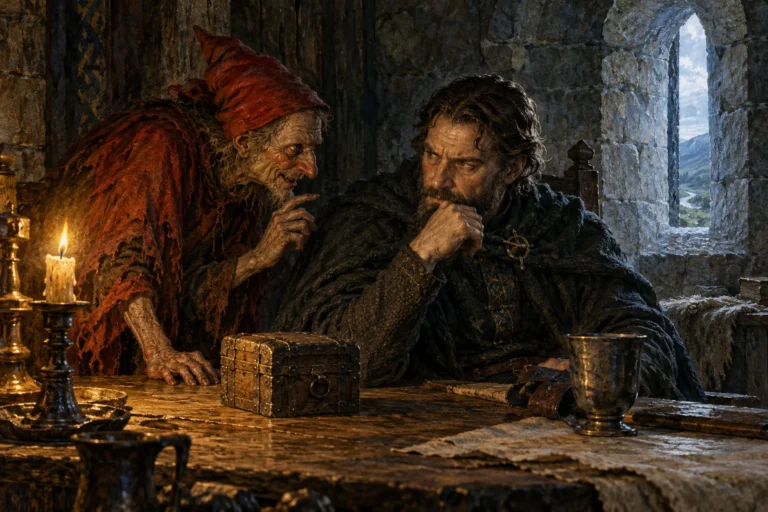
A red cap can belong to a murderous castle-haunter, a named literary familiar, or a very different household spirit. The source matters.
Also found as: Redcap · Redcomb · Bloody Cap
Research reviewed 18 October 2026.
A figure of ruined castles
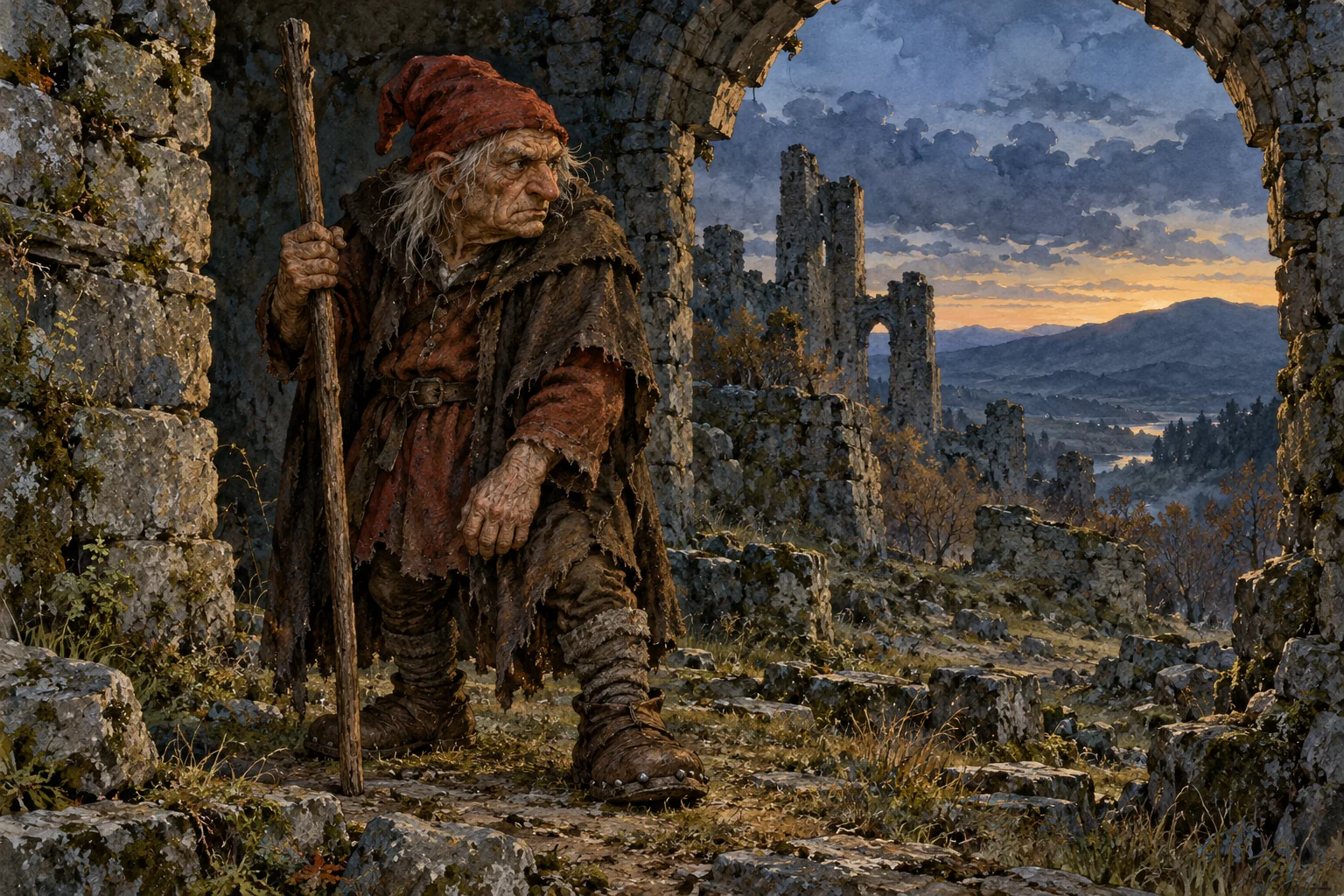
William Henderson describes Redcap, Redcomb or Bloody Cap as a short, thick-set old being with long teeth, fierce eyes, iron boots and a staff. His haunt is a ruined Border castle with a violent past. He attacks travellers and colours his cap with blood. These details belong to Henderson’s 1879 description; they are not universal rules for every fairy wearing red.
In the same account, Christian words and the sign of the cross drive him away, leaving a tooth behind. The tooth is a narrative detail, not a relic verified by this library.
Redcap and Lord Soulis
The Redcap associated with Soulis is a particular supernatural adviser. In John Leyden’s ballad he supplies protection and warnings, and later obstructs attempts to defeat his master. A named literary character and a collector’s general description can illuminate each other without being treated as identical evidence.
Versions and variations
Henderson’s general account
The castle-haunting description and its protective formula are printed together in chapter VII. Henderson’s book mixes collected material, earlier authors and comparison; it does not provide a modern field recording for this paragraph.
Leyden’s composed story
“Lord Soulis” is attributed to John Leyden in Scott’s collection. Henderson’s Soulis discussion draws on that literary tradition. Repetition between these books is therefore not a count of independent eyewitnesses.
A name is not a species
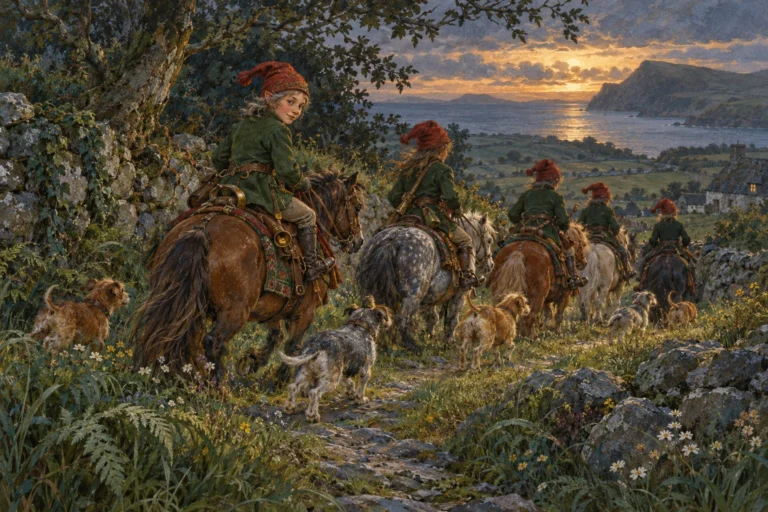
Henderson also mentions friendly Dutch beings with a similar name. That comparison does not make the Border attacker friendly. Likewise, Morrison’s red-capped Manx Little People are not automatically Scottish Redcaps.
Context and evidence
The castle setting brings the supernatural into places already associated with coercion and violent lordship. This is a useful interpretive connection, but it does not demonstrate that a single historical incident created the tradition.
Compare brownies for household help and the Manx Little People for a different use of red caps. Similar clothing alone is a weak basis for identifying figures across traditions.
Sources for this entry
- William Henderson, Notes on the Folk-Lore of the Northern Counties of England and the Borders. New edition, 1879. Chapter VII, Redcap and Lord Soulis passages. Read source — General Redcap description and an explicitly literary Soulis connection. About this book
- John Leyden; edited and introduced by Walter Scott, Minstrelsy of the Scottish Border. Third edition, 1806, volume III. “Lord Soulis”, introduction, poem and notes, pp.245 onwards. Read source — Named-author literary ballad and its editor’s account of related tradition. About this book
Research coverage
The passages named below have been read and compared. This entry does not claim to include every oral performance, manuscript witness or modern adaptation; unexamined leads are identified separately.
The Myths · Scottish collection · Editorial approach
Further Reading