Place · Near Cahir, County Tipperary
Knockgraffon
A real Tipperary place associated in Croker’s printed tale with Lusmore and the singing fairies. Its surviving Norman monument has its own history, distinct from the story of the enchanted hill.
Also found as: Knockgrafton · Cnoc Rafann · Knockgraffon Motte and Bailey
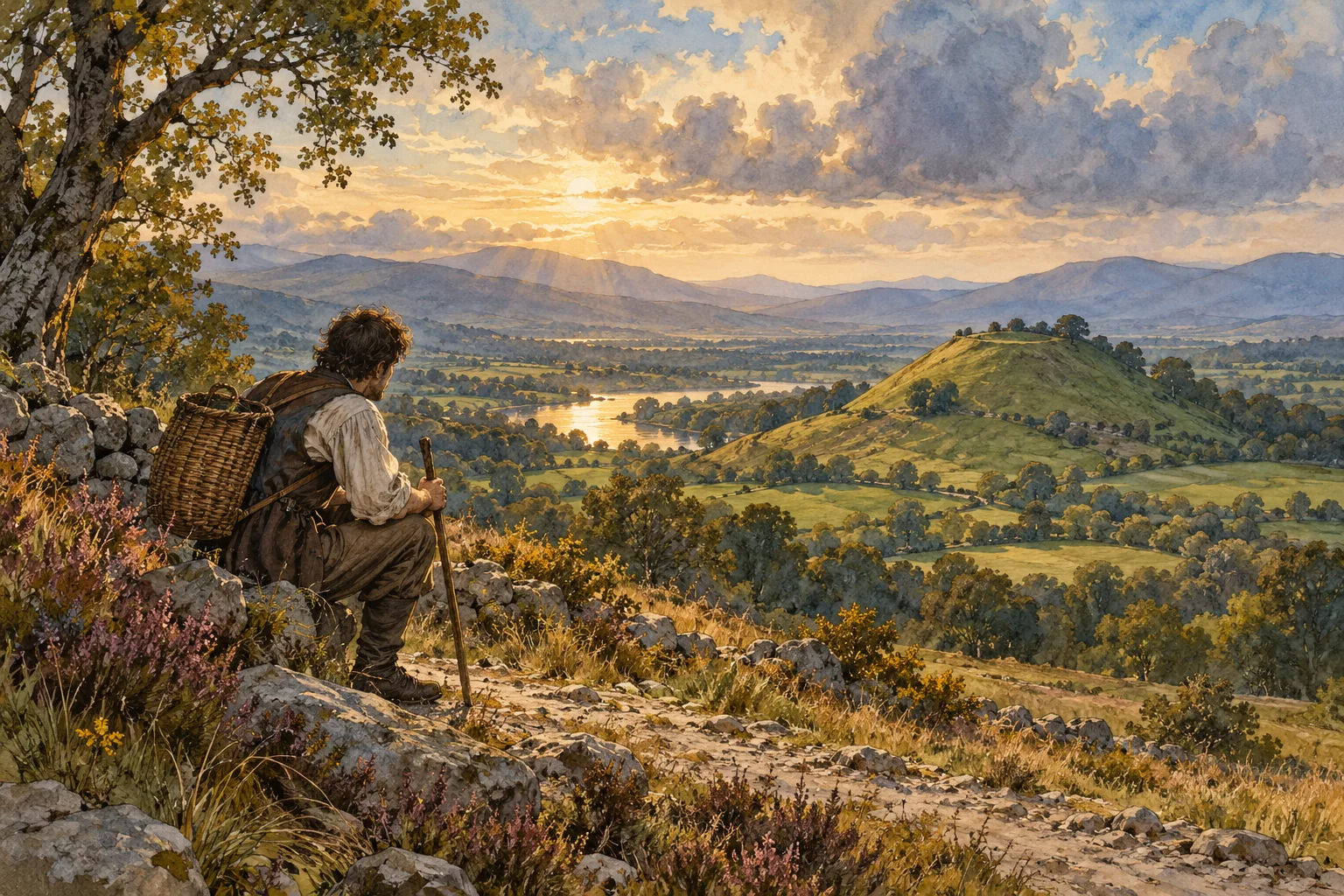
Knockgraffon brings a named place and a fairy story into the same view. Readers of Croker’s collection meet it as Knockgrafton, the hill where a tired basket-maker hears a song coming from within the ground. The County Tipperary Placenames Order 2005, p.99, item 2075, gives the modern official pairing Knockgraffon and Cnoc Rafann.
The surviving monument is five kilometres north of Cahir. Heritage Ireland identifies it as a Norman motte dating to 1192, raised on a natural hill, with a bailey to the north-west. The official account describes surviving wall remains and says the monument may occupy an earlier inauguration place of the Munster kings. That earlier association is presented as a belief, not a demonstrated identity. The motte is a National Monument in state guardianship.
The older and newer English spellings appear together in an NLI catalogue title, “Knockgrafton [Knockgraffon] moat, church and castle, County Tipperary, 1840”. The record names William Frazer as its main creator and George Victor Du Noyer as a contributor; its creation date is catalogued as undated. The year in the title should therefore not become an unsupported claim that this particular drawing was made in 1840.
In The Legend of Knockgrafton, Lusmore is travelling from Cahir towards Cappagh. He lives in the Glen of Aherlow beneath the Galtees, and the hill is a stopping place on a tiring journey. A song draws him from the roadside into a splendid fairy hall. He improves its rhythm by adding another weekday and receives a gift that transforms his body and his standing among his neighbours. The chosen printed account makes the return to familiar daylight part of the wonder.
A second journey brings Jack Madden from the Waterford side of the story. Lusmore has freely explained what happened, but Jack tries to command the same reward without listening carefully. The hill becomes a place of punishment. Its meaning depends on both visits: remembering only Lusmore’s good fortune would leave out the tale’s severe and troubling ending.
Croker calls the setting a moat and imagines an interior castle. The monument record classifies the surviving earthwork as a motte and bailey. These descriptions answer different questions. A visible mound gives the story a recognisable landscape; the archaeological classification does not establish that a chamber full of singing fairies existed beneath it.
For the library, Knockgraffon is therefore a meeting point between a printed tradition and a documented location. Follow Lusmore’s story for the music, the rival visits and the comparison with Parnell’s fairy poem. Read the Clurichaun guide to see how other collectors describe solitary household fairies, a different setting from the gathered singers inside this hill.
Sources for this place
- Thomas Crofton Croker, collection; Thomas Wright, later editor, Fairy Legends and Traditions of the South of Ireland. Seventh edition, June 1906; Library Ireland transcription. The Legend of Knockgrafton, complete story. Read source — Chosen narrative; printed literary presentation of folklore. About this book
- Office of Public Works / Heritage Ireland, Knockgraffon Motte and Bailey. Official monument information, consulted 17 October 2026. Location, date, description and guardianship. Read source — Evidence for the surviving monument; not evidence that the fairy episode happened.
- National Library of Ireland, Knockgrafton [Knockgraffon] moat, church and castle, County Tipperary, 1840. Catalogue record; created date given as undated; main creator William Frazer, contributor George Victor Du Noyer. Drawing PD 1975 TX 5 (15), title and creator fields. Read source — Primary catalogue evidence connecting the two spellings; not identification of a fairy chamber.
- Placenames Branch / Irish Government, Placenames (County Tipperary) Order 2005. Official Irish-language placenames order, 2005. p.99, item 2075: Knockgraffon / Cnoc Rafann. Read source — Official modern place-name pairing.
Research coverage
Official monument and place-name evidence is distinguished from Croker’s literary setting. The NLI catalogue supports the spelling connection but does not identify a supernatural chamber. No claim is made that Lusmore or Jack Madden has been historically identified. A site-specific oral archive survey and detailed archaeological bibliography remain gaps; this page is not a walking itinerary or an access assessment.
The Myths · Irish collection · Editorial approach
Further Reading