Highland landscape · place
Loch Ness
A deep Highland loch, an outflowing river and a ruined castle. Real places provide the setting, but they do not make every story attached to them historical.
Also found as: Loch Ness and the River Ness · Urquhart Castle and Loch Ness
Research reviewed 28 October 2026.
The real landscape
The UK Lakes Portal records Loch Ness as a freshwater body of about 55.3 square kilometres, with a mean depth of 132 metres and a maximum depth of approximately 230 metres. These measurements describe a large, deep body of water. They are useful geographical facts, rather than evidence for a monster.
At its north-eastern end, water leaves through the River Ness towards the Moray Firth. This connection explains why the names belong in the same geographical guide. It does not make the river and loch the same setting. That distinction is particularly important for Columba and the water beast.
Stories attached to the water
A river crossing
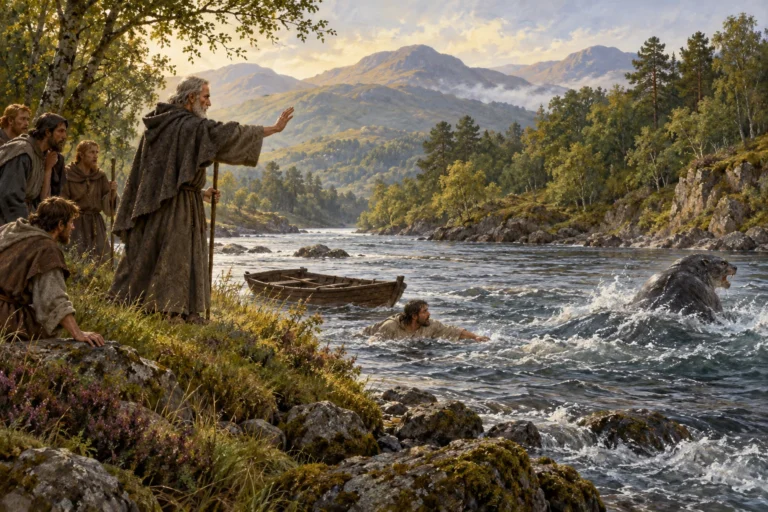
In Adomnán’s Life of Columba, the saint reaches the River Ness and asks a companion to fetch a boat from the opposite bank. The dangerous creature approaches the swimmer there. No precise crossing is identified. A modern riverside location, however picturesque, should not be labelled the verified site of the miracle on the strength of this text alone.
A loch watched for Nessie
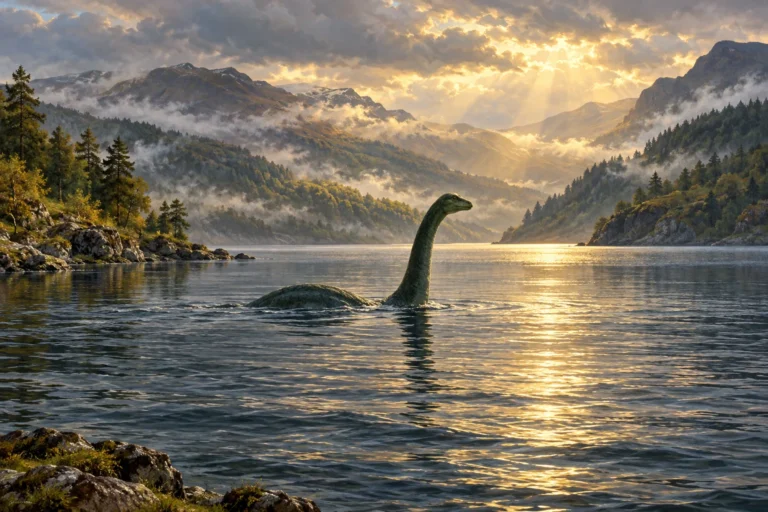
The modern The Loch Ness Monster belongs to the loch’s reported sightings and popular imagery. The 1933 Courier account places its observers on the north shore near Abriachan Pier. That is a location supplied by the report, not a confirmed position for an unknown species. The difference between an observation’s stated setting and its explanation applies throughout the collection.
Urquhart Castle
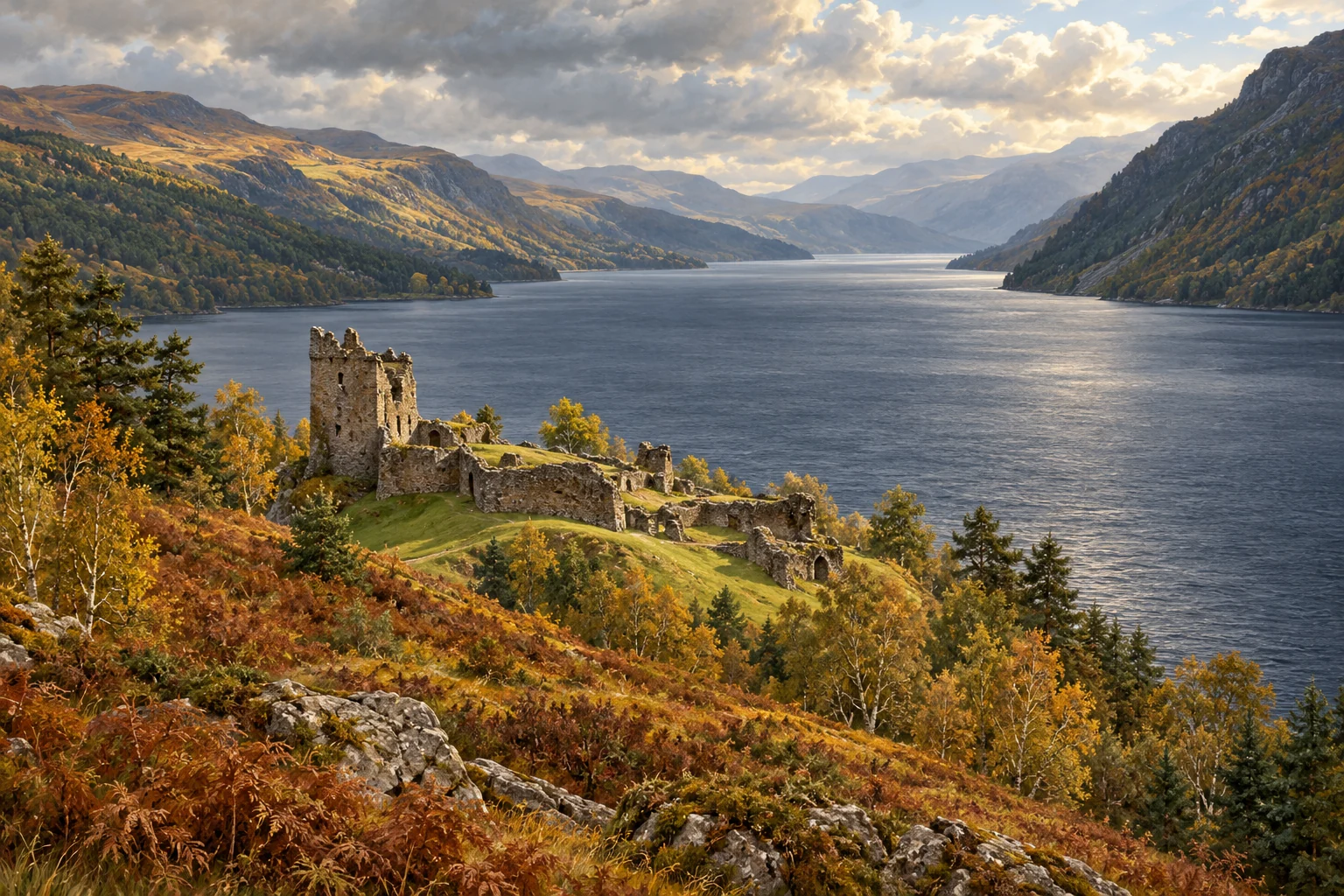
Historic Environment Scotland’s history records Urquhart’s capture by Edward I in 1296, its later Grant ownership and the destruction of its gatehouse in 1692. The ruined stronghold is part of the loch’s documented human history. Its visibility in monster imagery does not establish a link between its medieval occupants and a real Nessie.
The tower in our illustration gives the view a recognisable local setting. It is an artistic landscape, not a claim that every wall, viewpoint or season reproduces a survey. The medieval river story should not acquire this later ruined-castle backdrop merely because both are associated with Ness.
Place, tradition and evidence
Three kinds of location need to stay distinct: a place named by an old text, a position reported by a modern observer, and a viewpoint chosen by an illustrator. Each can help a reader picture the tradition, but they answer different questions.
The loch’s depth can make an imagined hidden creature compelling. Depth by itself is not evidence that such an animal lives there. The research page, Is the Loch Ness Monster real?, asks what the actual investigations establish and what they leave unresolved.
Read the landscape alongside the story rather than using it to authenticate the story. A real river can be the setting of a miracle narrative; a real castle can become part of a legendary image; a real lake can be observed carefully without every unidentified movement becoming a new species.
Sources for this entry
- UK Centre for Ecology & Hydrology, UK Lakes Portal: Loch Ness. Waterbody record 18767, consulted 28 October 2026. Read source — Surface area and mean and maximum depth.
- International Lake Environment Committee, World Lake Database: Loch Ness. Geographical account, consulted 28 October 2026. Read source — Connection through the River Ness to the Moray Firth; older measurements are not combined with the UK Lakes figures.
- Adomnán, Life of Saint Columba. English translation in the William Reeves edition, Edinburgh: Edmonston and Douglas, 1874; electronic text at CELT, University College Cork. Book II, chapter XXVIII, “An Aquatic Monster driven off by virtue of the blessed man’s prayer” (II.27 in some modern editions). Read source — Complete chapter examined; principal source for the retelling. Book or article record
- Inverness Courier, correspondent, Strange Spectacle in Loch Ness. What was it?. 2 May 1933; consulted the transcription reproduced in The Bibliography of Fantastic Beliefs. Read source — The wording of the early press account, not a newly verified eyewitness interview. A transcription rather than a newspaper facsimile.
- Historic Environment Scotland, Urquhart Castle: history and stories. Site history, consulted 28 October 2026. Read source — Castle chronology only. For the location of Columba’s water-beast episode, the primary text’s River Ness wording takes precedence.
Research coverage
Geographical measurements, the primary river narrative and the official castle history were examined for the specific claims above. No exact medieval crossing point is claimed, and the illustration is not archaeological documentation.
The Myths · Scottish collection · Editorial approach
Further Reading