
Learning & activities / England
Colouring
Colour the Pedlar of Swaffham
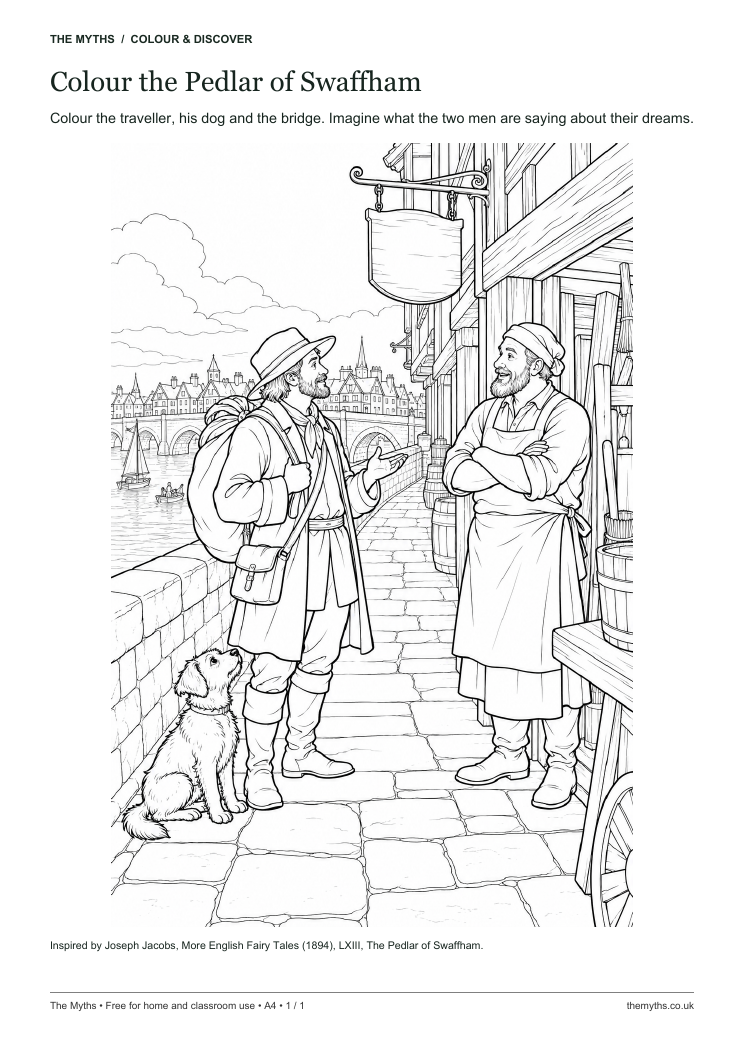
Colour the Pedlar of Swaffham talking to a shopkeeper on London Bridge, with a free A4 sheet and links to the treasure story’s variants.
EnglandAges 7+A4 · 1 page
Download and print
Colour the traveller, his dog and the bridge. Imagine what the two men are saying about their dreams.
Black-and-white printable. Select A4 and “Fit to page” when printing. Free for personal, home and classroom use. No sign-up needed.
Try this activity
Draw a dream map on another sheet. Mark invented places clearly, then explain which clue would send your traveller home again.
Suggested ages are a guide. Choose the reading and practical support that suits your learner.
More to try: The pedlar’s treasure: compare two tellings
The story behind the picture
A pedlar dreams that he will hear good news on London Bridge. He travels there with his pack and dog, but waits without success. A shopkeeper tells him about his own dream of treasure beneath a tree in Swaffham. The pedlar recognises the place and returns home. In Joseph Jacobs’s telling, he finds treasure and helps rebuild the church.
About this version
This scene follows the bridge conversation in Jacobs’s More English Fairy Tales (1894), tale LXIII. The buildings, clothing and dog’s appearance are invented, not a reconstruction of the bridge. The pedlar is unnamed in Jacobs’s main narrative; another printed account names John Chapman and adds a second treasure pot. The comparison worksheet keeps those endings separate. A tradition about dreams is not proof that a dream revealed real treasure.
Follow the story
Sources for this activity
Source notes are for adults and older readers. Full texts may contain material beyond the selected activity.
- Joseph Jacobs: The Pedlar of Swaffham
More English Fairy Tales (1894), LXIII and its source note. Jacobs credits Alfred Nutt’s rewriting of a version in Abraham de la Pryme’s diary; the activity uses the published Jacobs text, not an independently consulted diary manuscript.
How we use sources and illustrations · Browse all activities