Place · Scottish Borders
Selkirkshire
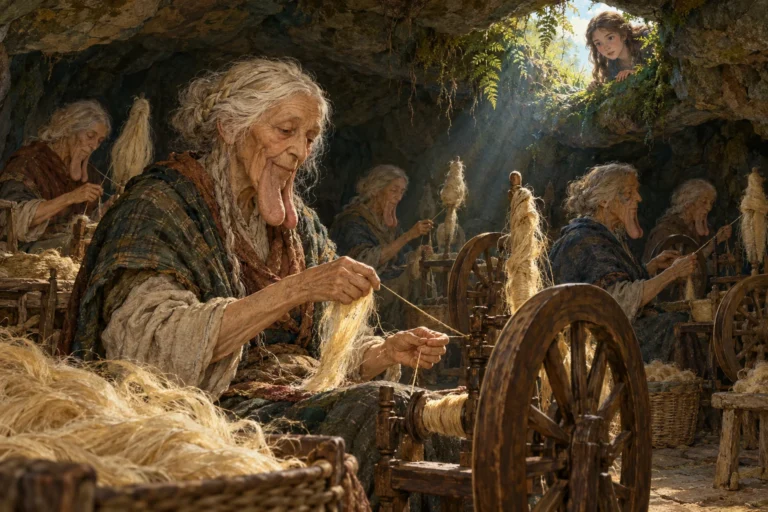
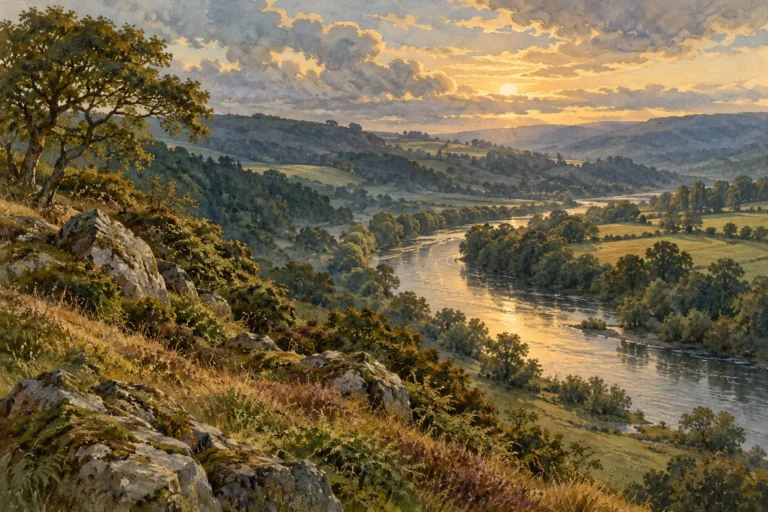
The regional setting of Habetrot’s spinning story, where a knoll and stream lead into an underground workshop.
Also found as: Selkirkshire fairy spinners. Research reviewed 17 October 2026.
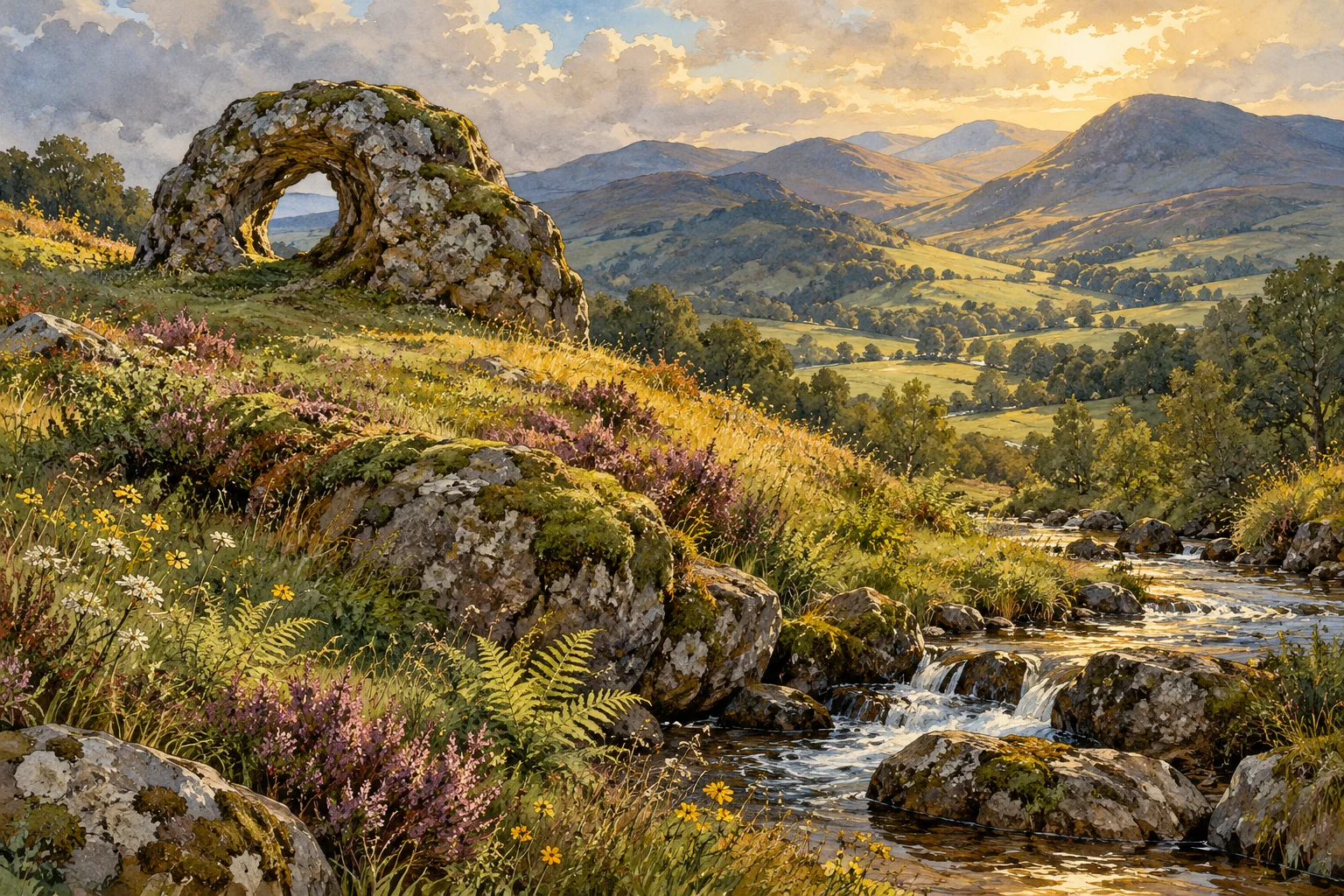
A regional setting, not an identified cave
Henderson begins Habetrot’s story with a mother and daughter in Selkirkshire. He describes a flower-covered knoll, a small stream and a naturally pierced stone, but does not give a village, estate or name for the knoll. The place association is therefore regional.
The stone serves two purposes in the story: it allows the girl to hear Habetrot’s name and to look down into the working space below. Later the bridal couple return to the same landscape and enter the cavern. It is a threshold into a fairy household, not a documented archaeological site.
The collecting trail
Henderson attributes the narrative to Mr Wilkie, among his material on Border sprites. That tells us something about how the printed account reached him. It does not identify the first teller, the date when the tale began or a real person behind the heroine.
Chambers’s related “Whippety Stourie” also puts fairy spinners beneath a stone, but does not supply the same Selkirkshire identification. A similar landscape image should not be used to relocate one account to the other’s setting.
Read through the place
Follow Habetrot for the complete narrative and its comparison with Chambers. The wider Scottish collection includes other stories attached to named Border landscapes, but proximity alone does not make them episodes of the same tale.
Sources for this place
- William Henderson, Notes on the Folk-Lore of the Northern Counties of England and the Borders. New edition, London: Folk-Lore Society, 1879. Chapter VII, Habetrot narrative. Read source — Explicit Selkirkshire setting and unnamed knoll. About this book
- Robert Chambers, Popular Rhymes, Fireside Stories, & Amusements of Scotland. Edinburgh: William and Robert Chambers, 1842. “Whippety Stourie”, pp.54–55 in the transcribed edition. Read source — A related fairy-spinners narrative, used for comparison with Habetrot; not substituted for Henderson’s text. About this book
Research coverage
The regional label and story landscape are taken from Henderson. No exact site is asserted, and local oral or place-name surveys have not yet been collated.
The Myths · Scottish collection · Editorial approach
Further Reading